
Azerbaijan National Academy of Sciences
The first website of Azerbaijan (1995)
 Elm TV
 Photo
Photo
 Video
Video
Heydarova Khadija İsabala qızı
| Place of birth | Baku | 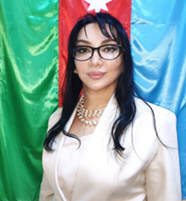 |
| Date of birth | 08.02.1973 | |
| Education | Baku State University | |
| Scientific degree | Doctor of Philosophy in Philology | |
| Title | Associate Professor | |
| Topic of PhD thesis:
- specialty code - specialty name - topic name |
5706.01 Azerbaijani language The inclusion of non-common words in Azerbaijani philological dictionaries |
|
| Topic of doctoral thesis:
- specialty code - specialty name - topic name |
5706.01 Azerbaijani language Religious-philosophical and geographical terms in Nasimi’s works written in his native language |
|
| Total number of printed scientific publications:
- number of scientific publications printed abroad: - number of papers published in journals indexed and abstracted in international databases |
A total of 92 scientific works (76 articles and conference proceedings, 16 books)
1 book, 15 articles, 9 conference proceedings
1 Scopus (Q1), 1 Web of Science, 3 Copernicus, 2 ERİHPLUS |
|
| Number of patents and certificates of authorship | ||
| Staff training:
- number of PhD |
||
| Basic scientific achievements | She is the author of 3 monographs and 5 dictionaries, and the co-author of 4 dictionaries. She is also the project leader of the fundamental collective work, the three-volume “Dictionary of Turkic-Origin Archaisms.” She is the author of the three-volume “Explanatory Encyclopedic Dictionary of Nasimi’s Works Written in His Native Language.” | |
| Names of scientific works |
Articles and conference proceedings: 1.Types of dictionaries and the formulation of the issue of word lists in Azerbaijani philological dictionaries. Article. Issues of Philology. Baku, 2011, No. 10, pp. 154–161. 2.The presentation of terms in the Explanatory Dictionary of the Azerbaijani Language. Article. Language and Literature. International Scientific-Theoretical Journal. Baku, 2011, No. 4(80), pp. 71–77. 3.Lexicographic aspect of the study of dialect vocabulary based on the material of the Explanatory Dictionary of the Azerbaijani Language. Article. European Science and Technology. Materials of the International Research and Practice Conference. Wiesbaden, Germany, January 31. The publisher “Strategic Studies Institute”, 2012, pp. 905–910. 4.The study of ethnographic vocabulary from the lexicographic point of view. Article. Language and Literature. International Scientific-Theoretical Journal. Baku, 2012, No. 1(81), pp. 43–45. 5.The study of archaic words from the lexicographic aspect based on the Explanatory Dictionary of the Azerbaijani Language. Article. Current Problems of Azerbaijani Studies. Proceedings of the 3rd International Scientific Conference dedicated to the 89th anniversary of the birth of National Leader Heydar Aliyev. Baku, Azerbaijan, May 2–5, 2012, pp. 244–247. 6.On the application of the principle of “grammatical homonyms” in the Azerbaijani-Russian Dictionary. Article. Proceedings of the Institute of Linguistics. Baku, Nasimi Institute of Linguistics, 2012, No. 3, pp. 56–63. 7.On the issue of reflecting diamorphy in bilingual dictionaries of unrelated languages. Article. Bulletin of Leningrad State University named after A.S. Pushkin. Scientific Journal. Philology. Saint Petersburg, 2013, No. 1, Vol. 1, pp. 103–109. 8.Lexicographic representation of morphological discrepancies between the Azerbaijani and Russian languages. Article. Bulletin of Voronezh State University, Series: Linguistics and Intercultural Communication. 2014, No. 1, pp. 107–112. 9.The place of rarely used homonymous words in Azerbaijani philological dictionaries. Conference proceeding. Applied Sciences and Technologies in the United States and Europe: Common Challenges and Scientific Findings. Scientific conference held in the United States. Cibunit Publishing. New York, USA, April 21, 2014, 225 p., pp. 147–149. 10.The study of the term “terminology” from the aspect of terminological variability. Article. Issues of Terminology. Baku, 2014, No. 2, pp. 154–161. 11.Lexicographic description of the methods of formation of native-language terms. Article. Sivilizasiya Scientific-Theoretical Journal. 2015, No. 7, pp. 70–76. 12.A new approach to the Explanatory Dictionary of the Azerbaijani Language. Article. Proceedings of the Institute of Linguistics. “Elm və təhsil”, Baku, 2015, No. 2, pp. 101–108. 13.Application of the International Phonetic Alphabet to the Orthoepy Dictionary of the Azerbaijani Language. Article. Sivilizasiya Scientific-Theoretical Journal. 2015, No. 10, pp. 91–96. 14. The Dilemma in Azerbaijani Philological Dictionaries: Homonymy or Polysemy. Article. International Research Journal. ISSN 2303-9868 PRINT, ISSN 2227-6017 ONLINE. Yekaterinburg, August 2016, No. 8(50), Part 5, pp. 97–102. 15. Principles of compiling the Dictionary of New Words and New Meanings. Article. Studies. Baku, 2016, No. 3, pp. 126–133. 16. Ordered Universe. Article. Elm, newspaper of the Presidium of ANAS. April 18, 2017, No. 07(1174), p. 6. 17. A lexicographic view of jargon, argot, slang and professionalisms. Article. Language and Literature. International Scientific-Theoretical Journal, Baku, 2017, No. 4(104), pp. 97–100. 18. It is worth thinking about: should participles be included in philological dictionaries? Article. Studies, Baku, 2017, No. 3, pp. 30–37. 19. Some semantic and grammatical features in Vagif’s language. Article. Proceedings of the Institute of Linguistics, “Elm və təhsil”, Baku, 2018, No. 1, 12,567 characters, pp. 154–162. 20. Which words should be included in the Orthographic Dictionary of the Azerbaijani Language? Article. Language and Literature. International Scientific-Theoretical Journal, Baku, 2018, No. 3(107), 12,739 characters, pp. 17–20. 21. Medieval Arabic lexicography. Article. Proceedings of the Institute of Linguistics. 2018, No. 2, 21,004 characters, pp. 76–86. 22. Variability and development of the suffix -ıb⁴ in the Azerbaijani language in the 11th–18th centuries. Conference proceeding. Conference Book, Baku 2nd International Conference of Science, Baku, Azerbaijan, April 1, 2018, 12,369 characters, pp. 193–195. 23. Figurative presentation of the meanings expressed by the lexical units “saç” and “zülf” in Nasimi’s works. Article. Linguistic Studies. Nasimi Institute of Linguistics, Azerbaijan National Academy of Sciences. International Scientific Journal. Baku, “Elm”, 2019, No. 2, 15,757 characters, pp. 25–29. ISSN 2664-5432. 24. Transliteration of Russian words and words borrowed through Russian in the Azerbaijani language. Conference proceeding. Proceedings of the International Scientific-Practical Conference “Current Problems of Kazakh Linguistics” dedicated to the 80th anniversary of Professor Bayynkul Kalievich Kaliev. Almaty, January 25, 2019, 8,445 characters, pp. 84–90. Co-author: Nigar Aghayeva. 25. Sufi and Hurufi terms used in Nasimi’s language. Conference proceeding. International Ambassadors of Culture of the Turkic World: Nasimi Symposium. BSU, New Educational Building, Round Hall, Baku, 2019, 10,590 characters, pp. 273–279. 26. The structure of the Explanatory Encyclopedic Dictionary of Nasimi’s Works Written in His Native Language. Conference proceeding. Nasimi-650. “Ey Nasimi, your word has conquered the world...” Proceedings of the 2nd International Scientific Conference dedicated to the 650th anniversary of Imadaddin Nasimi. December 8–11, 2019, 15,077 characters, pp. 267–272. 27. Descriptive shades of black hair in Nasimi’s poetry. Abstract. “Azerbaijani Manuscripts in World Libraries”: Proceedings of the 4th International Scientific-Theoretical Conference dedicated to the 650th anniversary of the great Azerbaijani poet Imadaddin Nasimi. Baku, “Elm və Təhsil”, 2019, 90 p., October 12, 2019, 4,843 characters, pp. 75–77. 28. Semantic analysis of Nasimi’s ghazal “Mən ki, dərvişəm, fəqirəm, padişahi-aləməm”. Book chapter / co-authored publication. Collective volume of articles. Text and Contexts: Commentaries on One Ghazal by Nasimi. Baku, “Elm və təhsil”, 2019, 192 p., 9,657 characters, pp. 181–190. ISBN 978-9952-8305-2-1. 29. The structure of Mahmud Kashgari’s dictionary Dīwān Lughāt al-Turk: a comparative analysis of al-Farabi’s Dīwān al-Adab fī Bayān Lughat al-‘Arab and Mahmud Kashgari’s Dīwān Lughāt al-Turk. Article. International Academy Journal Web of Scholar, February 2020, No. 2(44), 12,847 characters, pp. 37–40. ISSN 2518-1688; ISSN 2518-167X; DOI: 10.31435/rsglobal_wos/28022020/6916. 30. Transliteration rules for Arabic borrowings in the Azerbaijani language. Article. Language and Literature. International Scientific-Theoretical Journal, Baku, 2020, No. 1(113), 13,479 characters, pp. 23–29. ISSN 2218-7588. 31. Epidigmatic characteristics and graphical representation of the semantic hierarchy of the lexical unit “xətt” used in Nasimi’s language. Article. Philological Issues and Art Studies. 2020, No. 2, 13,676 characters, pp. 226–231. ISSN 2663-4368 (Print), ISSN 2709-2699 (Online), DOI: 10.29228/edu.308. 32. Pietro Della Valle’s 17th-century work Grammar of the Turkish Language: analysis of Chapters I and II. Article. Manuscripts Don’t Burn. 2020, No. 1(10), 14,692 characters, pp. 163–171. p-ISSN 2410-5600, ISSN-L 2663-998X, Creative Commons License, CC BY-NC 4.0. 33. The grammar of the Azerbaijani language of the 17th century. Article. Science and Life, popular science journal. 2020, No. 1–2(467–468), 10,433 characters, pp. 60–62. 34. Ancient Sumerian dictionaries. Article. Linguistic Studies. No. 1, Baku, 2021. ISSN 2664-5432, UDC: 81-112.4. 35. Determining the vocalism of 13th-century Azerbaijani Turkic based on Ibn Muhanna’s dictionary. Article. Linguistic Studies. 2022, No. 1, pp. 27–34. ISSN 2664-5432. 36. Features characteristic of the Azerbaijani language in the Istanbul manuscript of Ibn Muhanna’s dictionary. Article. Philology and Art Studies. 2022, No. 1, pp. 173–179. 37. Paradigmatic classification of mythonyms in Nasimi’s language. Article. Turkology. 2022, No. 2, 15,238 characters, pp. 71–79. ISSN 2313-5204. 38. Comparative analysis of lataif and related lexical units in Nasimi’s language with Indian philosophy. Article. ANAS Philology and Art Studies. 2023, No. 1, 21,567 characters, pp. 236–243. ISSN 2663-4368, E-ISSN 2709-2699, DOI: 10.59849/2663-4368.2023.1.236. 39. Lexical Units Reflecting Anthropomorphism in Nasimi’s Religious and Philosophical Views. Article. World Science. Dolna 17, Warsaw, December 30, 2024, No. 4(86), 7,835 characters, pp. 1–9. Scholarly Publisher, RS Global Sp. z o.o. ISNI: 0000 0004 8495 2390. The article is licensed under a Creative Commons Attribution 4.0 International License. DOI: 10.31435/ws.4(86).2024.3242. Indexed in Google Scholar, iDiscover, Index Copernicus and International Impact Factor Services. 40. Geographical terms in the works of the 14th-century Azerbaijani poet Imadaddin Nasimi. Article. Norwegian Journal of Development of the International Science. May 26, 2025, No. 157, 17,291 characters, pp. 62–65. DOI: 10.5281/zenodo.15536095. 41. Sufi Clothing Terms in Nasimi’s Works and Their Symbolic Meanings. Article. Qədim Diyar. International Scientific Journal. 28.02.2025, Vol. 7, Issue 2, 22,909 characters, pp. 64–70. ISSN: 2706-6185; e-ISSN: 2709-4197. DOI: 10.36719/2706-6185/44/64-70. Creative Commons Attribution-NonCommercial 4.0 International License (CC BY-NC 4.0). Indexed in ERIH PLUS, Copernicus, Google Scholar. 42. Figurative Representation of Mythotoponyms in Nasimi’s Works. Article. Vestnik of Saint Petersburg University. Asian and African Studies. Scopus Q1. 2025, No. 1, 27,318 characters, pp. 102–113. https://aasjournal.spbu.ru/article/view/22581. Scopus Q1. 43. Nominalization of Quranic Sentence Quotations in Nasimi’s Language: In Comparison with Azerbaijani Classical Literature. Article. Annali d’Italia. Scientific Journal of Italy. 2025, No. 68, 20,860 characters, pp. 19–22. ISSN 3572-2436. Website: https://www.anditalia.com/. DOI: 10.5281/zenodo.15754676. 44. Terms and Expressions Quoted from the Hadiths of the Prophet Muhammad in Nasimi’s Works. Article. Terminology Issues. 2025, No. 1, 39,668 characters, pp. 55–65. DOI: https://doi.org/10.59849/2663-8967.2025.1.55. UDC 811.521.1. ISSN 2663-8967. 45. Terminologization of Quranic Expressions in Nasimi’s Works. Article. Araşdırmalar. 2025, No. 1, 24,425 characters, pp. 29–36. https://dergipark.anas.az/index.php/lingres; https://dergipark.anas.az/index.php/lingres/article/view/3247. DOI: http://doi.org/10.59849/2664-5432.2025.1.29. 46. Etymological, Semantic, Grammatical and Statistical Analysis of Hurufi Terms in Nasimi’s Works. Article. Russian Linguistic Bulletin. Russia. 2025, No. 10 (70), 25,370 characters, pp. 1–6. https://rulb.org/media/articles/21048.pdf; https://rulb.org/archive/10-70-2025-october/10.60797/RULB.2025.70.11. DOI: 10.60797/RULB.2025.70.11. 47. Lexical-Grammatical, Etymological and Statistical Analysis of Terms Related to Hurufi Anthropology in Nasimi’s Poetry. Article. Journal of Scientific News. Ganja. 2025, No. 5, 11,335 characters. 48. Allegorical and Symbolic System in Nasimi’s Poetry in the Context of Sufism and Hurufism. Article. Scientific Bulletin of Namangan State University. Uzbekistan. 2025, No. 8, 20,854 characters, pp. 273–277. 49. Anthropomorphism and Hurufi Thought: An Analysis in Medieval Azerbaijani Sufi Poetry. Article. Nakhchivan. 2025, 15,979 characters. DOI: 10.59849/2311-8482.2025.2.25. 50. The Esoteric Nature of Letter and Language Forming the Basis of the Hurufi Doctrine in Nasimi’s Poetry. Article. Ganja State University. Journal of Scientific News. Ganja. 2025, No. 4, 15,482 characters, pp. 205–209. DOI: 10.30546/gdu.2025.4.205. 51. Fi-surati-shabi-qatat: Poetic Interpretation of Hurufi Anthropomorphism in Nasimi. Article. Linguistics of the XXI Century: Analysis and Interpretation. Uzbekistan. Integration of Science and Education, August 2025. 30 September 2025, No. 3, Vol. 2, 3(3), 20,332 characters, pp. 5–12, pp. 34–40. E-ISSN 2181-3914. https://journals.samdpi.uz. 52. Metaphysics of Speech: Sufi Terms and Their Symbolism in Nasimi. Article. Bulletin of Urgench State Pedagogical Institute, scientific-theoretical and methodological journal. Uzbekistan. May 2025, No. 3, 39,113 characters, pp. 197–205. https://www.urspi.uz/uz/site/active?id=121. 53. The Mystical-Oppositional Symbolism of “Face” and “Hair” in Nasimi’s Literary Heritage. Article. Western Caspian University. Scientific News Humanities Series. 2024, No. 3, 21,880 characters, pp. 71–77. 54. Lexical Manifestations of the Esoteric Theory of Cyclical Time in Nasimi’s Poetry. Article. Philological Issues. 2025, No. 6, 18,110 characters, pp. 3–9. https://filologiyameseleleri.com/2025/21-flologya-meseleler-6.html. DOI: https://doi.org/10.62837/2025.6.3. 55. Etymological and Semantic Analysis of Sufi Terms Used in Nasimi’s Language. Article. Western Caspian University. Scientific News. 2024, No. 1, 28,226 characters, pp. 85–92. DOI: 10.54414/PCFZ3555. 56. The Esoteric Nature of Letters and Language in Nasimi’s Hurufi Poetics. Article. Bulletin of L.N. Gumilyov Eurasian National University. Philology Series. Kazakhstan. 2025, No. 3 (152), 28,201 characters. https://bulphil.enu.kz/index.php/main/issue/view/35. DOI: https://doi.org/10.32523/2616-678X-2025-152-3-62-73. 57. The Metaphysical and Cosmic Language of Numbers in Nasimi’s Poetry. Article. Western Caspian University. Scientific News Humanities Series. 2025, No. 4, 22,178 characters, pp. 205–209. https://journal.wcu.edu.az/az/research/humanitar-elmler-seriyasi-id-407. 58. Sufi Terms and Expressions Used within the Concept of “Hair” in Nasimi’s Works. Article. Western Caspian University. Scientific News Humanities Series. 2025, No. 2 (14), 24,905 characters, pp. 220–226. 59. The Place of Theonyms in Nasimi’s Works. Thesis. International Conference “Azerbaijani Oriental Studies in the Context of East-West Scientific-Cultural and Socio-Political Dialogue” dedicated to the 100th anniversary of the establishment of the Faculty of Oriental Studies of Baku State University. 14–15 December 2022, Baku State University, Baku, Azerbaijan, 3,987 characters, pp. 13–14. http://static.bsu.az/w20/Abstract-books-konfrans-Oriental-1.pdf. ISBN: 978-9952-546-31-6. 60. The Structure of Mahmud Kashgari’s Lexicographic Work Dīwān Lughāt al-Turk. Conference material. Proceedings of the International Conference “Mahmud Kashgari. Dīwān Lughāt al-Turk – 950”. 28 June 2024, pp. 59–62. 61. Artistic Definition of the Types of Calligraphy in Nasimi’s Work. Conference material. Proceedings of the International Scientific-Practical Conference “Issues of Turkic Philology”. Uzbekistan. 21 May 2025, pp. 256–260. UDC 001.1 / BBC 1. ISBN 978-92-44513-63-7. DOI: https://doi.org/10.5281/zenodo.8273169. https://innopublic.ru/index.php/itp/index. 62. Terms Related to Humoral Pathology in Nasimi’s Works. Conference material. Current Problems of Teaching Philological Disciplines in the Modern Educational Space: Innovations and Prospects. Navoi State University, Department of Russian Language and Literature. Proceedings of the International Scientific-Practical Conference dedicated to the 225th anniversary of the birth of A.S. Pushkin. Navoi, Uzbekistan. 12 November 2024, 16,853 characters, pp. 338–344. https://nspi.uz/. 63. The Quranic Term “Ayat” in Nasimi’s Works. Conference material. Republican Scientific Conference of Young Linguists, Doctoral Students and Dissertation Candidates “Predecessors and Successors”, dedicated to the 102nd anniversary of the birth of National Leader Heydar Aliyev. 13 May 2025, 9,773 characters, pp. 109–112. 64. Lexical and Grammatical Classification of Terms Related to Idolatry, Christianity and Zoroastrianism in Nasimi’s Works. Conference material. Baku State University. Republican Scientific Conference “Azerbaijani Philological Thought in Contemporary Research”, dedicated to the 102nd anniversary of the birth of National Leader Heydar Aliyev. 14 May 2025, 12,317 characters, pp. 126–129. 65. The Concept of “Speech” in Imadaddin Nasimi’s Works and a Lexical-Semantic Analysis of Related Sufi Terms. Conference material. 7th International Bakhtiyar Vahabzade Conference on the Language, History, Culture and Literature of the Turkic World: “Bakhtiyar Vahabzade: Patriotism and National Identity”. Azerbaijan State Pedagogical University, Shaki Branch, Shaki, Azerbaijan, online and in-person participation. 21 June 2025, 20,288 characters, pp. 601–607. 66. A Scholarly View of the Purity of the Azerbaijani Language. Article. Xalq newspaper. 20 December 2025. https://xalqqazeti.az/az/medeniyyet/249066-azerbaycan-dilinin-safligina-elmi-baxis. 67. The Lexical-Semantic Model of Political Language in Azerbaijani Statehood Discourse: Based on the Speeches of Heydar Aliyev and Ilham Aliyev. Article. Yeni Azərbaycan newspaper. 23 December 2025. https://yeniazerbaycan.com/Siyaset_e133918_az.html. 68. Some Semantic and Grammatical Features in Vaqif’s Language. Article. Problems of Research and Education of the Uzbek Language. Tashkent, 18 October 2024, pp. 295–299. https://www.myscience.uz/index.php/language. 69. The Legacy of Mustafa Zarir and the Monument Siyarun-Nabi in the Formation of the Azerbaijani Literary Language of the 14th Century. Publicistic article. https://science.gov.az/az/news/open/35082. 70. The Concept of Strategic Security of the Azerbaijani Language: A Conceptual View of President Ilham Aliyev’s Language Policy. Publicistic article. Yeni Azərbaycan newspaper. 21 February 2026. https://www.yeniazerbaycan.com/Sosial_e137322_az.html. 71. Differences and Similarities between Sufi and Philosophical Terms in Nasimi’s Works. Conference material. Ministry of Higher Education, Science and Innovation of the Republic of Uzbekistan, Renaissance Educational University. Proceedings of the International Scientific-Practical Conference “Development of Philological Research and Problems of Education”. Tashkent. 17–18 October 2025, 17,290 characters, pp. 269–280. 72. The Graphic Representation of the Sonorant Consonant “Sagyr Nun” in the Old Alphabet and the Rules of Its Use in Azerbaijani Written Monuments of the 13th–20th Centuries. Article. Turkology journal. 2025, No. 2, pp. 78–86. DOI: 10.59849/2313-5204.2025.2.78. 73. Philosophical Terms of “Periodic Theory” in the Works by the 14th-Century Azerbaijani Poet Nasimi. Article. Interdisciplinary Cultural and Humanities Review. Ukraine, Kyiv. LLC “Scientific Journals”. https://interculture.com.ua/. 2026, Vol. 5, No. 1. ERIH PLUS criteria for inclusion. 74. The Humay/Umay Archetype: From Turkic Mythological Roots to Sufi Allegory. Conference material. Republican Conference dedicated to the 100th anniversary of the First Turkological Congress, held at the Institute of Linguistics of ANAS. 23 April 2026, 12,715 characters. https://azerbaycandili.az/Literatures/Download/28108/turcocongres.pdf. 75. Religious-Philosophical Terminology in Nesimi’s Native-Language Turkish Poems: A Lexical-Semantic Study through the Image of Hazrat Ali. Conference material. III International Symposium “Turkish as a Language of Science, Writing and Literature”. 18–20 May 2026. 76. The Quranic-Terminological Semantics of the Image “Raqq-i Manshur” in Nasimi’s Poetry and Its Intertextual Continuation in Classical Literature. Article. Philology and Art Studies. 2026, No. 1. BOOKS 77. Principles of Presenting Homonyms in Azerbaijani Lexicography. Monograph. Publisher: LAP LAMBERT Academic Publishing, an imprint / trademark of OmniScriptum GmbH & Co. KG. Heinrich-Böcking-Str. 6–8, 66121 Saarbrücken, 2014. Germany, 67 pp. 78. Dictionary of New Words and New Meanings. Book. “Elm və təhsil”, Baku, 2016, 269 pp. I. Mammadli, N. Seyidaliyev, T. Bakhshiyeva, S. Aliyeva, N. Aghayeva, L. Gasimli. 79. Orthoepic Dictionary of the Azerbaijani Language. Letters R, S, Ş, T. Book. ANAS, Azerbaijan University of Languages, 1,052 pp. 2016, pp. 793–965. A. Jafarov, R. Heydarov, A. Beylarova, Kh. Asgarova, P. Hasanova, A. Hasanova. 80. Explanatory-Encyclopedic Dictionary of Nasimi’s Native-Language Works. Vol. I. Dictionary. “Nurlar” Publishing and Printing Centre. Baku. ISBN 978-9952-83-593-9. 2019, 712,369 characters, 344 pp. 81. Presentation of Non-Common Words in Azerbaijani Philological Dictionaries. Monograph. Baku, “AVROPA” Publishing House. 2019, 332,953 characters, 222 pp. H 4702060104-07/88032-2019. 82. Principles of Compiling Ancient and Medieval Dictionaries. Monograph. “Elm və Təhsil” Publishing House. 2021, 293,481 characters, 248 pp. ISBN 978-9952-8428-1-4. 83. Orthographic Dictionary of the Azerbaijani Language. Letters R, Ş, T. Dictionary. Baku, “Elm”, 756 pp., 2021, pp. 524–541, 592–609, 609–658. Ismayil Mammadli, Nariman Seyidaliyev, Tunzala Bakhshiyeva, Fidan Salayeva, Sitara Aliyeva, Laman Gasimli, Fizuli Mustafayev, Nigar Aghayeva, Sevinj Safarova. ISBN 978-9952-523-37-9. 84. Dictionary of Heydar Aliyev’s Political Language. Dictionary. Baku, “Elm və təhsil”, 272 pp. 2023. ISBN 978-9952-568-89-9. 85. Explanatory Dictionary of Onomastic Units Used in Nasimi’s Language: Religious-Sufi and Poetic Onomasticon. Dictionary. Baku, Af-PoliqrAf Printing House, 320 pp. 2023, 310,764 characters. ISBN 978-9952-541-15-1. 86. Khadija Haydarova. Explanatory Dictionary of Onomastic Units Used in Nasimi’s Works: Religious-Sufi and Poetic Onomasticon. Dictionary. Translator: Norova Gulsanam Maxsutovna. Navoi. 2024, 262 pp. 87. Explanatory Dictionary of Onomastic Units Used in Nasimi’s Language: Religious-Sufi and Poetic Onomasticon. Dictionary. Baku, Af-PoliqrAf Printing House. 2023, 310,764 characters, 316 pp. ISBN 978-9952-541-15-1. 88. Dictionary of Turkic-Origin Archaisms: Based on Azerbaijani Written Monuments of the 13th–18th Centuries. Vol. I. Letters A, B, C, Ç. Dictionary. Baku, “Elm və təhsil”. Under the supervision of Kh. Heydarova. 2023, 468 pp.; letters A, B, C, Ç, pp. 18–292. T. Guliyev. ISBN 978-568-90-5. 89. Dictionary of Turkic-Origin Archaisms: Based on Azerbaijani Written Monuments of the 13th–18th Centuries. Vol. II. Letter Q. Dictionary. Baku, “Elm və təhsil”. Under the supervision of Kh. Heydarova. 2023, 464 pp.; letter Q, pp. 193–324. R. Madatova, A. Pashayeva, V. Abdullayeva, T. Asgarova. ISBN 978-9952-568-90-5. 90. Dictionary of Turkic-Origin Archaisms: Based on Azerbaijani Written Monuments of the 13th–18th Centuries. Vol. III. Letter Y. Dictionary. Baku, “Elm və təhsil”. Under the supervision of Kh. Heydarova. 2023, 480 pp.; letter Y, pp. 308–472. E. Abbasova, A. Mahmud, T. Guliyev. ISBN 978-9952-568-90-5. 91. Explanatory-Encyclopedic Dictionary of Nasimi’s Native-Language Works. Vol. I. Dictionary. Baku, “Elm və təhsil”. 2025, 558 pp. ISBN 978-9952-609-10-3. 92. Explanatory-Encyclopedic Dictionary of Nasimi’s Native-Language Works. Vol. II. Dictionary. Baku, “Elm və təhsil”. 2026, 558 pp. ISBN 978-9952-609-10-3. |
|
| Membership with international and foreign scientific organizations | ||
| Pedagogical activity | ||
| Other activities | ||
| Awards and prizes |
1. Certificate of Honour for active participation in the “Year of Nasimi”, awarded by the decision of the Division of Humanities and Social Sciences dated January 10, 2020, Protocol No. 1. 2. Certificate of Honour from the First Vice-President of ANAS for fruitful activity in the scientific and public life of ANAS and on the occasion of March 8 — International Women’s Day, dated March 5, 2020. 3. Letter of Appreciation for delivering a report entitled “Research Prospects of Azerbaijani Linguistics” at the web seminar organized by Western Caspian University. 4. Letter of Appreciation from ANAS for services in the study and promotion of the life and activity, rich political heritage and statehood ideals of the National Leader of the Azerbaijani people, Heydar Aliyev, in connection with Order No. 3494 of the President of the Republic of Azerbaijan Ilham Aliyev dated September 29, 2022, “On declaring 2023 the ‘Year of Heydar Aliyev’ in the Republic of Azerbaijan”, dated December 21, 2023. 5. Certificate of Honour from the Division of Humanities of the Azerbaijan National Academy of Sciences for fruitful scientific activity and on the occasion of March 27 — Science Day, dated March 27, 2024. 6. Certificate from the National University of Uzbekistan named after Mirzo Ulugbek. This certificate was issued to Associate Professor Khadija Heydarova of the Nasimi Institute of Linguistics of the Azerbaijan National Academy of Sciences, confirming that from October 17 to 18, 2024, she delivered 12 hours of lectures on the subject “Methodology of Linguistic Research and Anthropocentrism” to students of the Faculty of Uzbek Philology of the National University of Uzbekistan named after Mirzo Ulugbek.a |
|
| Main place of work and its address | ANAS Nasimi Institute of Linguistics. Address: 115 H. Javid Avenue, Baku, AZ1073. | |
| Position | Head of the Department | |
| Office phone | 012-538-15-20 | |
| Mobile | +994503581717 | |
| Home phone | ||
| Fax | ||
| heyderova73@mail.ru | ||