Azerbaijan National Academy of Sciences
The first website of Azerbaijan (1995)
 Elm TV
 Photo
Photo
 Video
Video
- A-
- A
- A+
The Most Detailed Image of the Sun’s Surface to Date Has Been Obtained
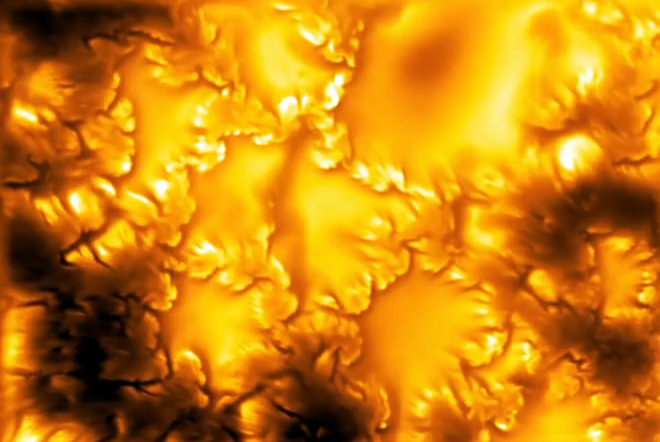
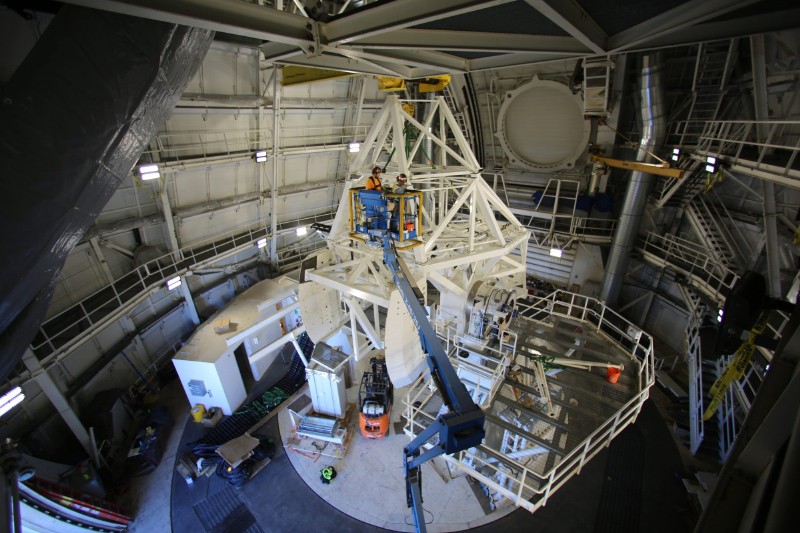
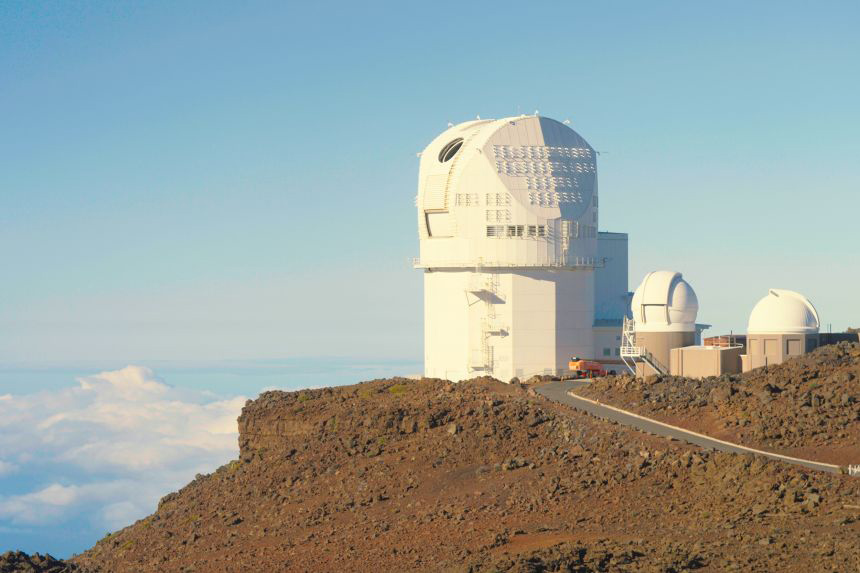
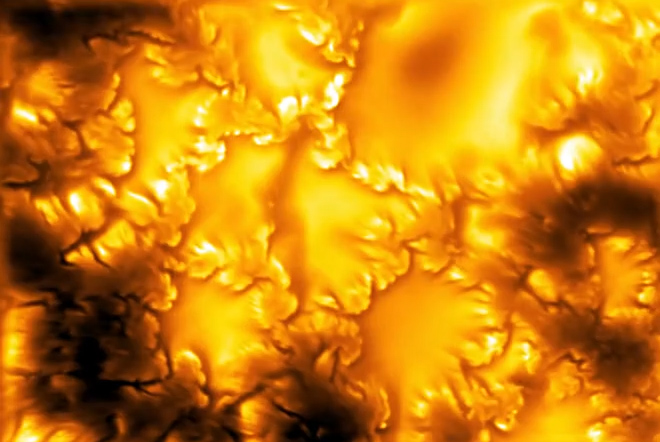
The highest-resolution and most detailed images of the solar photosphere to date have been obtained using the Daniel K. Inouye Solar Telescope, located at the Haleakalā Observatory on the island of Maui, Hawaii.
The observations provide highly detailed views of the structure of plasma flows in thin layers of the solar photosphere and the dynamics of the magnetic field.
For the first time, very small-scale, vortex-like structures have been detected around sunspots. These structures may help scientists understand how the Kelvin–Helmholtz instability observed in the solar atmosphere develops. The sharp increase in temperature from the photosphere to the chromosphere and then to the corona is one of the major problems in solar physics. While the temperature of the photosphere is approximately 5,500 K, the temperature in the upper chromosphere and corona rises to several million K, and the physical mechanism responsible for this increase has not yet been fully determined. These vortex-like structures may be involved in the formation of solar flares and coronal mass ejections and may play a key role in the transport and dissipation of magnetic energy.
Although it had been theoretically suggested that the conditions necessary for the development of the Kelvin–Helmholtz instability may exist not only in the upper layers of the Sun but also in the photosphere, and that vortex-like structures may be present there, the technological capabilities required to observe them had previously been unavailable. For the first time, the research team has identified how these structures form and the mechanism governing their motion. Scientists had previously hypothesized that the accumulation of magnetic energy was a result of vortex motion. In this process, the magnetic field lines associated with sunspots become twisted into spiral structures along with the plasma, eventually causing the local magnetic field to lose its stability completely and triggering an eruption.
The Kelvin–Helmholtz instability is a perturbation that develops as flows moving in different directions interact with one another, producing spiral-shaped vortices. This phenomenon is observed in lakes, seas, clouds and the atmospheres of gas giants. Jupiter’s Great Red Spot is one example. The Kelvin–Helmholtz instability also plays a role in the transfer of energy in the Earth’s atmosphere. At the microscale, energy released during such instabilities is converted into heat, while the Sun is capable of regulating its magnetism across different spatial scales. However, a complete picture of its dynamics has not yet been established. Small-scale energy releases, rather than less frequent flares, play an important role in the dynamics of the Sun’s magnetic field, and this micro-scale activity lies at the foundation of solar magnetic dynamics. This is an important aspect of research into solar physics and space weather forecasting.
The Daniel K. Inouye Solar Telescope used for these observations is currently the world’s largest solar telescope, with a primary mirror 4.24 metres in diameter. Its high spatial resolution enables the observation of structures on the solar surface on scales of approximately 20 km. The telescope is equipped with an adaptive optics system. Adaptive optics is a technology that corrects for distortions caused by the Earth’s atmosphere, enabling high-resolution and clear observations to be obtained from the ground.
It should be noted that the study in question has been published in the journal Nature.
Translation by Gulhane Aghayeva, Department of Public Relations, Press, and Information, Presidium of ANAS.
© All rights reserved. When using these materials, reference to www.science.gov.az is required.
Links