Azerbaijan National Academy of Sciences
The first website of Azerbaijan (1995)
 Elm TV
 Photo
 Video
- A-
- A
- A+
A Unique Contribution to Enriching the Treasury of Philosophy and Culture

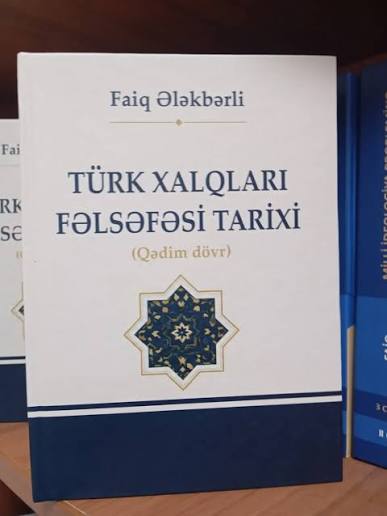

Every nation has made and continues to make its own unique contribution to enriching the treasury of human philosophy and culture. In this regard, the unique heritage of the Turkic peoples, passed down from generation to generation over the centuries, holds a special place in the history of world culture. It should be noted that the restoration of the independence of the Turkic states of Central Asia and Azerbaijan, as well as the Turkic peoples’ vision of their spiritual revival through an understanding of their true history and the revival of their distinctive cultures, has encouraged a new perspective on a number of historical and cultural issues.
As for the conceptual nature of approaches to our history, it should be noted that, despite the undeniable achievements of Western historical scholarship, the history of our people was generally diminished and concealed for many years in the works of foreign researchers devoted to the history of the Caucasus and the Middle East. During the years when Azerbaijan was part of the Soviet Union, only limited attention was devoted to the history of Azerbaijan. At the same time, the achievements of Azerbaijani historical scholarship over the past decades are undeniable. Major works by Azerbaijani historians and philosophers have been published.
However, it should be noted that research still requires overcoming various obstacles that emerged as a result of a long period of dependent development, including numerous stereotypes in scholarly thought shaped under the influence of Eurocentrism, Great Russian chauvinism and Iranocentrism. It is gratifying that today the accepted historical narratives are being reconsidered and researchers are returning to their genuine history. Unfortunately, a large part of the history of the ancient Turks has been lost and disappeared without a trace. Only fragments have remained in the archives of several countries, and researchers are attempting to reconstruct the earliest history of the ancient Turks.
From this perspective, the book is highly relevant and of great scholarly significance. The book is devoted to the history of philosophical thought among the Turkic peoples from ancient times to the 7th century AD. Spirituality occupies a fundamental and dominant position in the culture of the Turkic peoples. Therefore, the author seeks to focus particular attention on the spiritual culture of the ancient Turks.
The author provides a detailed study of such ancient philosophical teachings as Tengriism, Turkism, the philosophy of Dede Gorgud, Kamism and Shamanism. The monograph also examines the teachings of the Magi, Manichaeism and various related aspects. The book analyzes the ideas underlying the philosophical views of both the Azerbaijani and other Turkic peoples. In our opinion, this is precisely what determines the value of the monograph. The rich culture created by the ancient peoples of the East is a unique jewel in the treasury of world culture. Exploring issues related to the history of Turkic philosophy and thought, the author covers a broad historical horizon and examines the historical past and cultural history of the Turkic peoples.
As in all ancient civilizations, philosophical views as a distinct worldview did not emerge overnight in Azerbaijan either; they developed gradually over the centuries and were further developed by successive generations. It should be noted that this development continues to this day. As mentioned above, the problem under consideration is highly relevant. The questions raised in this monograph stand out for their originality, scholarly novelty and the author’s comprehensive treatment of the issues addressed.
At the same time, given the great complexity and multifaceted nature of the issue under study and its connection with many significant events, processes and stages in world history, the author does not regard all the scholarly findings obtained, as well as many ideas and hypotheses put forward for the first time in the course of the research, as definitive and indisputable. Further study of primary sources, both those introduced into scholarly circulation in this monograph and those that may yet be discovered, may lead to new research in the context of the problem under consideration.
I am confident that Faiq Alakbarli’s book “History of Philosophy of Turkic Peoples (Ancient Period)” is a valuable contribution to the study of one of the most important periods in the history of the Turkic peoples. The materials presented in the monograph make it possible to create an objective picture of the history of the Turkic peoples. The author’s choice of this research topic was not accidental. The researcher has been studying the history and philosophical thought of the Turkic peoples for many years. This monograph is one of a series of books by Faiq Alakbarli devoted to the history, philosophy and culture of the Turkic peoples.
In conclusion, I consider it necessary to note that this book is one of those works that will be read for decades to come by both specialists and anyone interested in the history of the Turkic peoples. I wish success in his scholarly research to a researcher who is deeply committed to Turkic ideals and possesses a strong and unwavering sense of national identity.
Lala Movsumova, Doctor of Philosophical Sciences, Docent, Chief Research Associate at the Institute of Philosophy and Sociology of ANAS
Translation by Gulhane Aghayeva, Department of Public Relations, Press, and Information, Presidium of ANAS.
© All rights reserved. When using these materials, reference to www.science.gov.az is required.
Similar News


Links