Azerbaijan National Academy of Sciences
The first website of Azerbaijan (1995)
 Elm TV
 Photo
 Video
- A-
- A
- A+
President Ilham Aliyev’s Concept of Intercultural Dialogue
Azerbaijanism, national identity and ideological security lie at the heart of this approach
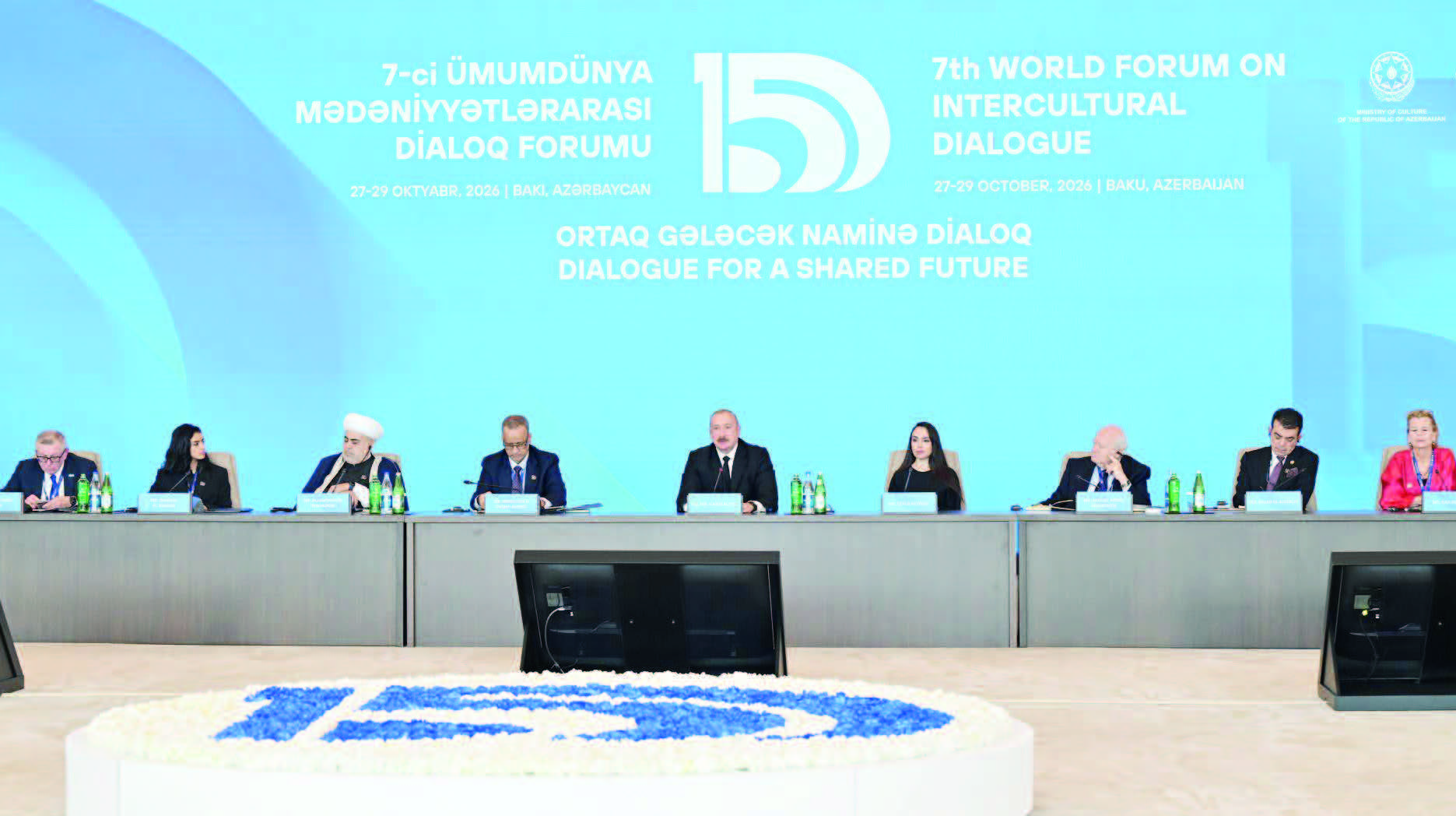
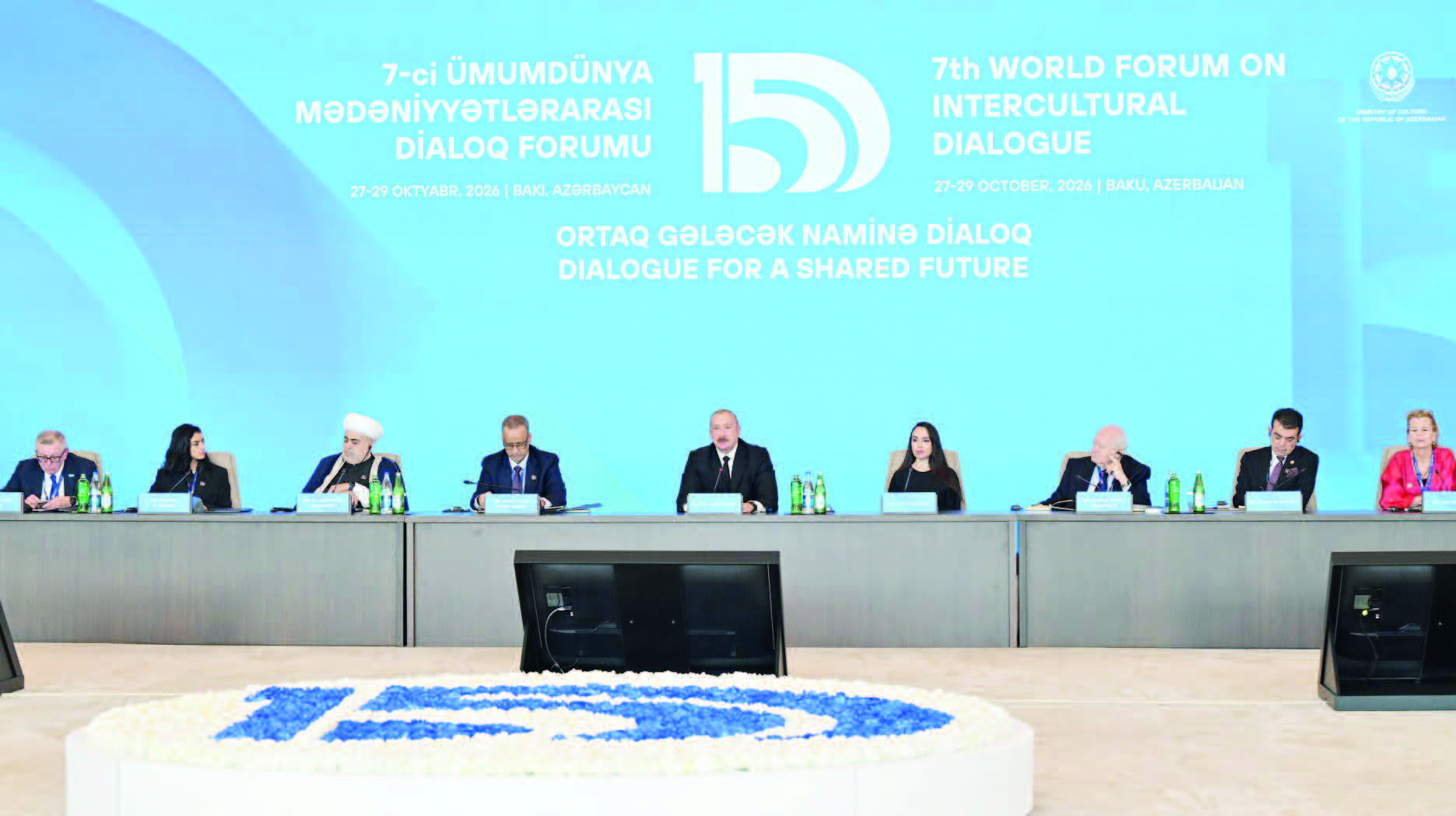
President Ilham Aliyev’s address at the opening ceremony of the 7th World Forum for Intercultural Dialogue, held on 27 October 2026, sets out Azerbaijan’s position on intercultural relations in the modern era, the preservation of national identity in an increasingly globalised world, state sovereignty and ideological security, while also articulating the country’s strategic objectives. The significance of the address is not limited to the political messages delivered on an international dialogue platform. It also conveys the fundamental principles, historical experience and strategic vision underpinning the political, economic, national and cultural development model of the modern Azerbaijani state.
One of the key points emphasised in the President’s address is the connection between intercultural dialogue and Azerbaijan’s historical and social experience. The head of state stresses that our country has been a meeting point of different cultures for centuries and that traditions of multiculturalism, religious and ethnic tolerance have played an important role in the way of life of our people. At the same time, he notes that solidarity within Azerbaijani society and unity around national ideals are among the fundamental conditions for the country’s stable development. In this approach, multiculturalism is presented not merely as the coexistence of different ethnic and religious groups, but as a system of social relations based on mutual respect, shared civic responsibility and the idea of Azerbaijanism.
The conceptual significance of this approach lies in the understanding that the preservation of national identity and the safeguarding of cultural diversity are not contradictory processes. On the contrary, strong national unity entails the integration of different ethnic and cultural identities within a shared framework of statehood and citizenship. In this regard, the idea of Azerbaijanism serves as an important ideological foundation that unites all peoples and ethnic groups living in our country around a common historical and cultural space, traditions of statehood and shared future objectives.
The unifying nature of Azerbaijanism encompasses not only social solidarity within the country but also the unity of Azerbaijanis living in different parts of the world, based on their shared national identity, language, historical memory and spiritual ties to their homeland. Thus, Azerbaijanism encompasses both the integration of different ethnic and religious groups within the country around a common space of statehood and the preservation and strengthening of the national and cultural ties of Azerbaijanis around the world. From this perspective, civic solidarity and national identity are brought together as two complementary dimensions of its essence.
Azerbaijan’s international initiatives in the field of intercultural dialogue are by no means accidental. The organisation of the World Forum for Intercultural Dialogue since 2011, the expansion of this platform internationally and the development of cooperation with various organisations demonstrate the importance our country attaches to intercultural relations. The presentation of Azerbaijan as a platform for dialogue and mutual understanding in the President’s address reflects the essence of this policy. Such a policy is important not only for international relations but also for strengthening social solidarity, mutual trust and respect for cultural diversity within the country.
At this point, it is necessary to consider an important dimension of intercultural dialogue: collective memory and folklore. This is because intercultural relations are shaped not only by official political statements, legal norms and institutional mechanisms. At a deeper level, they are rooted in peoples’ historical experiences, forms of memory, beliefs, everyday patterns of behaviour and perceptions of one another. Folklore is precisely the cultural system through which this experience is preserved, transmitted and reinterpreted in each new historical context.
Assessing folklore merely as a collection of texts and traditions inherited from the past would limit our understanding of its social function. Fairy tales, epics, legends, beliefs, proverbs and other forms of folklore are important sources for understanding how a people perceive the world, how they see themselves within a historical and cultural context, and how they establish relations with other communities. Thus, alongside being an expression of collective memory, folklore is a living cultural mechanism involved in the formation and continuity of national identity and in shaping the meaning of relations with other cultures.
The role of folklore in intercultural dialogue is not unambiguous. It can express shared values, mutual understanding and cultural affinity, but it can also contribute to the emergence and transmission of certain stereotypes and distinctions between “us” and “others”. Therefore, the scholarly study of folklore is important not only for documenting and preserving national heritage but also for understanding cultural relations, collective perceptions and patterns of social behaviour within society.
It should be noted that the multi-volume publication project entitled “Folklore of Ethnic Minorities”, implemented by the Institute of Folklore of ANAS, is of particular importance in this regard. The collection and publication of folklore materials belonging to various ethnic groups living in Azerbaijan represent an important step towards studying the country’s cultural diversity. The project’s significance lies not only in preserving individual folklore texts but also in studying the worldviews, social relations, ceremonial practices and cultural identities underlying them. In this respect, the publication project serves the scholarly documentation and study of our country’s cultural diversity.
Another important dimension of cultural memory in the formation and continuity of national identity is its connection with place. The history of a people is also remembered through the places where generations have lived, held ceremonies and created myths and legends. In folklore, geographical space is not merely the setting in which events take place; it is a bearer of collective experience, spiritual attachment, social relations and historical belonging. For this reason, studying the memory of place on the basis of folklore materials is particularly important for revealing the historical and cultural foundations of national identity.
The publication of the multi-volume series “Folklore of Western Azerbaijan”, implemented by the Institute of Folklore of ANAS, as well as the study of the folklore of Karabakh and East Zangezur, constitute another dimension of the connection between national and cultural memory and place. The folklore heritage of these territories reflects the historical experience of our people, local cultural traditions, perceptions of place, ceremonies, beliefs and social life. The collection and documentation of folklore heritage in the territories liberated from occupation serve to study the cultural and spiritual history of these lands, explore local traditions and bring collective memory into focus in contemporary social and cultural life.
The cultural dimension of the Great Return should also be understood in this context. Alongside the return of people to their ancestral lands, the restoration and continuation under new circumstances of the social relations, family and community memories, ceremonial practices and local folklore traditions associated with these places are also of great importance. This process entails rebuilding the connection between a place preserved in memory and the place where people actually live. In the new historical circumstances that have emerged following the restoration of our territorial integrity and state sovereignty, the reactivation of cultural memory and the study and preservation of local folklore traditions are among the factors enriching the humanitarian substance of the Great Return.
The emphasis in President Ilham Aliyev’s address at the opening ceremony of the 7th World Forum for Intercultural Dialogue on the fact that ideological risks are as serious as physical threats makes it necessary to approach the concept of security in the modern era from a broader perspective. The head of state had also clearly expressed this position in his speech at the 8th Congress of the New Azerbaijan Party on 2 October 2026. In that address, the President stated that ideological provocations recognise no borders and that new risks are emerging, particularly in the environments of the internet, cyberattacks and artificial intelligence. He also emphasised the importance of education, knowledge, patriotism and modern ideological work in preventing these threats.
As is well known, the rapid development of information and communication technologies in the modern world, the growing influence of digital platforms on social relations, and the widespread application of artificial intelligence systems in the production and dissemination of information are changing the content and boundaries of ideological security. Algorithmic technologies no longer merely facilitate the transmission of information. They also influence the selection and ranking of information, the speed at which it spreads and its potential impact on different audiences. Manipulative content, disinformation, historical facts taken out of context and ideological influences alien to society, disseminated through social networks, are becoming increasingly complex in this new communication environment.
In this regard, information security can be considered an important component of national security from both technological and digital perspectives and the standpoint of ideological content. Although these dimensions are closely interconnected, they differ in their nature and mechanisms of ensuring security. Technological and digital security encompasses the protection, management and resilience of information resources, communication systems, digital infrastructure and technological platforms. Ideological security, meanwhile, takes into account the impact of content disseminated in the information environment on society’s national identity, historical memory, value system, perceptions of statehood and social solidarity.
The first dimension of information security concerns technological and digital security and sovereignty. The concept of technological sovereignty encompasses a state’s capacity to manage, protect and develop its digital infrastructure, information resources, communication systems and technological platforms in accordance with national interests. This includes identifying and preventing cyber threats, ensuring data security, maintaining the resilience of critical information infrastructure, mastering artificial intelligence technologies, developing domestic technological and scientific potential, and responding promptly to risks arising in the digital environment.
Technological sovereignty is of strategic importance in terms of digital independence and security. Under such circumstances, technological knowledge, professional human resources, digital skills and competencies, scientific research capabilities and modern security solutions become essential conditions for national security. Technological sovereignty does not mean isolation from the external technological environment. Rather, it means protecting national interests while participating in global technological systems, managing dependency risks and possessing the necessary technological capabilities.
In this regard, the policies pursued by the Azerbaijani state in recent years in the fields of digital development, artificial intelligence, information security and cybersecurity are of particular importance. The “Strategy of the Republic of Azerbaijan on Information Security and Cybersecurity for 2023–2027”, the “Artificial Intelligence Strategy of the Republic of Azerbaijan for 2025–2028” and the “Digital Development Concept of the Republic of Azerbaijan” are among the key strategic documents underpinning state policy in these areas. The Digital Development Council of the Republic of Azerbaijan, established on 27 February 2026 and chaired by First Vice-President of the Republic of Azerbaijan Mehriban Aliyeva, is an important institutional mechanism for coordinating state policy in the fields of digitalisation, e-government, artificial intelligence and innovation.
For this policy to be implemented successfully, it is essential not only to develop technological infrastructure but also to improve society’s digital literacy and strengthen citizens’ ability to critically assess information sources, recognise false and manipulative content, protect their personal data and behave safely in the digital environment.
The second dimension of information security is related to ideological security. This dimension encompasses the nature and semantic characteristics of content disseminated through technological platforms, as well as its potential impact on society.
In this context, the idea of Azerbaijanism should be regarded as one of the key foundations of national ideological security. The preservation of national identity, historical memory, traditions of statehood and shared national interests creates the moral and intellectual criteria necessary for society to assess various ideological influences. From this perspective, Azerbaijanism is an ideological foundation that serves to strengthen national self-awareness, social solidarity and the consciousness of statehood. Presenting this idea through contemporary content and forms of expression in the digital communication environment, and particularly strengthening the younger generation’s connection with national and moral values, are of particular importance for ideological security.
Thus, the technological and digital and ideological dimensions of information security complement one another. Technological protection can prevent interference with information systems, but it cannot, on its own, eliminate manipulative influences directed at society’s consciousness and value system. To achieve this, people must develop the ability to understand information content, identify its origin and purpose, and assess its historical and cultural context.
It is precisely at this point that the potential of the humanities and social sciences, particularly folklore studies, within the system of ideological security becomes apparent. This is because ideological resilience is formed not only through technological means of protection but also on the basis of society’s value system, historical memory, collective identity and moral self-awareness. This value system develops through the accumulated historical experience, social relations, moral choices and collective judgement of generations. A significant part of it is preserved in folklore texts and traditions.
The epics, fairy tales, proverbs and other forms of folklore of a people express not only artistic imagination but also the outcomes of long-term social experience and established patterns of behaviour. These texts and traditions embody, through various characters, plots and semantic models, the people’s perceptions of justice, courage, devotion to the homeland, family, mutual responsibility and human relationships. The significance of folklore lies precisely in the fact that these values enter collective memory not as abstract ideas but through concrete life situations, characters, conflicts and examples of behaviour.
From this perspective, folklore can be characterised as a living system of cultural memory in which national and moral values are preserved and transmitted between generations. The moral experience crystallised in folklore texts can help society understand itself, recognise its historical and cultural identity, and assess contemporary events within its own value system. However, folklore is not a ready-made or automatic mechanism of resistance to alien ideological influences. More precisely, it is an important intellectual and moral resource for the formation of national self-awareness and cultural resilience. Its potential can be realised more effectively when it is linked to scholarly research, education, public awareness activities and modern means of communication. In this sense, folklore can also be regarded as one of the important mechanisms involved in the formation of a national and cultural immune system. The collective experience preserved in folklore not only enables society to understand its historical and cultural identity but also provides moral and intellectual criteria for recognising, comparing and evaluating various ideological influences in the context of national and moral values. This experience, reflected in the epic thinking, belief and behavioural patterns, proverbs and sayings, and historical memory of the people, is important for taking a position, making decisions and determining strategies for self-defence under complex and crisis conditions. Thus, the role of folklore in the national immune system derives not from the mechanical rejection of alien influences but from its potential to interpret and analyse them in the context of national identity and values and to foster a conscious position towards them.
An important point to bear in mind here is that ideological security does not mean creating an unchanging and closed model of national identity or adopting an isolationist stance towards foreign cultures. The very essence of intercultural dialogue presupposes interaction with different cultural experiences. The key issue is not to regard everything unfamiliar as a threat, but to identify, through scholarly and critical analysis, influences aimed at distorting national and cultural memory, manipulating historical facts and turning collective identity into an instrument of confrontation and division. From this perspective, folklore studies should examine not only the content of traditional texts but also how they are presented in the digital environment, the contexts in which they are reinterpreted and the purposes for which they are used in public discourse.
In this regard, the humanities and social sciences face two important tasks. The first is to study national and moral values, historical memory and collective identity on a sound scholarly basis and determine their significance for contemporary society. The second is to communicate the knowledge gained through education, the media, digital platforms and public awareness initiatives.
In his address at the opening ceremony of the forum, President Ilham Aliyev particularly emphasised that, despite having been deprived of independent statehood over the past two centuries, our people had preserved their national values, language, traditions and way of life. This statement demonstrates that national identity is preserved and transmitted between generations not only through state institutions but also through historical memory, language and spiritual and cultural traditions. Language, in particular, is one of the principal carriers of this continuity and an important means of expressing collective self-awareness and national belonging. Under the conditions of contemporary digital transformations, the issue of preserving and developing language has acquired new significance, bringing the problem of linguistic security to the fore as an important dimension of ideological security.
In this regard, the status of the Azerbaijani language is also of particular importance. Preserving the Azerbaijani language is not limited to compliance with spelling and grammatical rules. It also entails ensuring that the language maintains an active and functional role in all spheres of public life, including education, science, the media, digital platforms and artificial intelligence technologies.
In the modern era, it is not sufficient to approach the preservation of the mother tongue solely within the framework of traditional language protection. The digital future of a language depends on its participation in the new communication environment, the level at which technological opportunities are utilised and the continuous development of national linguistic awareness. It would be incorrect to regard new forms of expression, examples of collective creativity, memes and other folklore-related content emerging on the internet and social networks merely as language deterioration or deviations from established norms. These phenomena are underpinned by new socio-cultural and communicative processes. Their scholarly study helps us better understand the functional potential of our language in a changing environment.
Folkloric thinking also plays an important role in this process. The collective mode of thinking shaped by the historical experience of the people interprets new linguistic elements and cultural influences by relating them to its own internal system of values. From this perspective, folkloric thinking is an important mechanism that ensures the continuity of national and cultural memory and participates in the process through which society assimilates new influences. However, this mechanism does not operate automatically or on its own. Its continuity depends on the development of national linguistic awareness, education, scholarly research and the production of high-quality cultural content.
The rapid development of artificial intelligence technologies makes these tasks even more pressing. The availability of technical tools alone is not sufficient to strengthen the position of the Azerbaijani language in the digital environment. The rich folklore materials, historical texts, dialectological features, examples of oral speech and contemporary digital creative materials of our language must be systematically collected, digitised and incorporated into scholarly circulation. This is of strategic importance both for expanding the technological capabilities of the language and for transmitting national cultural memory to future generations.
All these developments also set new tasks for folklore studies. The discipline should not be limited to collecting and analysing traditional texts; it should also examine new forms of folkloric meaning and communication emerging in the digital environment. Internet folklore, algorithmic communication, the impact of artificial intelligence on the production of cultural content and the collective creative practices of virtual communities are becoming relevant research areas in contemporary folklore studies. Research in these areas makes it possible to understand how national culture is represented in a changing technological environment, what types of content are disseminated and the new forms through which collective memory is expressed.
Thus, the views expressed by President Ilham Aliyev at the opening ceremony of the 7th World Forum for Intercultural Dialogue provide an important basis for assessing intercultural relations, national unity, historical memory and ideological security within a unified strategic framework. The approach articulated in this address is grounded in Azerbaijan’s experience of statehood, national and cultural identity, and independent position in the modern world. The President’s policy in this area should be regarded as a consistent and strategically significant political course aimed at protecting our country’s national interests, national and moral values and state sovereignty.
The continuity of this course, however, depends not only on state policy and institutional activity but also on the responsible position of every member of society, particularly intellectuals, scholars, teachers and cultural figures. Issues relating to national identity, language, historical memory and cultural heritage are not the responsibility of specific sectors or institutions alone. They require a sense of shared national responsibility.
Hikmat GULIYEV,
Director of the Institute of Folklore of ANAS, Doctor of Philological Sciences
Translation by Gulhane Aghayeva, Department of Public Relations, Press, and Information, Presidium of ANAS.
© All rights reserved. When using these materials, reference to www.science.gov.az is required.
Similar News



Links