Azerbaijan National Academy of Sciences
The first website of Azerbaijan (1995)
 Elm TV
 Photo
 Video
- A-
- A
- A+
Archaeological Study of Albanian Monuments in Karabakh: Results and Tasks
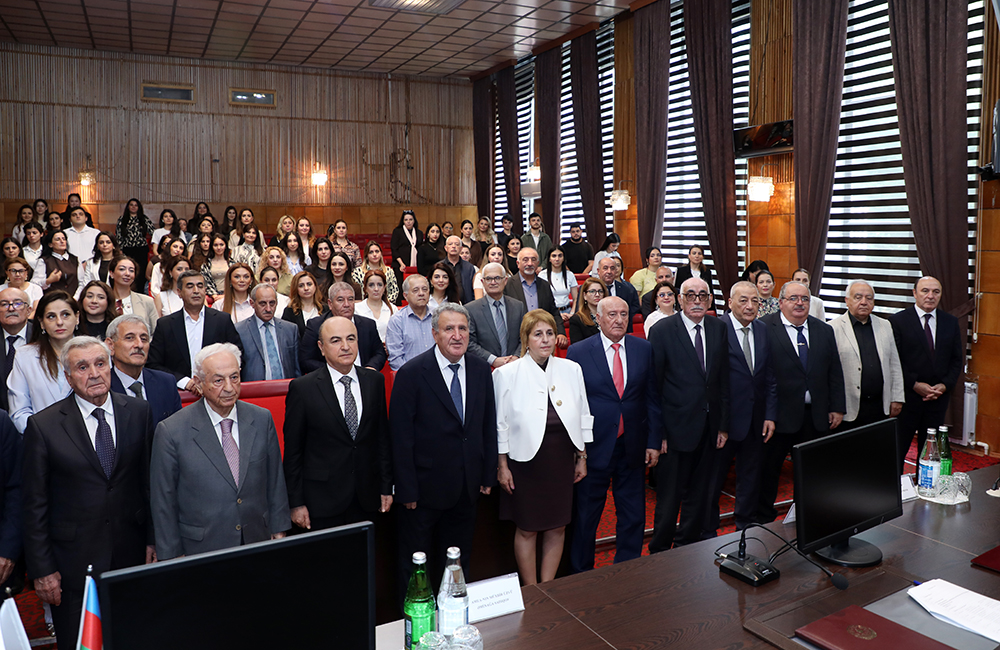
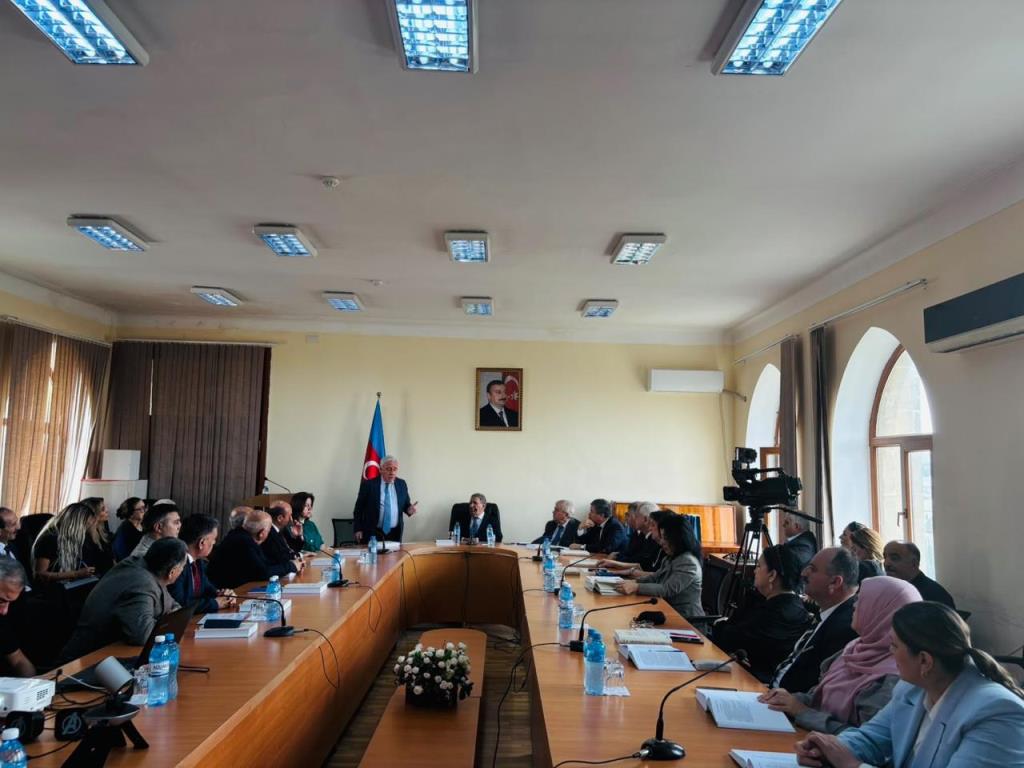
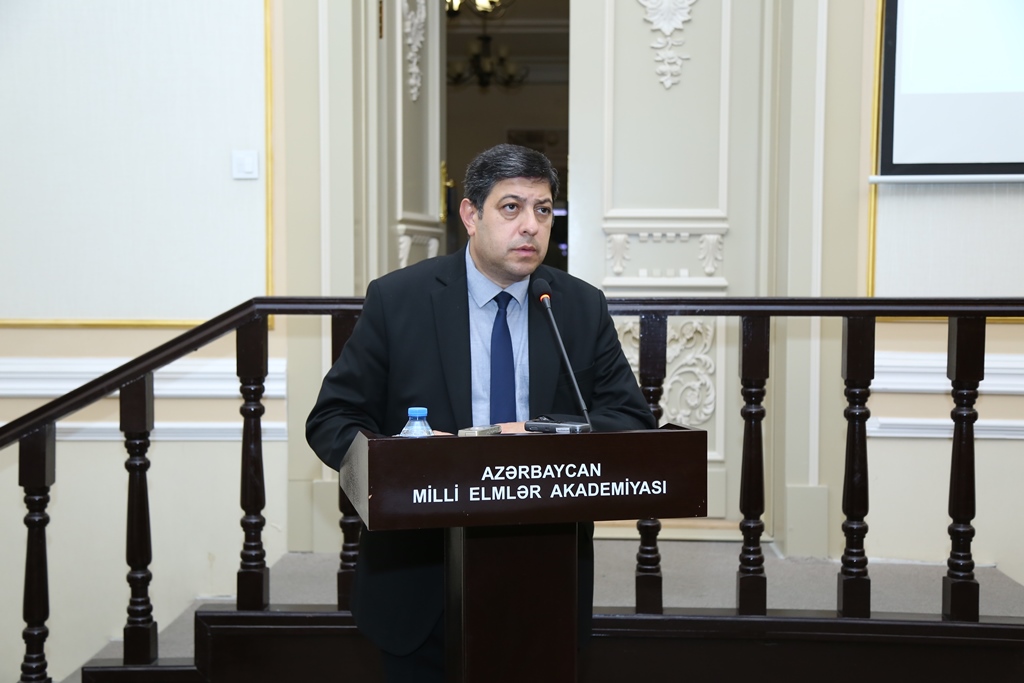
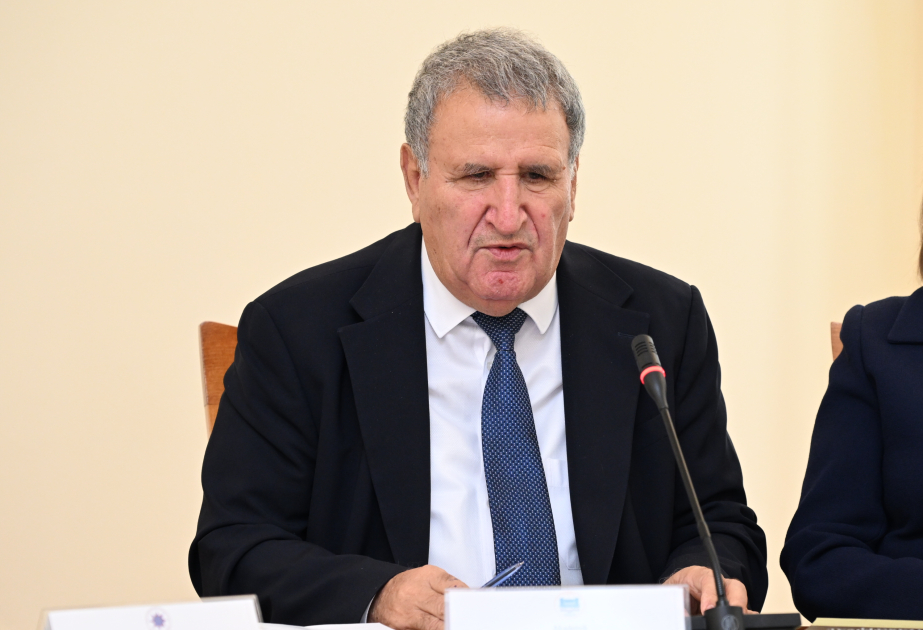
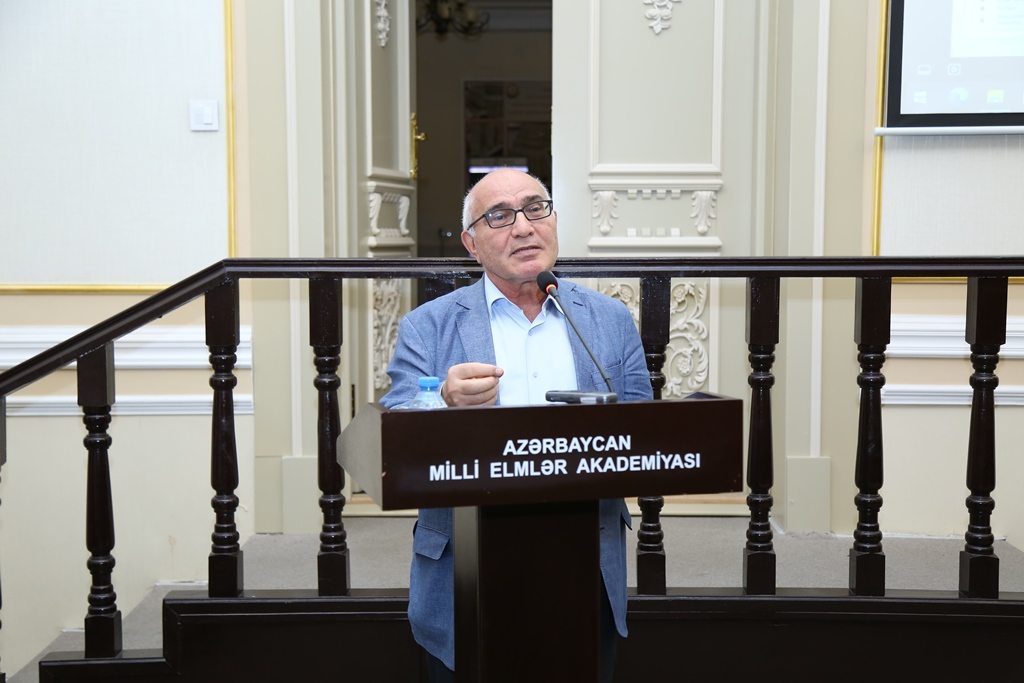
At a meeting of the Presidium of the Azerbaijan National Academy of Sciences (ANAS), a report entitled “Archaeological Study of Albanian Monuments in Karabakh: Results and Tasks” was delivered by Farhad Guliyev, PhD in History, Director of the Institute of Archaeology and Anthropology of ANAS.
Farhad Guliyev stated that the relevance of the topic of Caucasian Albania has increased in recent years and that it is extremely important for research in this field to be based on scientific foundations. According to him, it is unacceptable for scientific issues related to Caucasian Albania to be presented in various and contradictory ways on social media by non-specialists.
The speaker noted that the Institute of History and Ethnology has prepared a map of Caucasian Albania and studies its history on the basis of written sources, while the Institute of Archaeology and Anthropology researches its material cultural heritage. He noted that church complexes, necropolises, and other archaeological monuments related to Caucasian Albania are being studied by the Institute of Archaeology and Anthropology and that radiocarbon analysis makes it possible to determine the dates of the monuments more precisely. Farhad Guliyev emphasized the important role of archaeogenetic research in this field as well.
The Director of the Institute also spoke about archaeological research being conducted in Karabakh and East Zangezur and provided information on excavations carried out at the Shahbulag Complex in the Aghdam District.
Farhad Guliyev also touched upon research conducted at the Kilsadag Church Complex in Gabala. He noted that archaeological excavations have been ongoing there since 2024. The scholar stated that there are preliminary assumptions that the Kilsadag Complex may date back to the ancient period and emphasized the importance of clarifying this assumption through the results of research. The speaker noted that, in addition to a place of worship, traces associated with human habitation and burials have also been discovered at the Kilsadag Complex, making it possible to study the monument more extensively.
He noted that the Ministry of Culture has already begun registering all churches dating from the Christian period in Karabakh and East Zangezur, particularly temples and churches associated with the history of Caucasian Albania.
The Director of the Institute also drew attention to research conducted in the Selbir area of Gabala, at the Torpaqqala ancient settlement in the Qakh District, as well as at the Kurmuk Temple. He noted that the earlier period of the Kurmuk Temple is associated with the material culture of Caucasian Albania and that the remains of structures dating to an earlier period found there attest to this.
The speaker noted the particular importance of research conducted at the Khudavang Complex in Kalbajar. He stated that long-term and targeted archaeological research is planned at the Khudavang and Gandzasar complexes.
Farhad Guliyev stated that the research conducted with the support of “AzerGold” at the Kharkhar Necropolis in the Gadabay District had also produced interesting results and noted that the findings of the archaeological excavations are important for studying the ancient population of the area.
The scholar stated that the results of research on Caucasian Albania have been published in the form of articles and monographs.
The Director of the Institute emphasized the importance of joint cooperation in studying the heritage of Caucasian Albania and training young specialists.
Translation by Gulhane Aghayeva, Department of Public Relations, Press, and Information, Presidium of ANAS.
© All rights reserved. When using these materials, reference to www.science.gov.az is required.
Similar News
Links