Azerbaijan National Academy of Sciences
The first website of Azerbaijan (1995)
 Elm TV
 Photo
Photo
 Video
Video
- A-
- A
- A+
The next meeting of the Presidium of ANAS was held
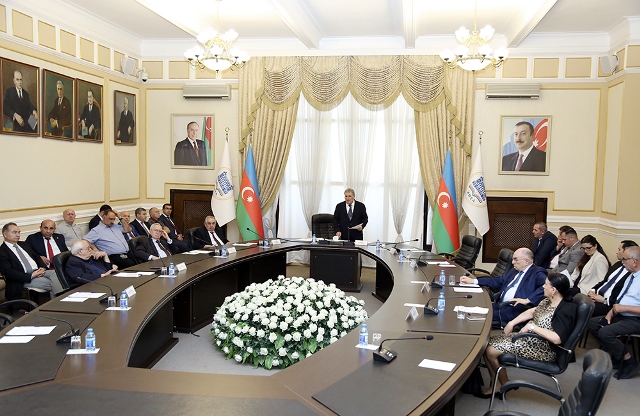
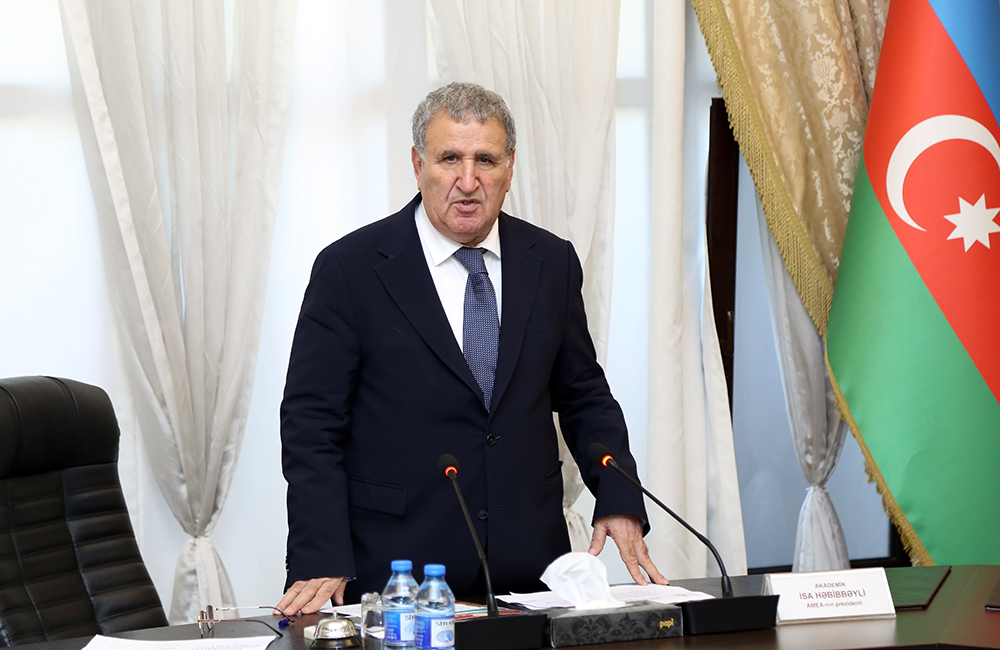
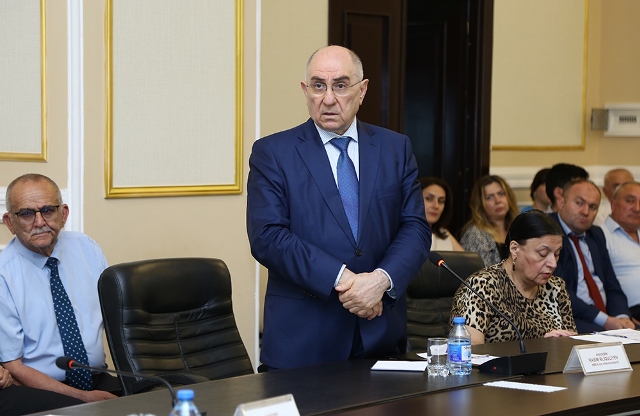
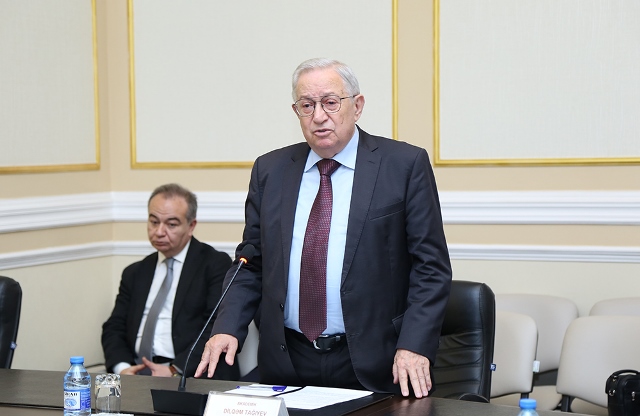
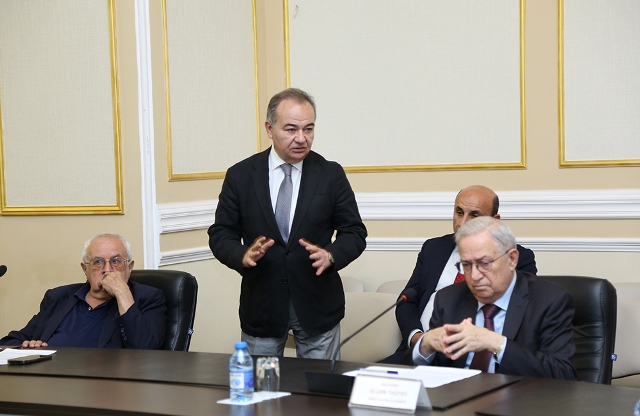
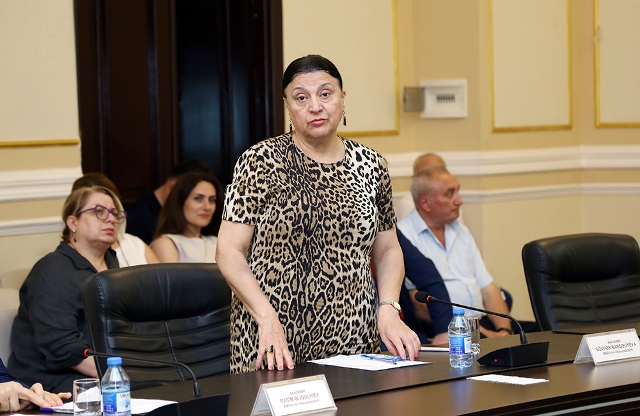
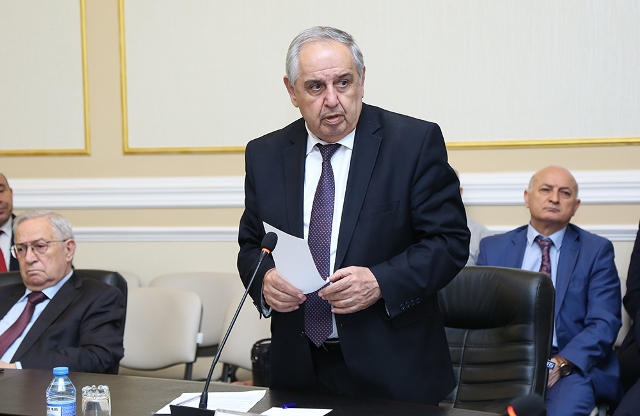
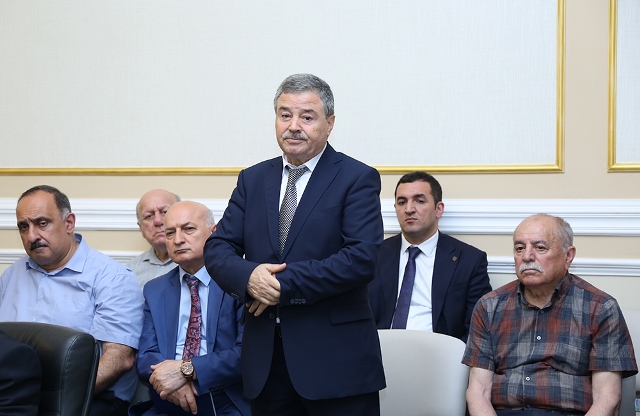
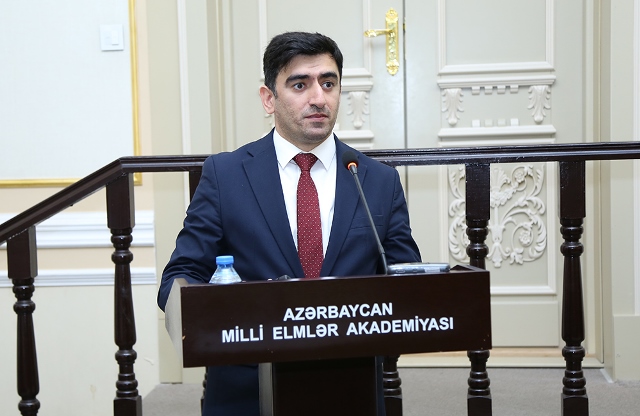
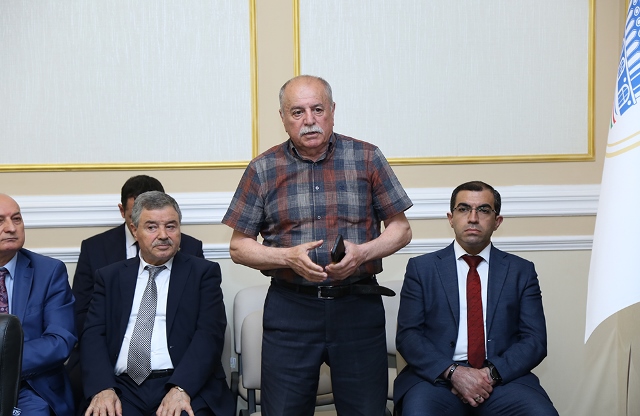
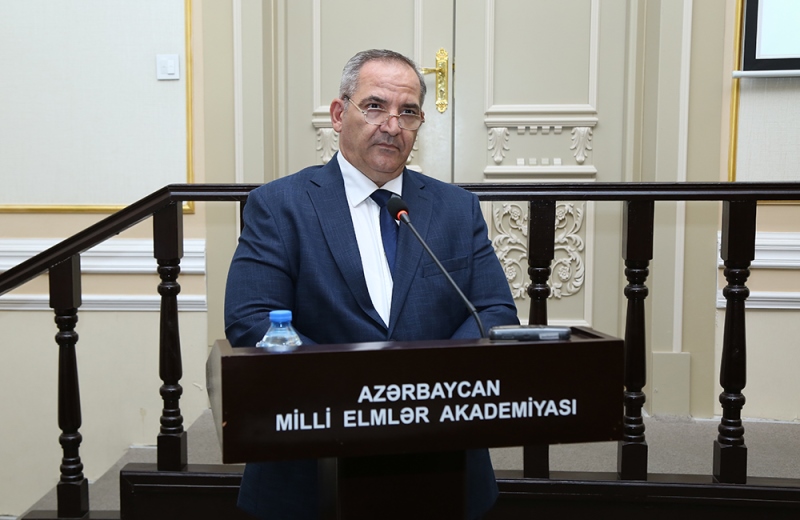
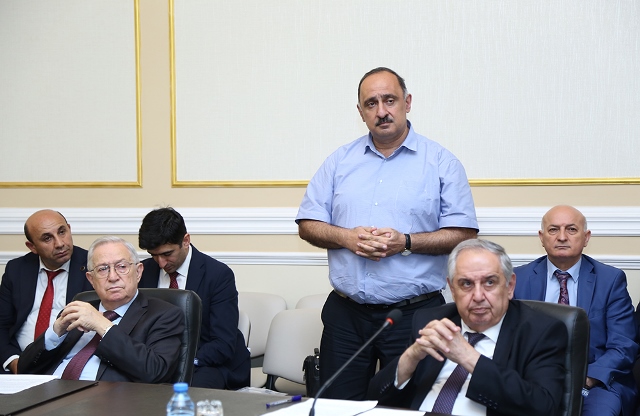
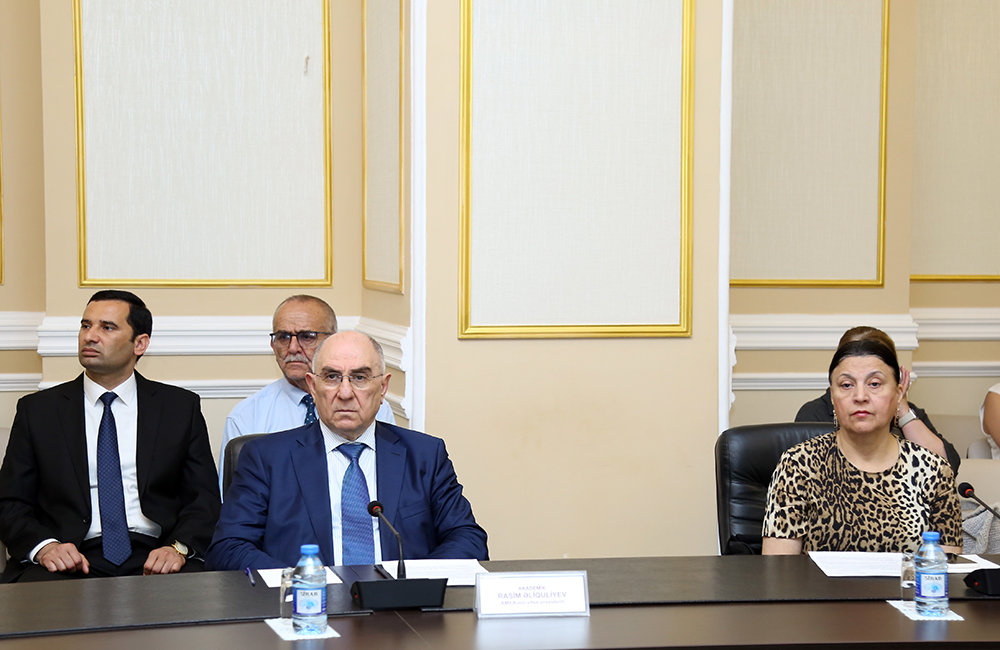
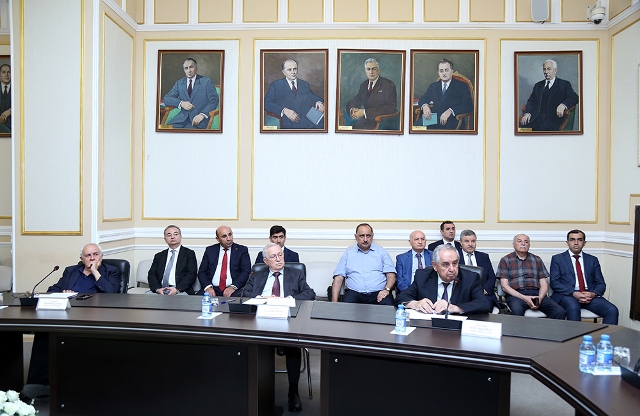
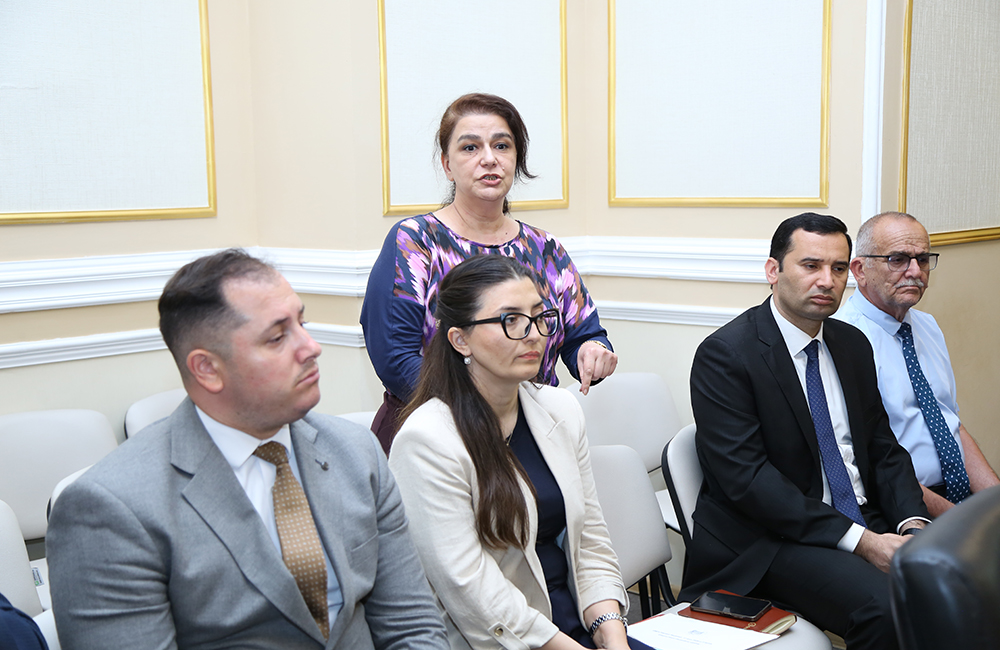
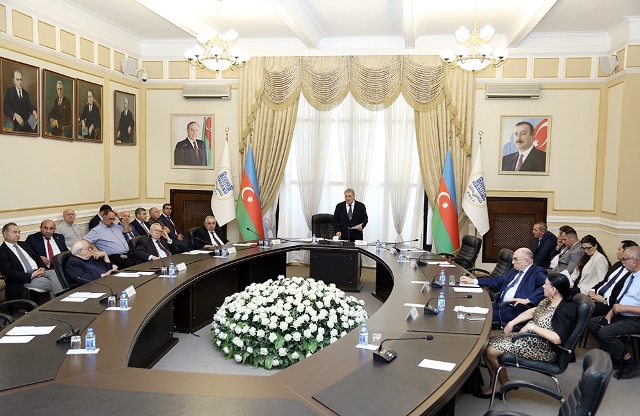
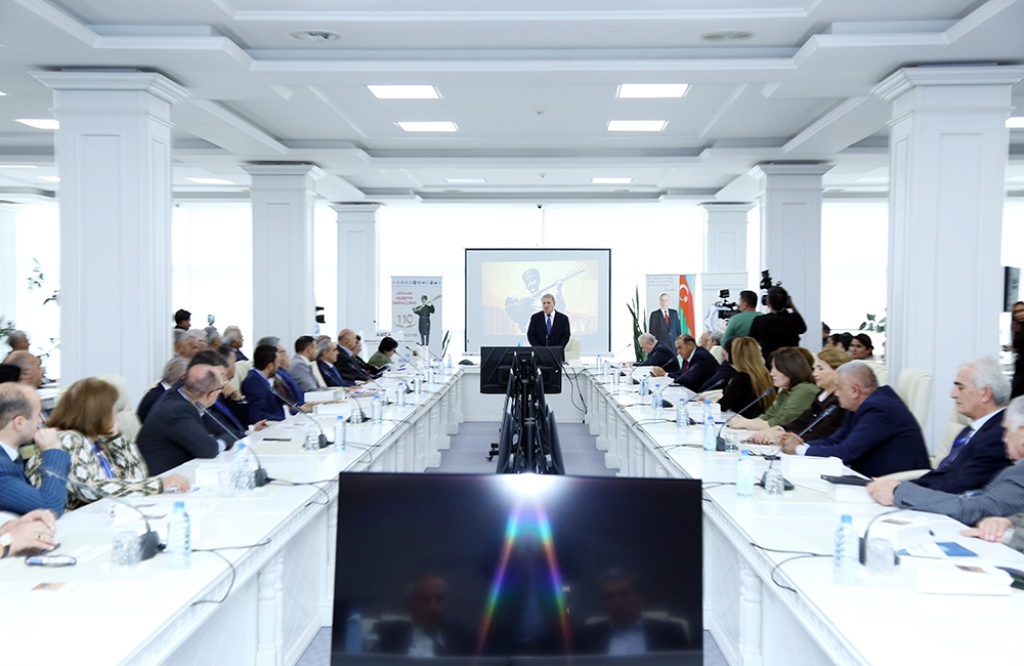
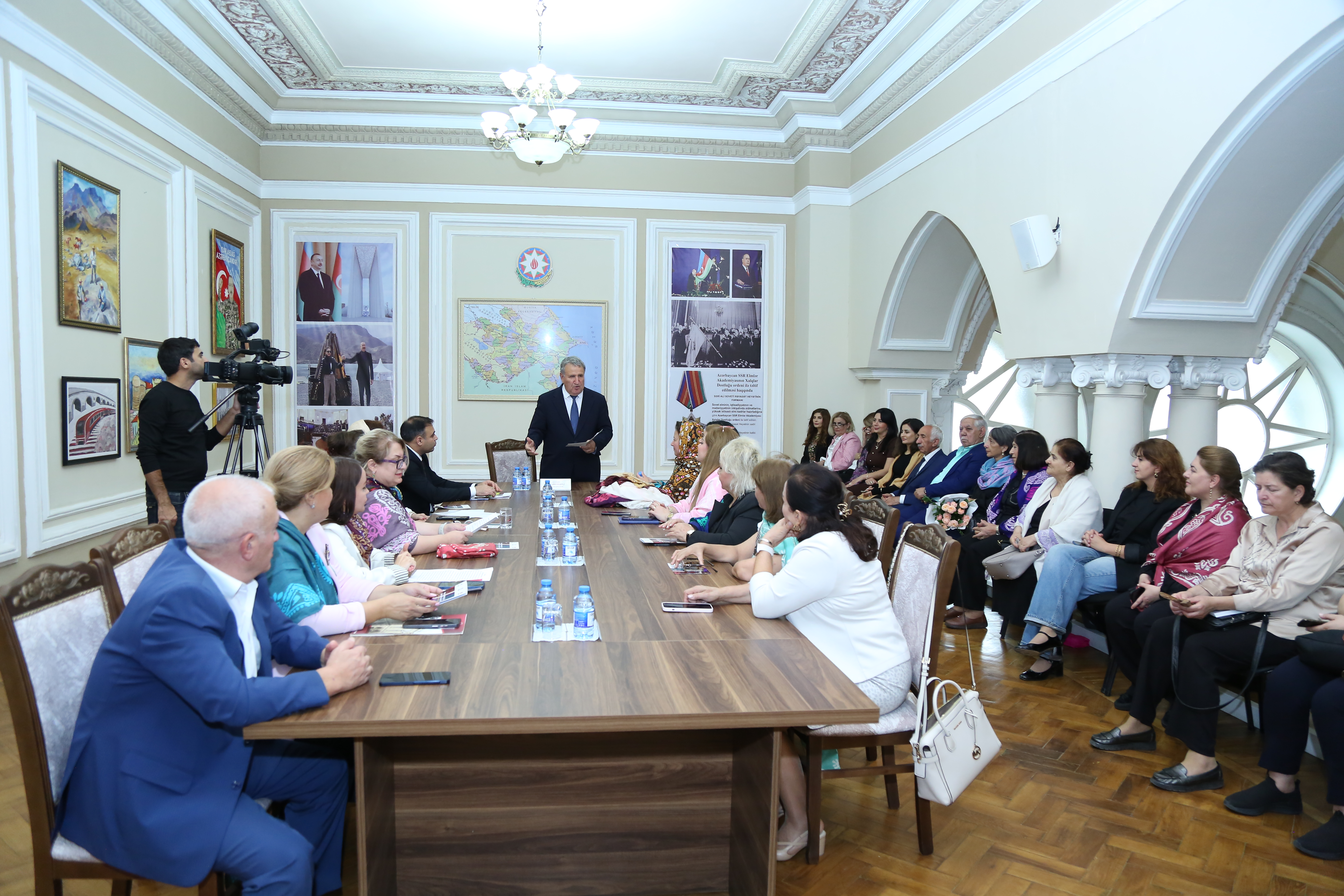
The next meeting of the Presidium of the Azerbaijan National Academy of Sciences (ANAS) was held.
Opening the meeting with an introductory speech, the President of ANAS, Academician Isa Habibbayli, provided detailed information on the scientific and scientific-organizational issues included in the agenda.
The first issue discussed at the meeting concerned the status of implementation of the semi-annual reports on the scientific and scientific-organizational activities of ANAS’s scientific institutions and organizations, as well as its regional scientific departments and centers, for the first half of 2026.
Academician Isa Habibbayli noted that semi-annual reporting has been conducted at the scientific institutions and organizations of ANAS for several years now, emphasizing that this process serves to mobilize the Academy’s scientific potential, increase the efficiency of activities, and more clearly define the tasks ahead.
He also stated that the participation of representatives of the Presidium in the reports as experts is an important step towards strengthening responsibility and coordination among scientific institutions. He noted that the obtained results are assessed in a more objective and transparent manner, thanks to both independent expert opinions and the comprehensive presentations of the institutes.
In conclusion, the head of ANAS recommended organizing a broad discussion of the semi-annual reports at the Presidium meeting to be held in July of the current year.
Speaking on the issue, the Head of the Department of Science and Education of the Presidium of ANAS, Doctor of Philology, Associate Professor Serkhan Khaveri, stated that, in accordance with the decision of the Presidium of ANAS dated June 1, 2026, the reports on scientific and scientific-organizational activities for the first half of 2026 are scheduled to be held at the Academy’s scientific institutions and organizations, as well as its regional scientific departments and centers, from June 10 to July 3, based on an approved schedule.
He noted that in recent years one of the main directions of the reforms carried out at the Academy has been to increase the result-oriented nature of scientific activity, strengthen accountability and transparency mechanisms, and apply modern approaches to scientific management. In this regard, semi-annual reports are not merely administrative events, but are also essential for evaluating the efficiency of scientific institutions and discussing development prospects.
Serkhan Khaveri added that the participation of responsible staff members from the Presidium Office of ANAS and scientific departments in the reporting meetings contributes to a more objective evaluation of reports, strengthens relations between scientific institutions and the Presidium, and enables the direct examination of local issues and development opportunities.
The department head also noted that another important innovation of the current reporting period is the planned implementation of a pilot project at the Nizami Ganjavi Institute of Literature, where reports will be conducted based on a scoring system. He emphasized that the purpose of this mechanism is to enhance objectivity in the evaluation of scientific activity and to analyze results based on measurable indicators, adding that the outcomes of the pilot project may serve as a useful experience for improving evaluation mechanisms in other scientific institutions of the Academy in the future.
The next item on the agenda concerned the evaluation of scientific activity in ANAS research institutes through a scoring system based on nominations.
Academician Isa Habibbayli provided detailed information about the new project envisaging the evaluation of scientific activity in ANAS research institutions through a scoring system according to relevant nominations. He stressed that the model, which is currently in the preparation stage, will create a healthy competitive environment within the Academy, improve the quality of scientific activity, and ensure an individual and objective assessment of each scientist’s work.
Speaking on the matter, Mehman Hasanli, Deputy Director for Scientific Affairs, Digital Development and Artificial Intelligence at the Nizami Ganjavi Institute of Literature, provided detailed information on the main directions of measuring scientific activity through a scoring system, stating that the evaluation system has been grouped based on a number of criteria.
During the discussions, the Vice-Presidents of ANAS — Academician Ibrahim Guliyev, Academician Dilgam Taghiyev, Academician Rasim Aliguliyev, Academician Govhar Bakhshaliyeva — as well as Academician-Secretary Arif Hashimov, Corresponding Member of ANAS Artegin Salamzadeh, Doctor of Historical Sciences Eynulla Madatli, Doctor of Philosophy in Biology Esmira Alirzayeva, Doctor of Philosophy in Art Studies Nazmin Jafarova, and others delivered speeches and put forward proposals aimed at improving the new model.
The meeting also considered the issue of studying the “Ilandag inscription” discovered in the Nakhchivan Autonomous Republic within the context of Urartian cuneiform writings.
Academician Isa Habibbayli emphasized the importance of re-examining this cuneiform inscription of significant scientific value discovered in Ilandag, Nakhchivan, and gave relevant instructions.
He then touched upon the official visit of the delegation led by the President of the Academy of Sciences of Albania, Academician Skender Gjinushi, to ANAS. He noted that within the framework of the visit, the prospects for expanding cooperation between the scientific institutions of the two countries, as well as implementing joint research and projects, were evaluated.
At the meeting, Vice-President of ANAS, Academician Rasim Aliguliyev, also spoke about the outcomes of his participation in the TNC-2026 international summit held in Helsinki, Republic of Finland. He stated that within the framework of the summit, large-scale events with the participation of representatives from more than 70 countries discussed in detail the role of artificial intelligence in global scientific processes, the innovative opportunities it brings, and trends in digital transformation.
Academician Rasim Aliguliyev noted that he delivered an extensive presentation at the event, informing participants about the important work carried out and achievements obtained in Azerbaijan in the direction of integration into the global scientific environment, development of national research platforms, and establishment of modern digital infrastructure within the framework of the “GEANT and Eastern Partnership Initiative.”
At the end of the meeting, the Presidium of ANAS adopted relevant decisions on other issues included in the agenda.
Translation by Gulhane Aghayeva, Department of Public Relations, Press, and Information, Presidium of ANAS.
© All rights reserved. When using the news, reference to www.science.gov.az is required.
Similar News
Links