Azerbaijan National Academy of Sciences
The first website of Azerbaijan (1995)
 Elm TV
 Photo
 Video
- A-
- A
- A+
Scientific Conference on “Alban Monuments in the Karabakh Region of Azerbaijan: Historical Reality and Armenian Falsifications” Held at ANAS
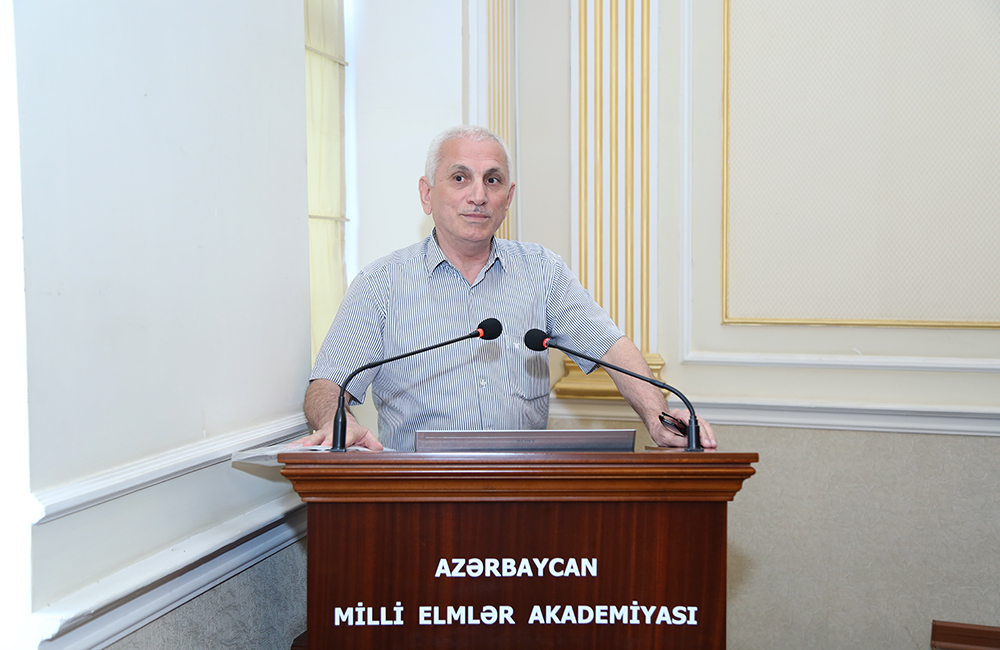
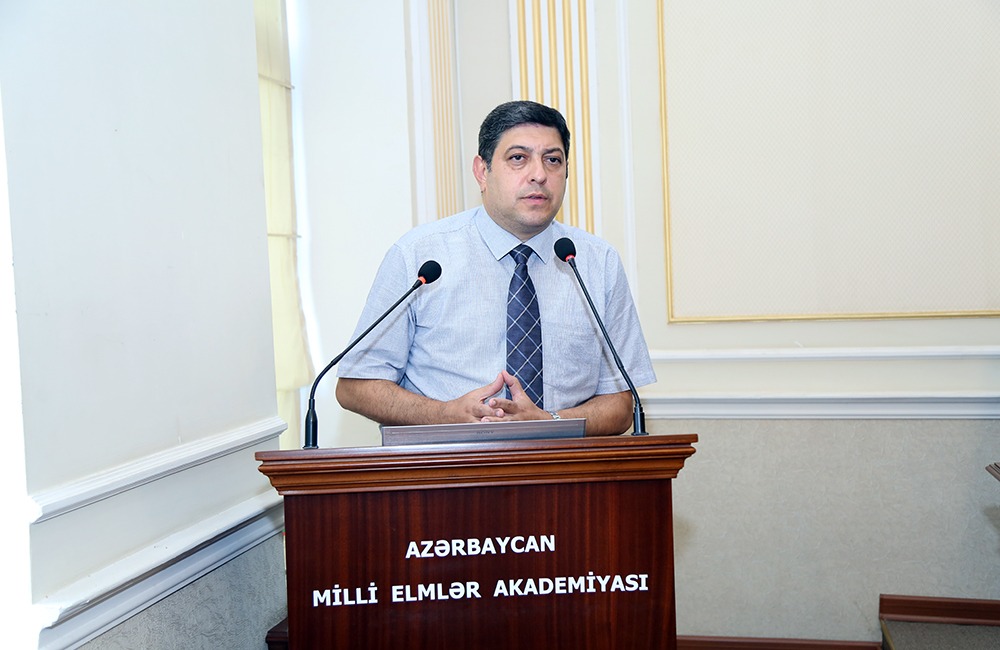
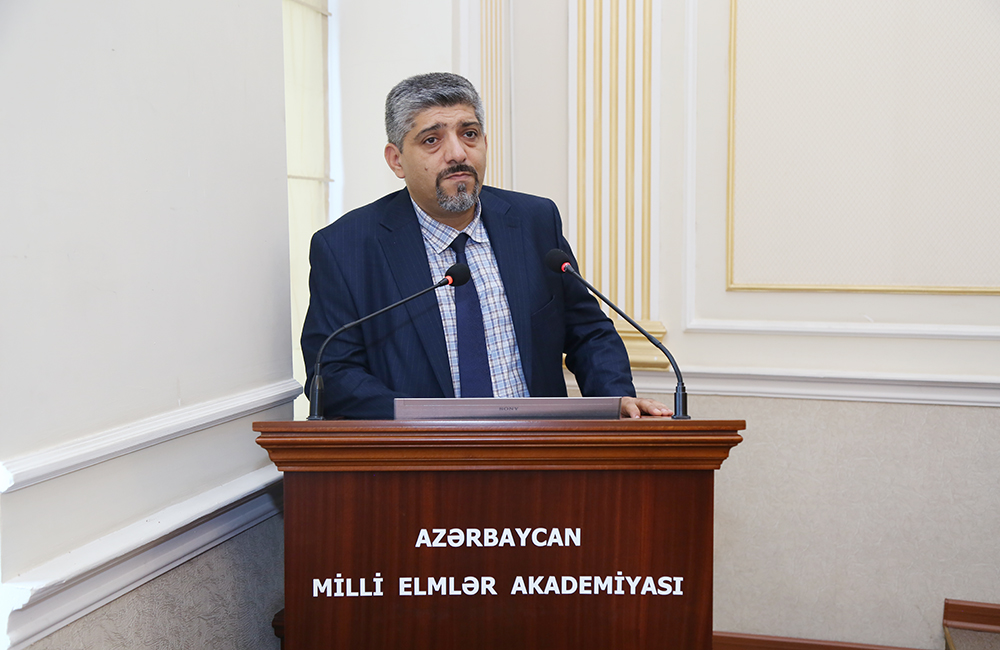
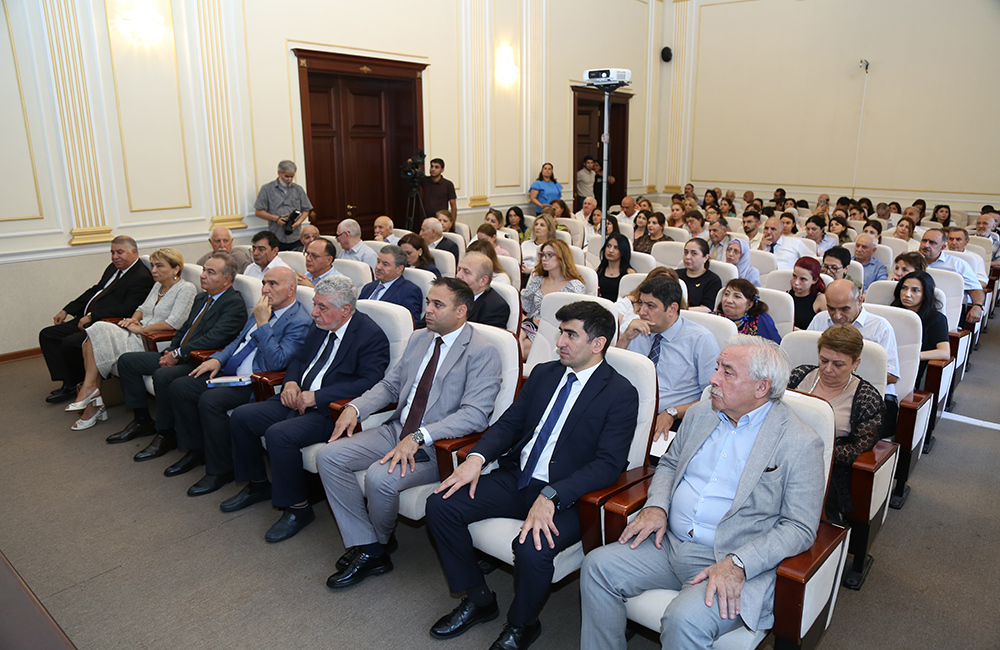
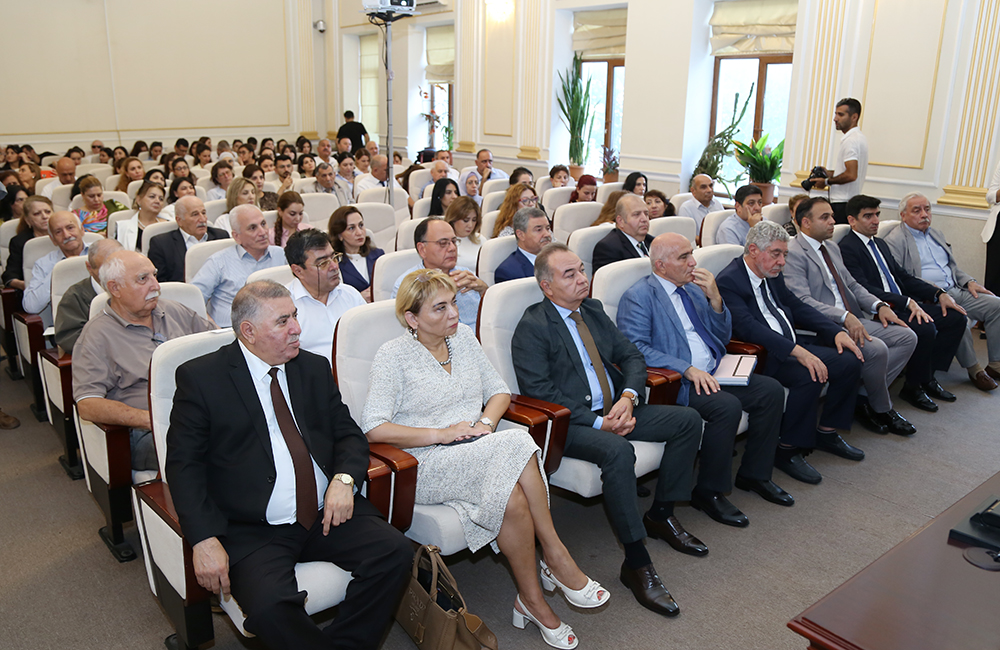
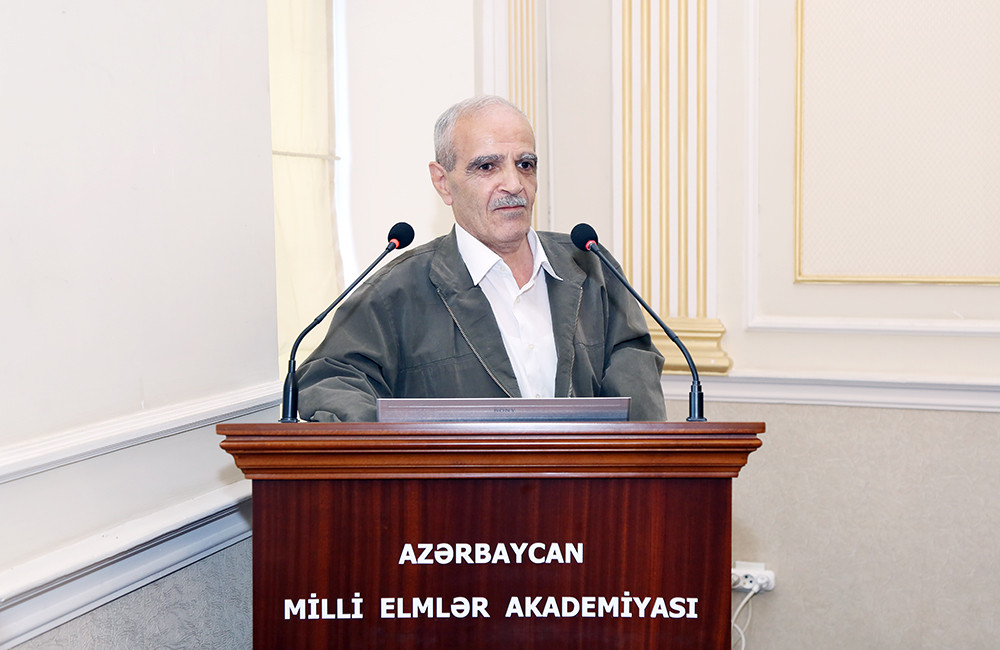
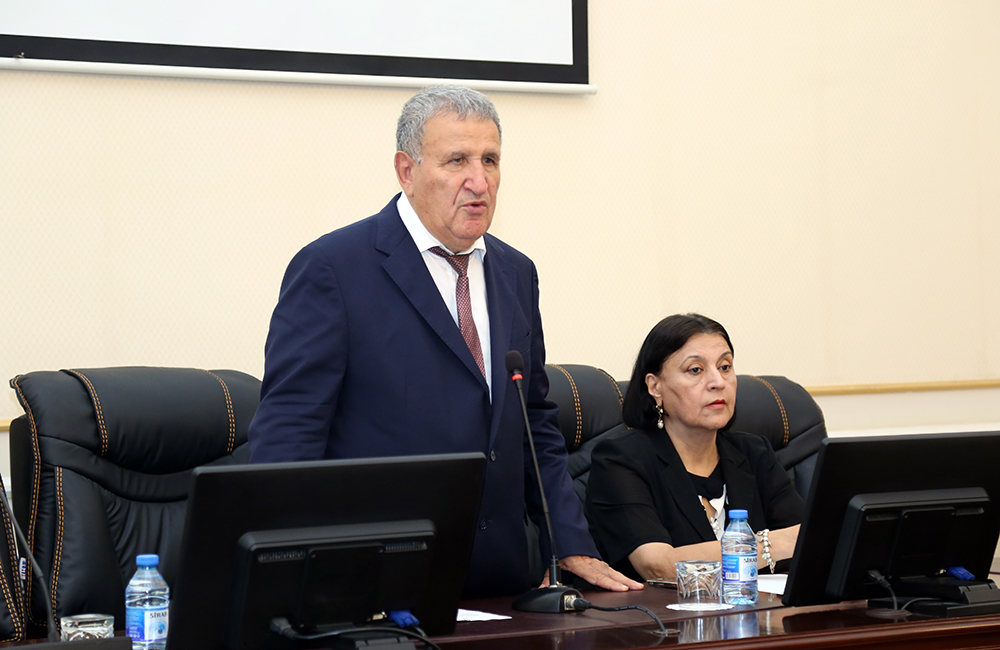
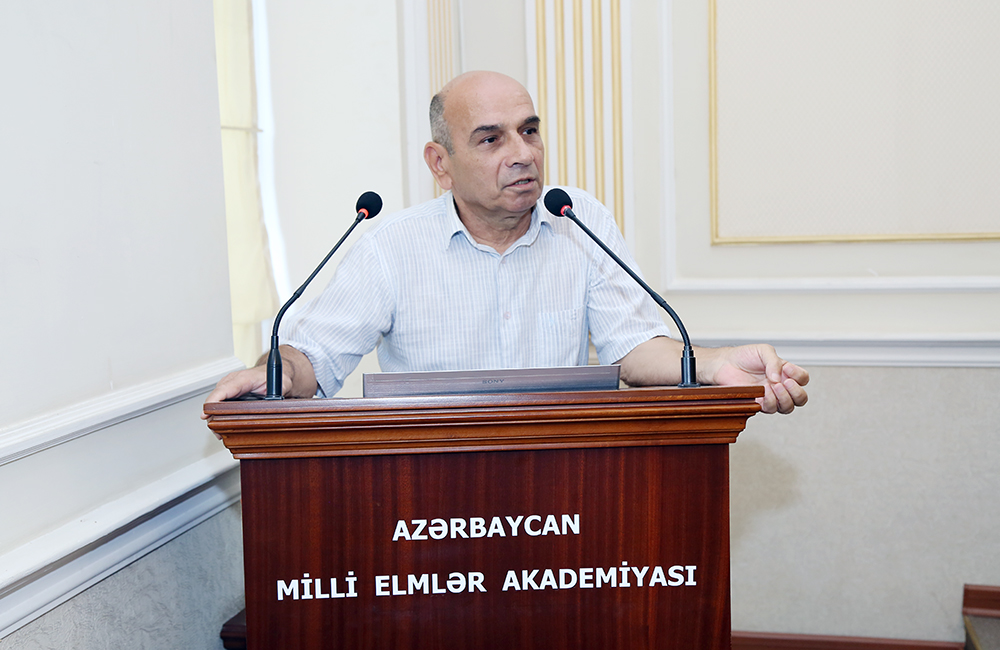
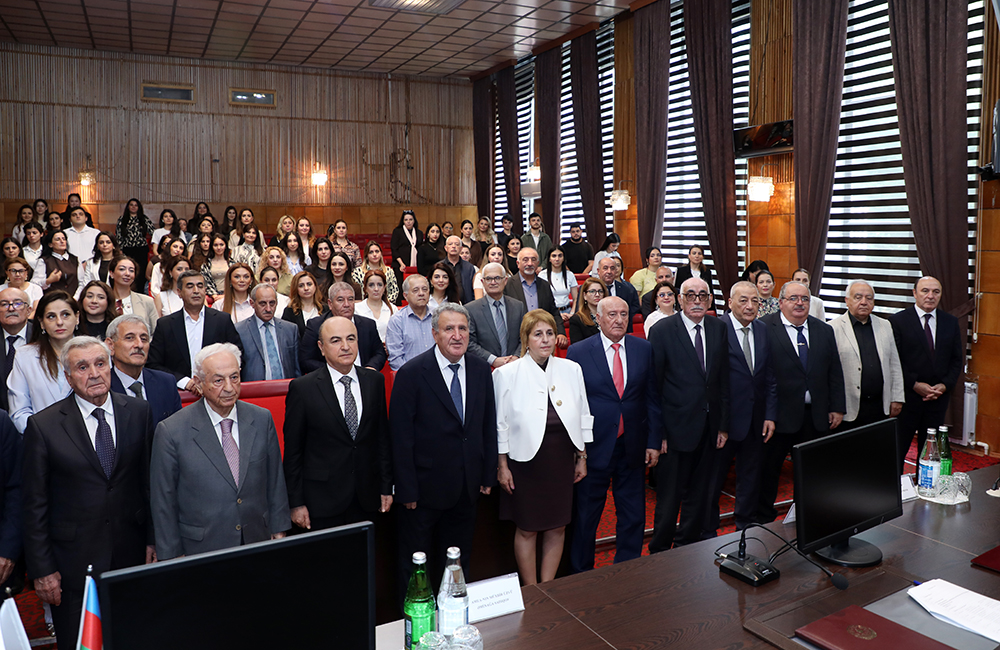
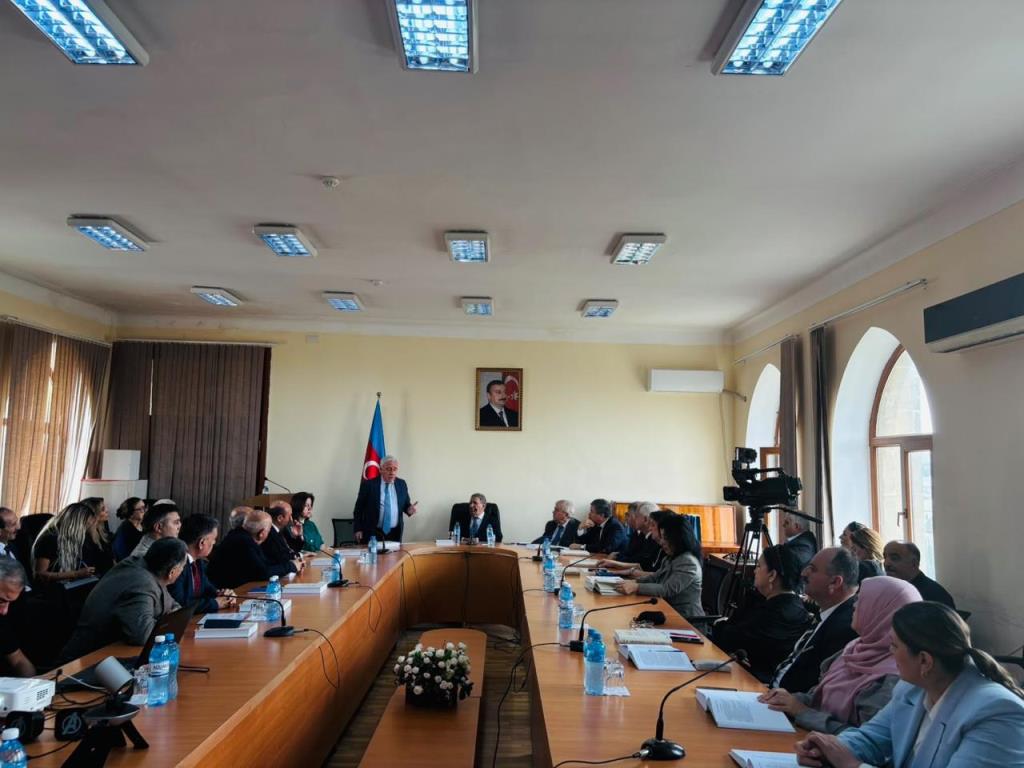
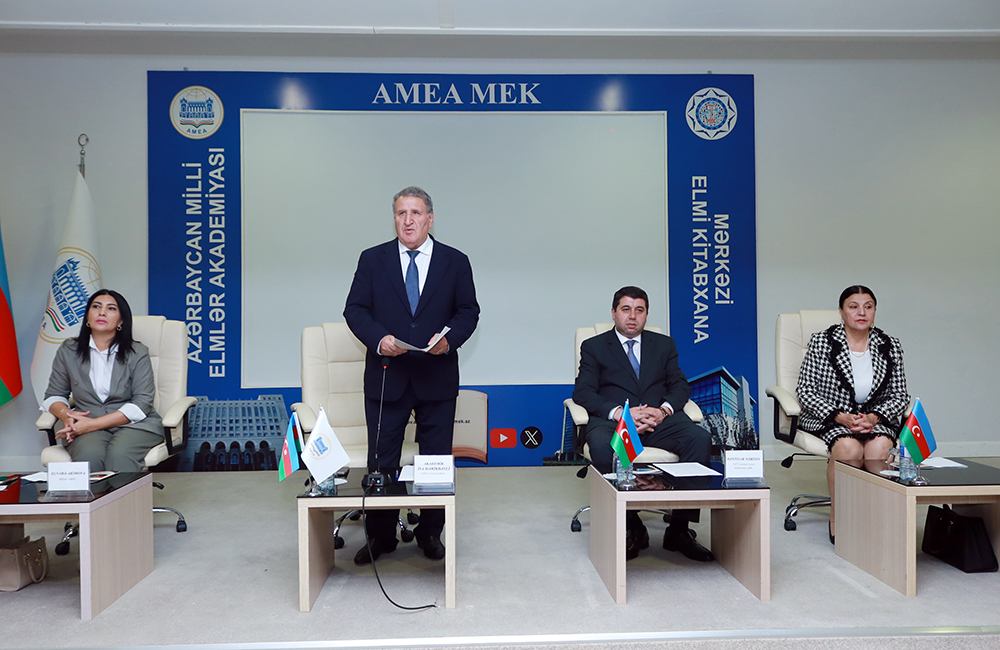
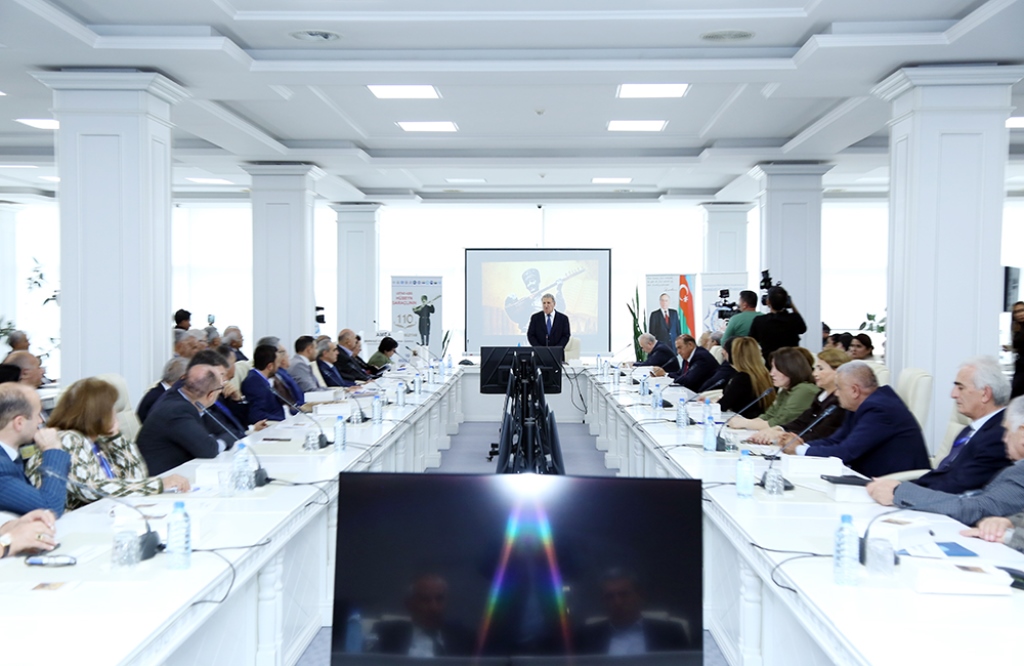
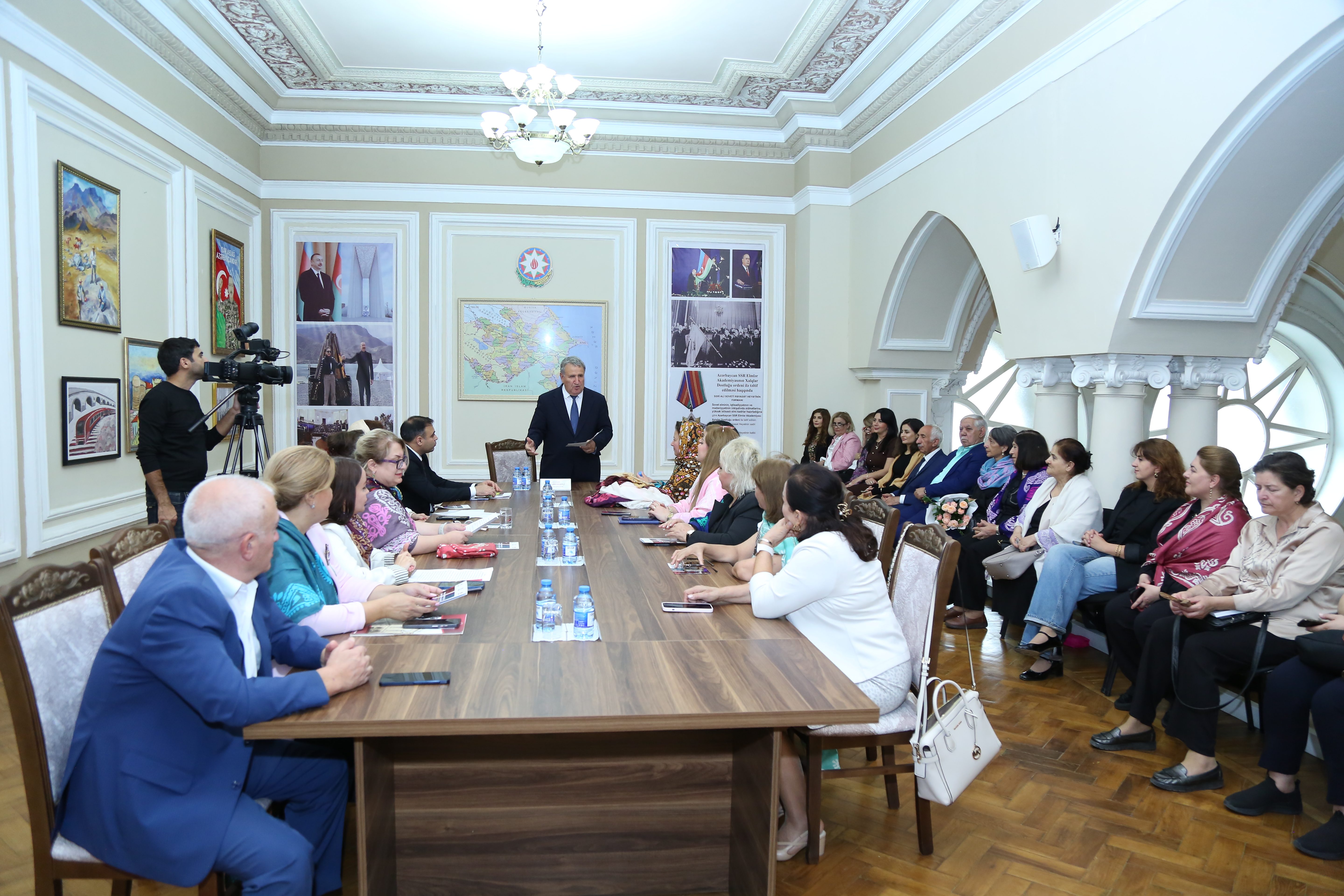
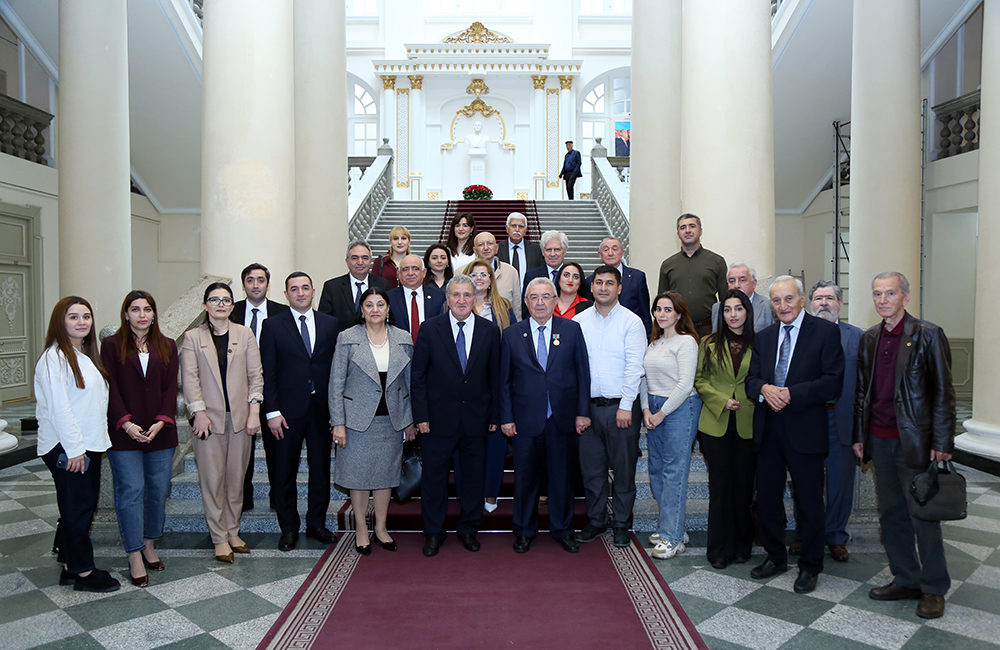
A scientific conference on “Alban Monuments in the Karabakh Region of Azerbaijan: Historical Reality and Armenian Falsifications” was held at the Azerbaijan National Academy of Sciences (ANAS).
Opening the conference with an introductory speech, President of ANAS, Academician Isa Habibbeyli, emphasized the significance of the event.
The Academician noted that attempts to portray markings and inscriptions crudely made on monuments by Armenians as dating back to ancient times clearly demonstrate that efforts have been made to falsify not only ancient history but also the recent past: “Crude artificial interventions are being made to historical monuments, and false inscriptions are being carved on them. Genuine historical inscriptions were once removed and taken to Yerevan, altered, and the original texts of the monuments were distorted. Even in recent years, these monuments have deliberately been damaged in an attempt to create a false impression that they belong to Armenian heritage. All of this is yet another clear example of unfounded Armenian claims regarding the history of Caucasian Albania and historical falsification.”
Academician Isa Habibbeyli stated that following the liberation of the territories from occupation, archaeological expeditions had been organized by the Institute of Archeology and Anthropology of ANAS and large-scale excavations had commenced in the area. He noted that Azerbaijani scholars had begun to conduct in-depth and scientifically grounded research into Alban monuments in accordance with the requirements of the period of independence: “It is precisely the uncovering of these scientific truths that seriously concerns the Armenian side. For this reason, Armenian falsifications have become active again, and recently, artificial and unfounded claims have been put forward with the aim of appropriating the ancient Alban monuments located in the liberated territories of Karabakh and Eastern Zangazur and misleading the international community.”
The Academician stated that the situation had placed important and urgent tasks before Azerbaijani scholars. These tasks include providing prompt and decisive responses to every unfounded claim raised and further deepening systematic and fundamental research on Caucasian Albania at the Academy.
The head of ANAS also noted that specialized departments studying the heritage of Caucasian Albania currently operate both at the Institute of History and Ethnology and at the Institute of Archeology and Anthropology of ANAS. In addition, some time ago, online classes on the teaching of the ancient Albanian language were organized through the initiative of the Institute of History and Ethnology and with the organizational support of the Baku International Multiculturalism Centre. Such initiatives are of particular importance in enabling new generations to study the genuine roots of their historical culture in depth and preserve scientific truths.
Academician Isa Habibbeyli noted that the claims put forward by the Armenian side concerning the monuments of Caucasian Albania located in the territory of Azerbaijan are categorically rejected as unscientific and historically unfounded.
Then, Director of the Institute of Archeology and Anthropology, PhD in History, Associate Professor Farhad Guliyev, delivered a speech on “Attempts by Armenians to Falsify the Historical and Cultural Monuments of Karabakh and Zangazur and Historical Realities.” The scholar spoke about the work carried out to ensure the objective study of archaeological materials obtained during the research of historical and cultural monuments in the territories of Karabakh and Zangazur.
Farhad Guliyev noted that immediately after the liberation of Karabakh and Eastern Zangazur from occupation, archaeological expeditions began operating in the area and presented their initial findings, as well as a classification of the crimes committed by the Armenian occupiers against Azerbaijani monuments, to the public.
The Institute’s director stated that one of the systematic and deliberate crimes committed against Azerbaijan’s heritage during the occupation was the attempt to associate Bronze Age and earlier settlements and burial mounds with the ancestors of Armenians through alleged archaeogenetic studies, thereby creating a false impression that Armenians were the earliest inhabitants of the region. The second was the policy of forcibly altering the architectural details of Alban temples and monasteries dating to the Christian period and completely Armenian-Gregorianizing them in religious and cultural terms. The third was the complete destruction of mosques and cemeteries belonging to the Azerbaijani people or, in the case of monuments that could not be destroyed, portraying them as the heritage not of Azerbaijanis but allegedly of other Muslim peoples, particularly as part of Iranian culture.
The scholar emphasized that Azerbaijani archaeologists had already launched extensive research in the districts of Khojavand, Kalbajar, and Aghdara. In particular, archaeological excavations conducted at the State Historical-Architectural Reserve in the village of Tug, Khojavand District, at the palace complex of the Albanian princes, as well as at Ancient Alban Christian monuments Nos. 2 and 3 in the area and in the villages of Hadrut and Chanagchi, make it possible to expose Armenian falsehoods through scientific evidence.
Ramil Agayev, Head of the Atropatena–Albania History Department at the A.A. Bakikhanov Institute of History and Ethnology of ANAS, Doctor of Historical Sciences, Associate Professor, delivered a presentation entitled “On the Material and Cultural Heritage of Caucasian Albania.” He highlighted facts concerning the Christian heritage of the state of Caucasian Albania, the fundamental theological differences between the Alban and Armenian churches, as well as historical facts that Armenian historians have been unable to conceal even in their own sources.
The speaker stated that historical chronicles, including the work of Movses Kaghankatvatsi, confirm that the Albans adopted Christianity centuries before the Armenians. At the same time, he emphasized that the churches belonged to entirely different religious traditions. The scholar noted that attempts by Armenians to appropriate monuments in Karabakh and Nakhchivan solely through inscriptions and alphabets contradict international scholarly principles: “Although a large part of the population adopted Islam following the collapse of the Albanian state, the material heritage of the Albans who preserved their Christian traditions, as exemplified by the Principality of Khachen, differs fundamentally from Armenian monuments. Unlike Gregorian monuments, Alban khachkars and burial monuments feature symbols of the Moon, Sun, and birds, reflecting elements of ancient worldviews. It can be seen that the names inscribed on the majority of burial monuments in the area belong not to Armenians but directly to historical figures of Albanian origin.”
Later, Ramin Alizade, Head of the Department of Ancient History of Azerbaijan at the Institute of History and Ethnology, delivered a report entitled “The Policy of Cultural Genocide in Modern Armenia and Caucasian Albania.” He stated that one of the most significant misconceptions in the study of Caucasian Albania is the examination of the ancient history and culture of this state within the context of modern borders: “This approach represents the greatest blow inflicted on Albanian studies by researchers of Armenian origin during the Soviet period. Studying ancient history within modern borders essentially means distorting and falsifying it. Meanwhile, artefacts discovered through archaeological excavations, historical, cultural, and religious monuments located above ground, as well as information reflected in written sources, expose this falsification.”
The scholar stated that near the city of Van in the Republic of Türkiye, there are around 200 inscriptions on an ancient rock and that, during their visit, they observed inscriptions written in the Urartian language: “At the historical site where the rock inscriptions are located, some of these inscriptions, which had previously been recorded by the expeditions of Joseph Orbeli and Nikolai Marr, were deliberately damaged by Armenians at a later stage in an attempt to erase the traces. However, photographic documentation and the original publications of the texts have been preserved in scholarly circulation. Alongside the country of Albania, these inscriptions also list other ancient geographical names associated with the Lake Goycha basin and the Karabakh region.”
In his speech, Ramin Alizade emphasized that the mention of the country of Albania in Urartian cuneiform inscriptions places the historical scope of Caucasian Albania far earlier than the Christian period and fundamentally challenges claims to appropriate this heritage solely within the framework of church history.
At the conference, Ramil Niftaliyev, Leading Researcher at the Department of Northern Azerbaijan in the 19th and Early 20th Centuries of the Institute of History and Ethnology, PhD in History, Associate Professor, delivered a report entitled “The Struggle of the Albanian Catholicoses of Caucasian Albania Against the Gregorianization of Albanian Churches.” The report focused on the historical development of the Albanian Church, the activities of the Albanian Catholicoses, and the historical struggle to preserve the religious and cultural identity of the churches.
Ramil Niftaliyev stated that the Albans, as an indigenous people of the Caucasus, had left an indelible mark on the ethnogenesis of the Azerbaijani people and the history of statehood. He noted that, according to the confession of Armenian Catholicos Avraam recorded in the chronicle “History of Albania,” the Albanian patriarchal throne was considerably older than the Armenian one. In addition, the early religious centres of the Albanian Catholicosate operated precisely in the historic Azerbaijani cities of Gabala and Chola (Derbent).
At the conference, Telman Ibrahimov, Leading Researcher at the Department of Fine, Decorative and Applied Arts and Heraldry of the Institute of Architecture and Art of ANAS, PhD in Art Studies, Associate Professor, delivered a presentation entitled “Periods of Cultural Development of Caucasian Albania.” He addressed various stages of the cultural development of Caucasian Albania and spoke about architectural, fine-art, and decorative and applied art examples from the period.
The speaker noted that Alban sculpture encompasses the primitive, ancient, and early medieval periods. He stated that the philosophy underlying the creation of the sculptures was associated with notions of animism, totemism, protective and sympathetic magic, while in the early medieval period it was directly connected, alongside Christianity, with the ancient Turkic worldview.
In his presentation, the scholar demonstrated that the motifs of a deer, a calf, and an attacking wolf found in Mingachevir and dating to the Scythian period of the 7th–6th centuries BC were repeated in virtually identical form approximately two thousand years later in 13th-century monuments of Shirvan. He stated that this fact provides compelling evidence that, despite changes in periods and religions, the artistic ideas of Azerbaijani and Caucasian Albanian art constituted a profound and unbroken unity.
At the conclusion of the conference, President of ANAS, Academician Isa Habibbeyli, instructed that a comprehensive Action Plan be prepared at the Academy for the publication of the conference materials, the fundamental study of the heritage of Caucasian Albania, and the organization of systematic scholarly efforts to combat Armenian falsifications.
Academician Isa Habibbeyli emphasized that the document to be prepared should give particular attention to ensuring the material and technical equipment of archaeological expeditions so that research can be conducted in accordance with the requirements of modern world science. At the same time, the preparation of fundamental scholarly works reflecting the results of the research, as well as their publication in reputable international journals and their broad dissemination, should be identified as key priorities of the Action Plan.
Translation by Gulhane Aghayeva, Department of Public Relations, Press, and Information, Presidium of ANAS.
© All rights reserved. Reference to www.science.gov.az is required when using these materials.
Similar News
Links