Azerbaijan National Academy of Sciences
The first website of Azerbaijan (1995)
 Elm TV
 Photo
 Video
- A-
- A
- A+
Important Research Has Been Conducted in Azerbaijani Historiography to Determine the Borders of Albania
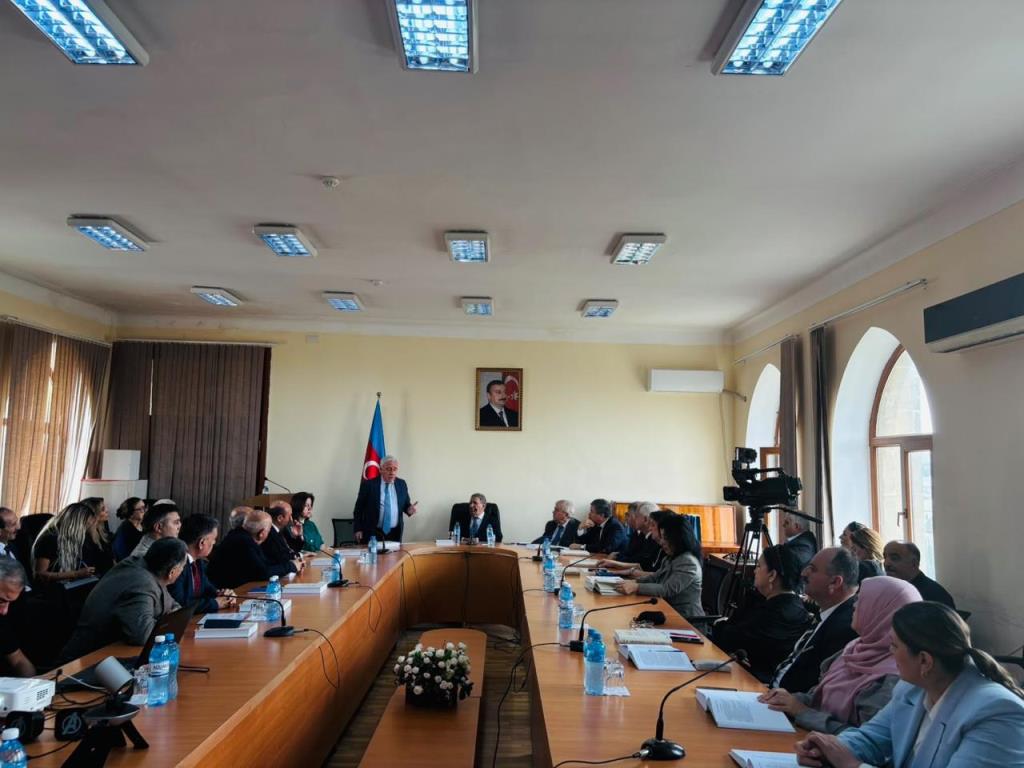
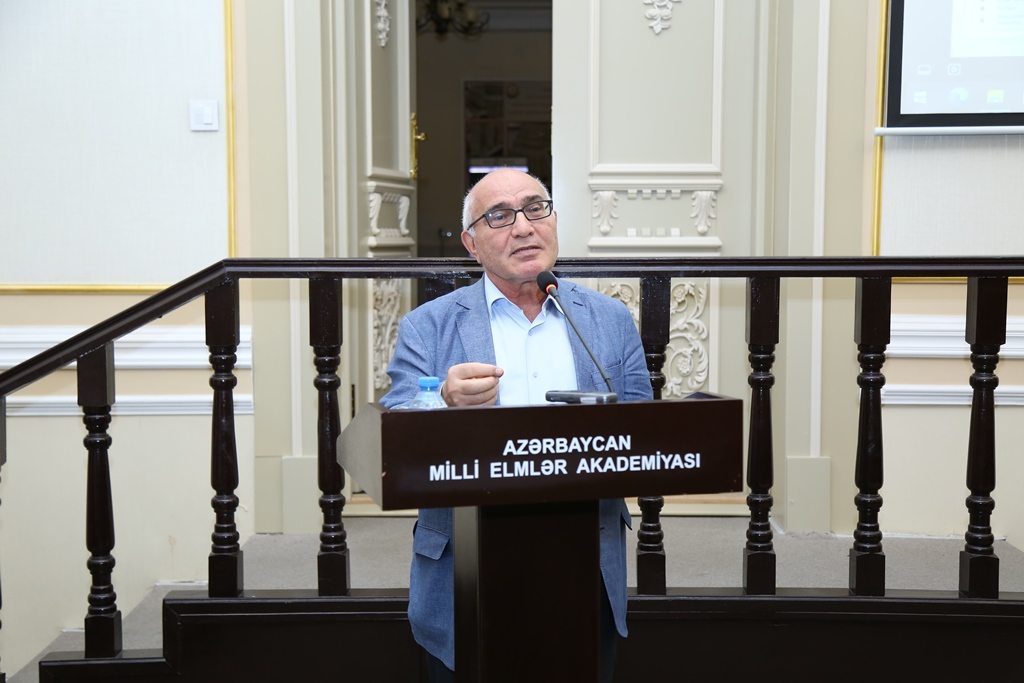
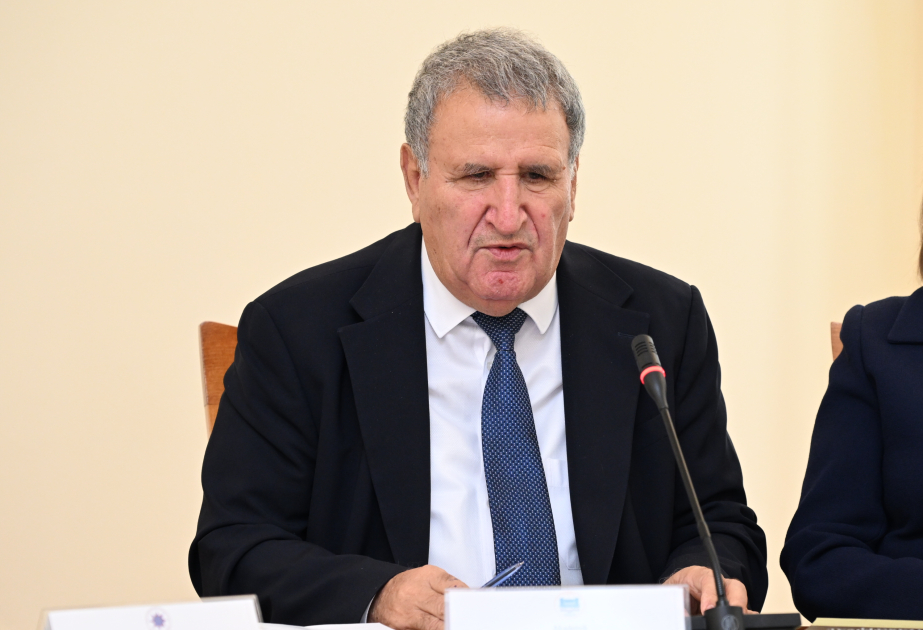
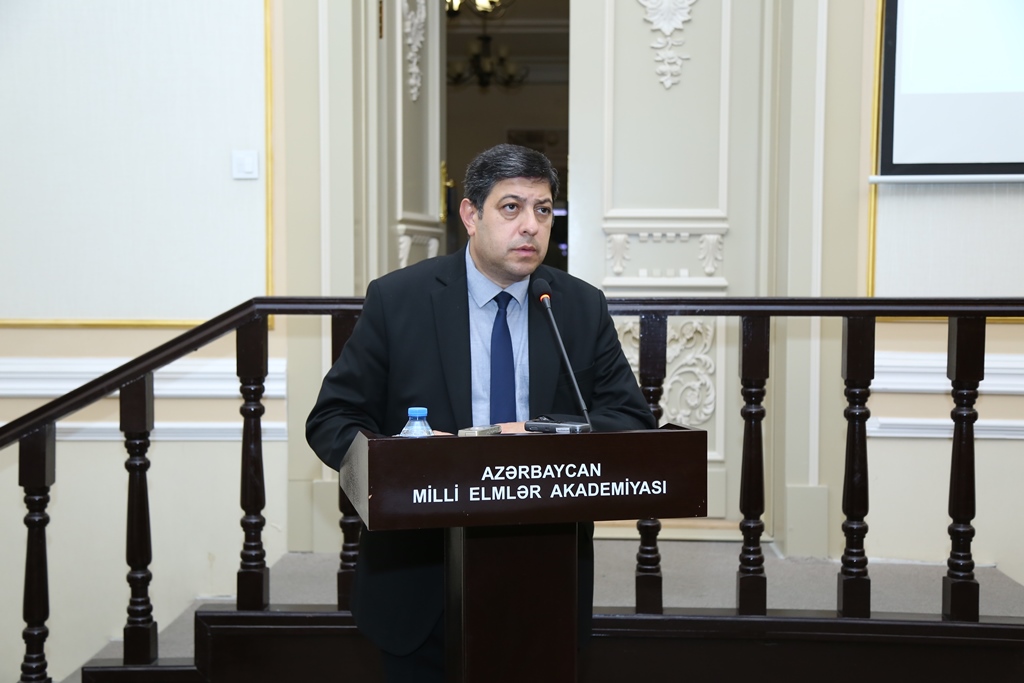
Speaking during a discussion on “Archaeological Study of Albanian Monuments in Karabakh: Results and Tasks” held at the next meeting of the Presidium of the Azerbaijan National Academy of Sciences (ANAS), Professor Karim Shukurov, Director of the Institute of History and Ethnology of ANAS named after Abbasgulu Agha Bakikhanov, shed light on issues related to the history of Caucasian Albania, the ethnic and religious transformation of the Albanians, and the territory, language, religion, and material and cultural heritage of the state.
The scholar stated that the existence of the Albanian state came to an end in 705, when the last Albanian ruler was taken to Samarra, the center of the Caliphate, and executed. Karim Shukurov emphasized that the Albanians constituted a confederation comprising various tribal unions and that, following the collapse of the state, this population continued to exist under the influence of various historical processes.
He noted that following the weakening and fragmentation of the Arab Caliphate in the mid-9th century, the first Muslim states emerged in Azerbaijan. During this period, a struggle to restore the Albanian Kingdom also began. Karim Shukurov stated that one of the most important stages of this process was associated with the Albanian-Khachen Principality, which emerged in the late 12th and early 13th centuries. The scholar said that the construction of the Gandzasar Monastery began in the 13th century and that the Albanian-Khachen Principality subsequently fragmented into five melikdoms. He emphasized that presenting these melikdoms, which existed in the mountainous part of Karabakh, solely as Armenian melikdoms constitutes a one-sided approach to history.
Karim Shukurov stated that following the Treaty of Turkmenchay of 1828, the mass migration of Armenians to the South Caucasus, including the mountainous part of Karabakh, began, and that subsequent developments resulted in the de-ethnicization of the Albanian population living in those territories.
Addressing the issue of territory, the speaker noted that important research has been conducted in Azerbaijani historiography to determine the borders of Albania. Professor Karim Shukurov stressed the importance of conducting a special study of the history of the spread of Christianity in Albania. He particularly emphasized the contributions of Academician Ziya Bunyadov to the study of these issues. Karim Shukurov noted that Ziya Bunyadov’s concept concerning the Gregorianization of the Albanians in the 7th–9th centuries and subsequent ethnic processes occupies an important place in Azerbaijani historiography.
The scholar also stated that historical documents exist demonstrating that the Albanians identified themselves as Albanians. He noted that in 1701, the Albanians addressed Peter I, identifying themselves as Albanians.
Touching upon the issue of monuments, the scholar stated that the Albanian heritage is not limited to the monuments of the state that existed from the 4th century BC to 705 AD. According to him, Albanian Christian monuments dating to subsequent periods have also survived until the 19th century, and there is a need for the systematic study of this heritage.
Translation by Gulhane Aghayeva, Department of Public Relations, Press, and Information, Presidium of ANAS.
© All rights reserved. When using these materials, reference to www.science.gov.az is required.
Similar News
Links