Azerbaijan National Academy of Sciences
The first website of Azerbaijan (1995)
 Elm TV
 Photo
Photo
 Video
Video
- A-
- A
- A+
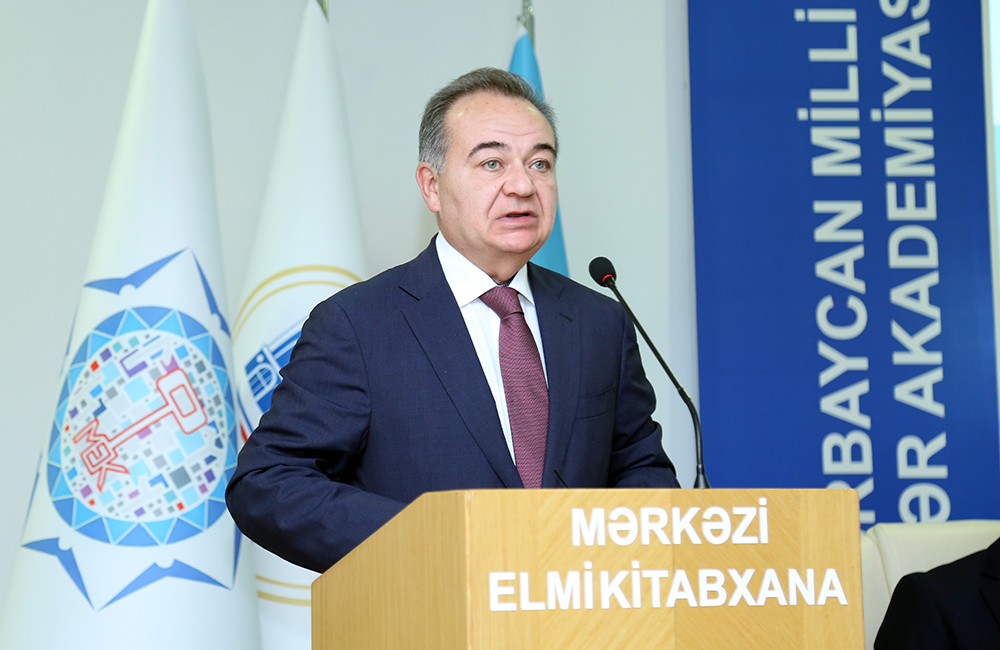
Ertegin Salamzade, Corresponding Member of ANAS: “Music Constitutes One of the Key Semantic Layers of Turkic Culture”
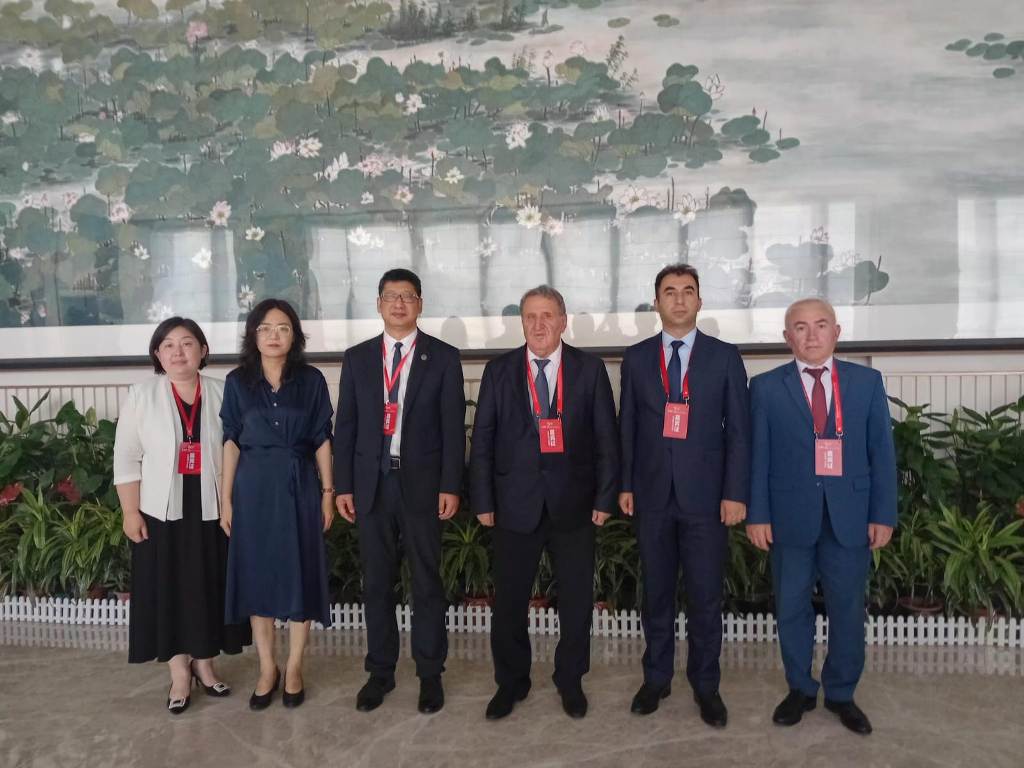
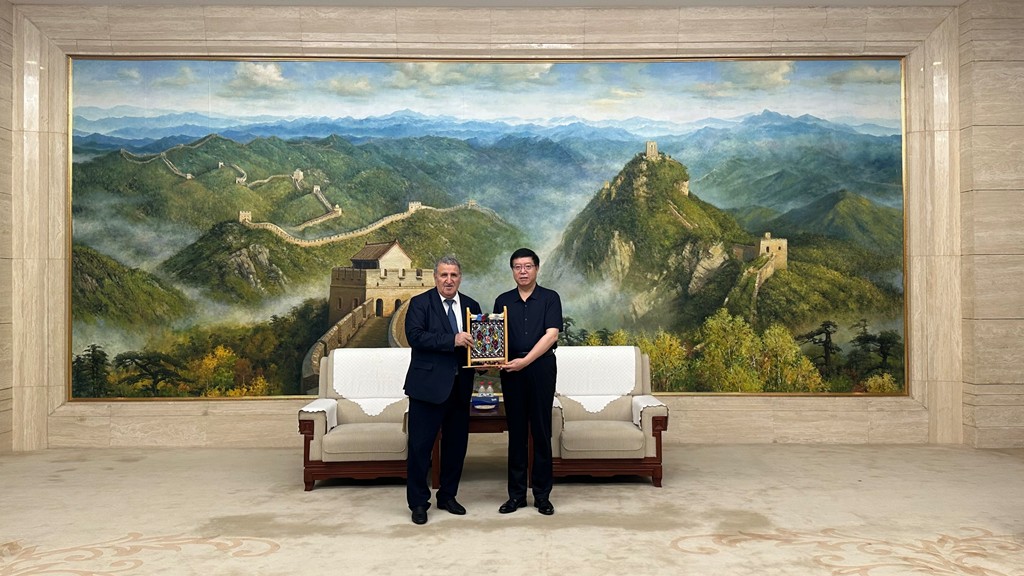
Ertegin Salamzade, Director of the Institute of Architecture and Art and Corresponding Member of ANAS, delivered a speech at the 1st International Turkic World Symposium on Traditional Music and Cultural Identity.
In his address, the scholar emphasized that traditional music is one of the core indicators of national identity. He noted that music constitutes a major part of traditional art as a whole and plays a significant role in an ethnos’ self-perception, differentiation, and consolidation of its cultural features.
Ertegin Salamzade stated that cultural identity in the Turkic world is shaped at two levels: at the national level of individual peoples and within the framework of a common Turkic identity. Referring to the great states and vast geographies created by ancient Turks, he highlighted the historical depth of the pan-Turkic identity based on territory and language. He stressed that the extensive civilizational space formed by the Turks, as well as the factor of a shared language, played a major role in developing a common Turkic identity.
The Director underlined that modern Turkology is no longer limited to linguistics; it now encompasses fields such as folklore, art, architecture, ethnography, philosophy, and archaeology. He noted that new methodological approaches are needed to systematize the rich materials of Turkic culture and pointed out that a new scientific direction, “Turkological Art Studies,” is emerging in this context.
Professor Ertegin Salamzade added that the modern approach does not hinder the study of each Turkic people’s uniqueness; on the contrary, it allows for a deeper exploration of a unified Turkic culture: “To study the culture of one people means to study Turkic culture as a whole.”
The scholar concluded by stressing that the integrated study of Turkic culture opens new scientific perspectives, and that traditional music constitutes one of the key semantic layers of this great civilization.
Translation by Gulhane Aghayeva, Department of Public Relations, Press, and Information, Presidium of ANAS.
© All rights reserved. Reference to www.science.gov.az is required when using materials from this site.
Similar News
Links