Azerbaijan National Academy of Sciences
The first website of Azerbaijan (1995)
 Elm TV
 Photo
Photo
 Video
Video
- A-
- A
- A+
ANAS Ganja Branch Reports on Its Activities in 2025

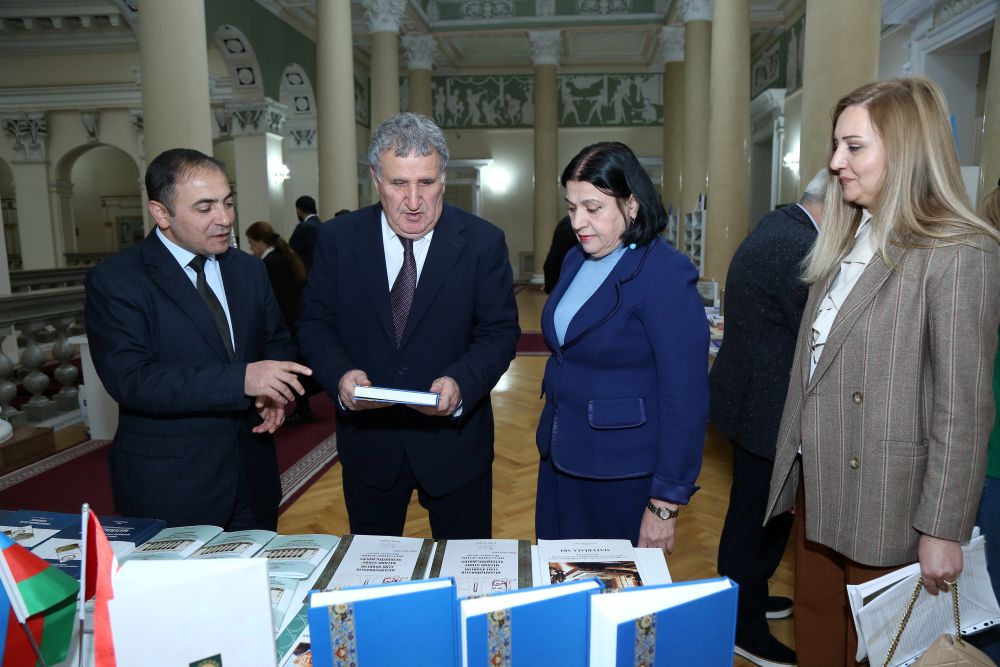
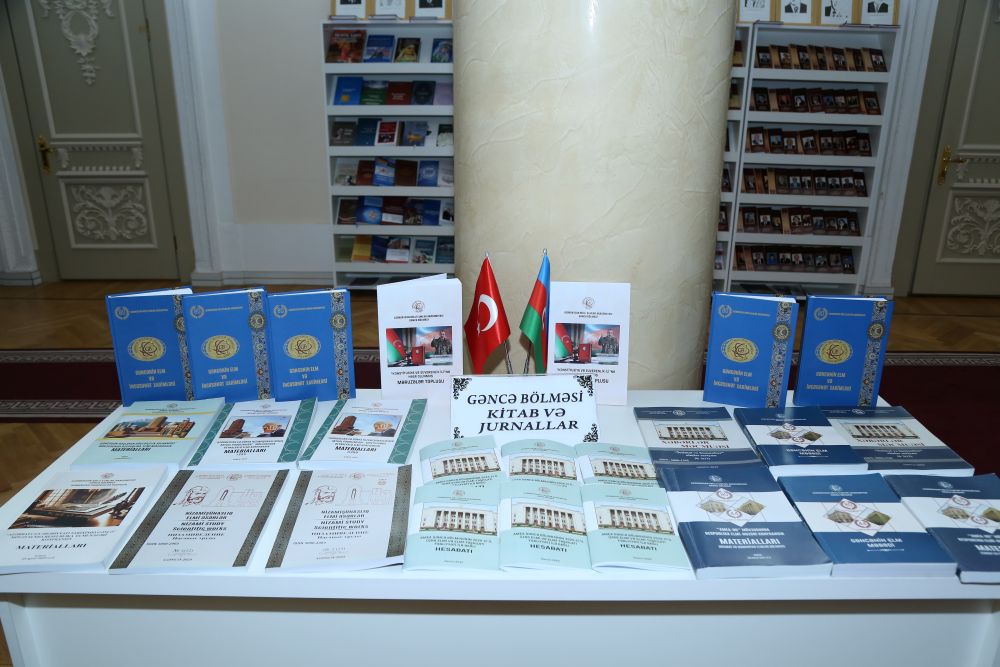
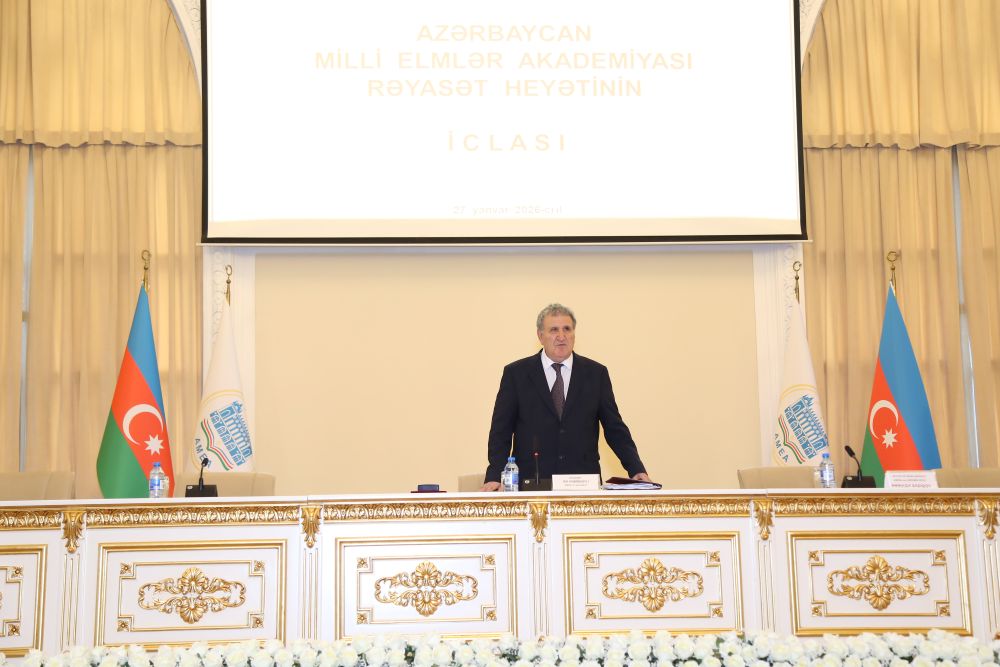
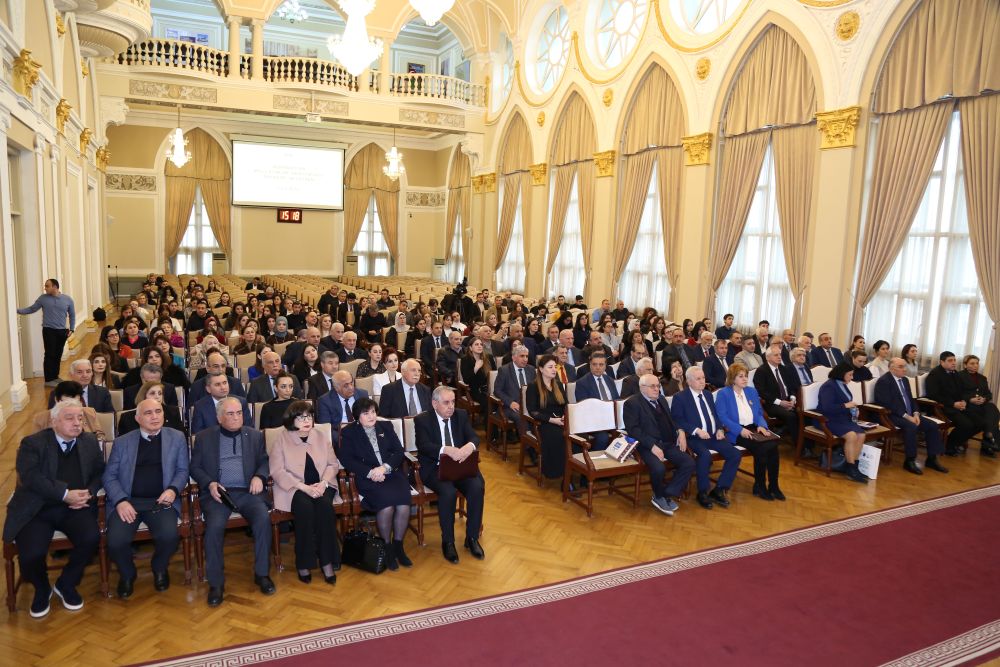
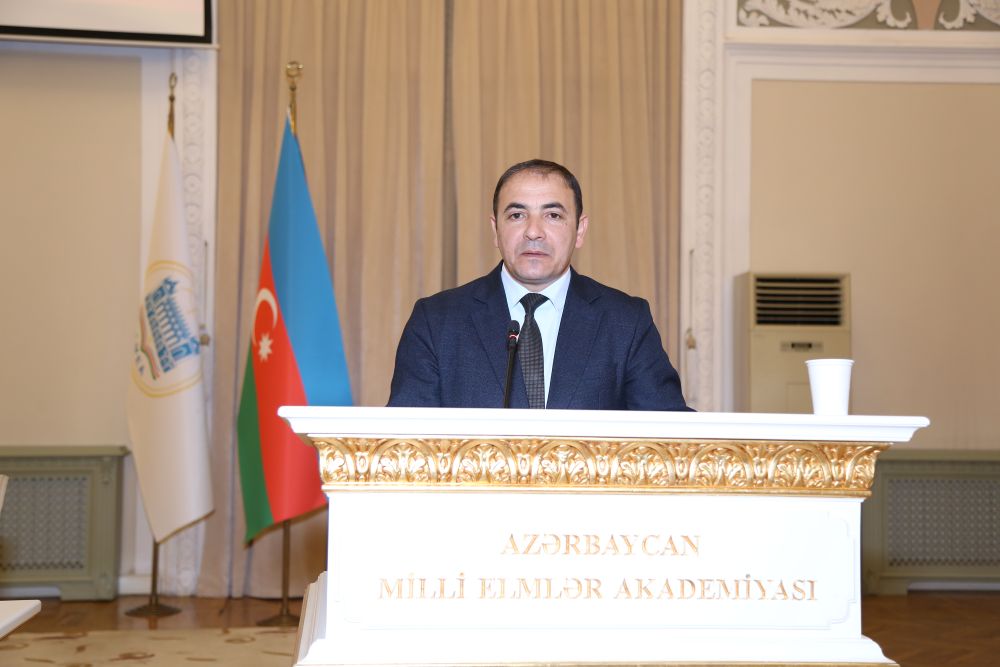

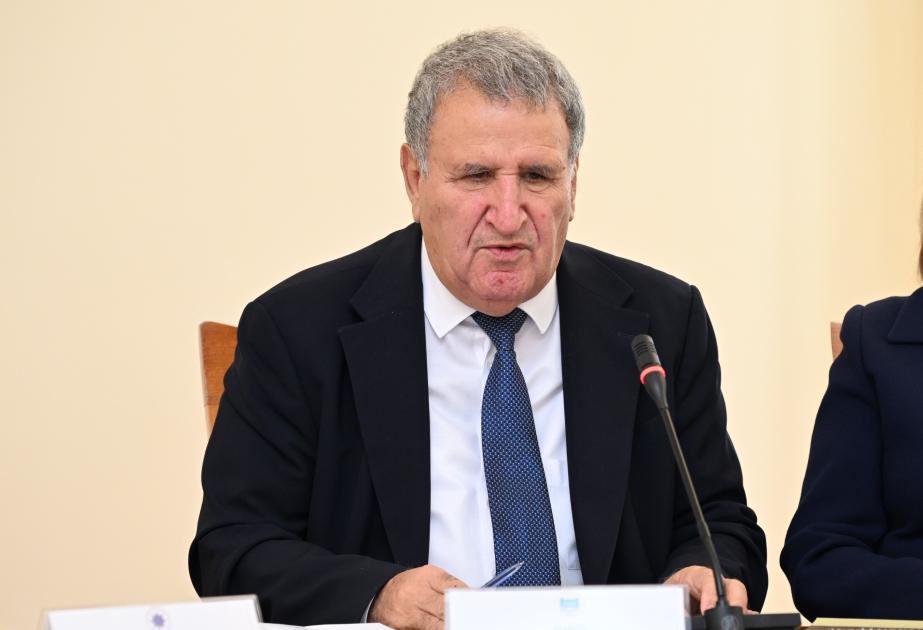
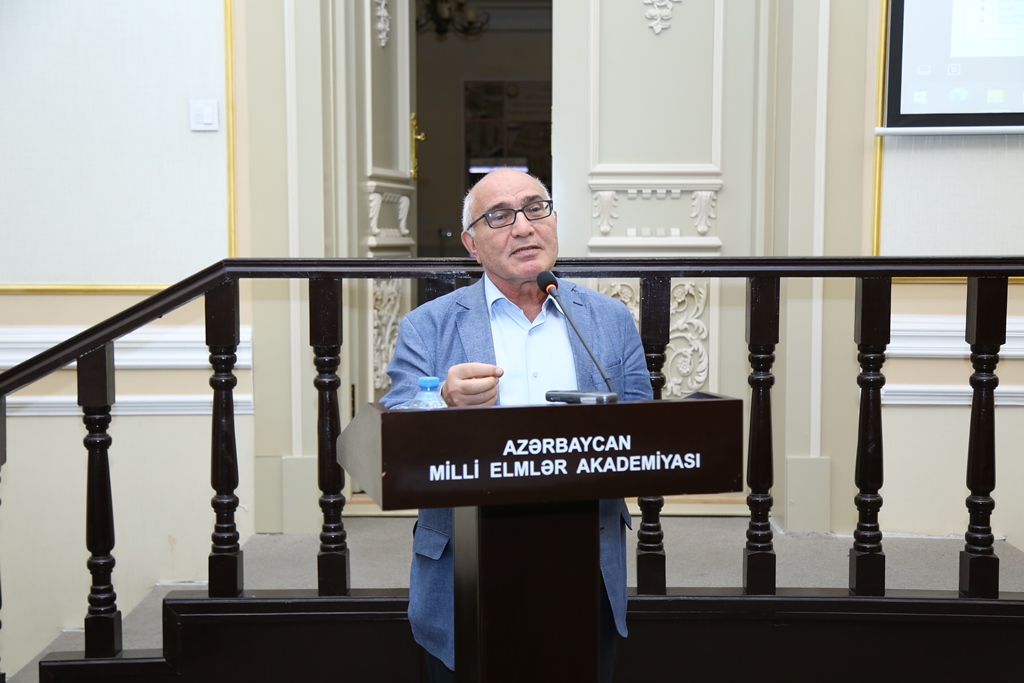
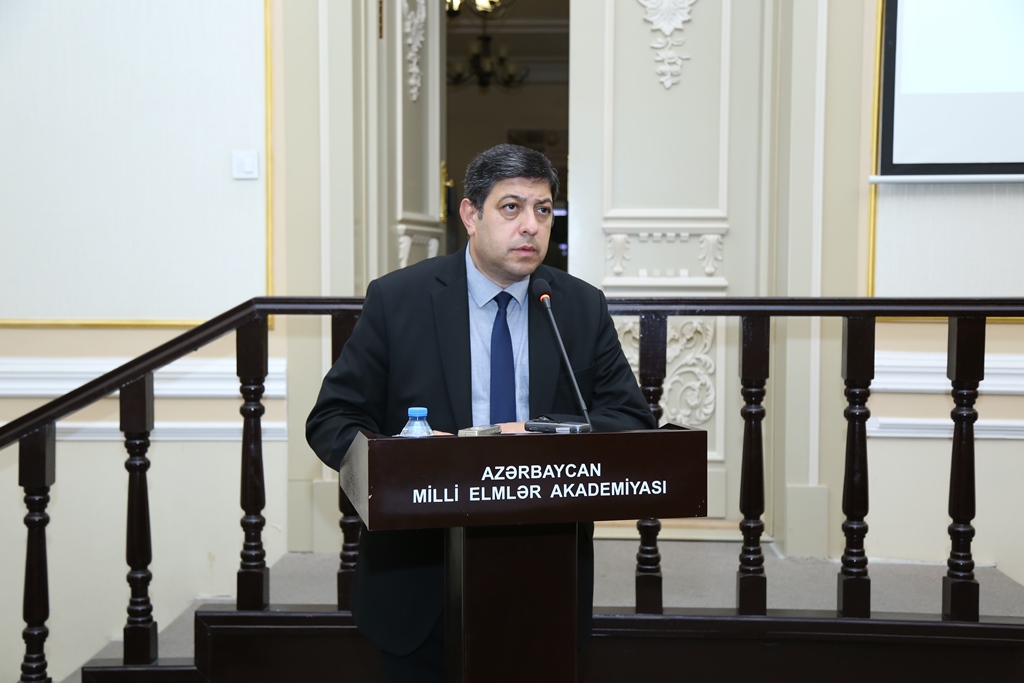
At the next meeting of the Presidium of the Azerbaijan National Academy of Sciences (ANAS), a report was heard on the scientific and scientific-organizational activities of the Ganja Branch for 2025. The report was presented by the Branch’s Deputy Chair for Research, PhD in Philology, Associate Professor Alimukhtar Mukhtarov.
Alimukhtar Mukhtarov noted that during the reporting year, activities at the Branch’s institutions were carried out in line with the decisions and decrees “On Declaring 2025 the ‘Year of the Constitution and Sovereignty’ in the Republic of Azerbaijan,” “On Celebrating the 80th Anniversary of the Azerbaijan National Academy of Sciences,” and “On Approval of the Artificial Intelligence Strategy of the Republic of Azerbaijan for 2025–2028,” as well as orders issued by the head of state regarding the anniversaries of prominent figures of the Azerbaijani people. He also referred to the “ANAS Development Program for 2020–2025,” the State Program on the “Restoration and Sustainable Development of the Territories of the Republic of Azerbaijan Liberated from Occupation for 2021–2025,” and the decisions of the Cabinet of Ministers of the Republic of Azerbaijan, the ANAS Presidium and General Assembly, as well as orders and instructions of the Ganja City Executive Authority arising from these documents.
Research was conducted at the scientific institutions of the ANAS Ganja Branch on 19 topics covering 13 problems, encompassing 20 works and 24 stages. As a result, 19 topics, 20 works, and 24 stages were completed, and three significant results were obtained. During the reporting year, staff members of the ANAS Ganja Branch published two books, one monograph, two booklets, 48 articles (including 10 abroad), and 84 conference papers (including 14 abroad). Their works were cited 54 times in international scientometric databases.
The speaker emphasized that important results were achieved through research conducted at the Ganja Branch in the following areas: “Study of the Life and Works of Nizami Ganjavi,” “History of the Development of the Azerbaijani Language,” “Azerbaijani Folklore,” “History of Azerbaijani Literature and Its Stages of Development,” “Musical Art,” “Research on Ganja Fine Arts,” “Study of Archaeological and Ethnographic Monuments of the Western Region,” and “History of the Western Region.”
Alimukhtar Mukhtarov noted that during the reporting period, books and monographs titled “Ganja as a Temple of Science” and “Figures of Science and Art of Ganja,” dedicated to the 80th anniversary of ANAS, were published, along with a collection of reports dedicated to the “Year of the Constitution and Sovereignty.”
Within the framework of the topic “Nizami Ganjavi’s Creativity in American Studies,” the history of the study of Nizami Ganjavi’s heritage in world literature starting from the 15th century was examined; the geography of manuscript dissemination and research traditions were analyzed; and the significance of Nizami’s legacy in global Oriental studies, particularly his role in the development of spiritual and philosophical thought, was explored. In addition, based on the topic “Different and Similar Research Technologies for the Study, Translation, and Publication of Nizami Ganjavi’s Heritage in the Republic of Azerbaijan and Iranian Azerbaijan,” the national identity and creative legacy of the great Azerbaijani poet and thinker Nizami Ganjavi were extensively examined in studies by both Azerbaijani and Iranian scholars.
In accordance with the “State Program on the Use of the Azerbaijani Language in Line with the Requirements of the Time under Globalization and the Development of Linguistics in the Country,” the structure and use of mixed-type complex sentences in the Ganja dialect were studied. Both coordinating and subordinating conjunctions in mixed-type sentences of the Ganja dialect were analyzed, and a comparative analysis of the features of the Ganja dialect with other Western group dialects was conducted.
In addition, during the reporting year, research was carried out on the topic “Thinkers Who Lived and Created in Karabakh in the Middle Ages,” focusing on the role and position of women poets of Karabakh in the Karabakh literary milieu.
Within the framework of the study “Research on Ancient Craft Traditions of Ganja,” the historical development of traditional crafts that have existed since ancient times in Ganja and its surrounding areas—once part of Caucasian Albania—was examined based on scientific and ethnographic research, archaeological expeditions, and written sources. Particular attention was paid to pottery and coppersmithing, which stood out as key areas of craftsmanship in the region.
The speaker also highlighted work carried out pursuant to presidential decrees “On the Year of the Constitution and Sovereignty,” “On Celebrating the 80th Anniversary of the Azerbaijan National Academy of Sciences,” “On Celebrating the 140th Anniversary of Uzeyir Hajibeyli,” “On Celebrating the 100th Anniversary of Bakhtiyar Vahabzadeh,” “On Celebrating the 190th Anniversary of Seyid Azim Shirvani,” and “On Celebrating the 150th Anniversary of Fatali Khan Khoyski.”
Information was also provided on the human resources potential and training at the Ganja Branch, strengthening the integration of science and education, international cooperation, awards, and the state of e-science.
Commenting on the report, ANAS President Academician Isa Habibbeyli highly assessed the work carried out at the Ganja Branch in the study and promotion of the life and activities of Nizami Ganjavi, as well as steps taken to fulfill other tasks, and expressed confidence that the achievements attained would continue to grow in 2026.
Following the discussions, by decision of the ANAS Presidium, the report on the scientific and scientific-organizational activities of the Ganja Branch for 2025 was approved, and it was decided to include the significant results achieved in the ANAS annual report.
Translation by Gulhane Aghayeva, Department of Public Relations, Press, and Information, Presidium of ANAS.
© All rights reserved. Reference to www.science.gov.az is required when using materials from this site.
Similar News
Links