Azerbaijan National Academy of Sciences
The first website of Azerbaijan (1995)
 Elm TV
 Photo
Photo
 Video
Video
- A-
- A
- A+
An International Scientific Conference on “Living Alisher Navoi” Held at ANAS


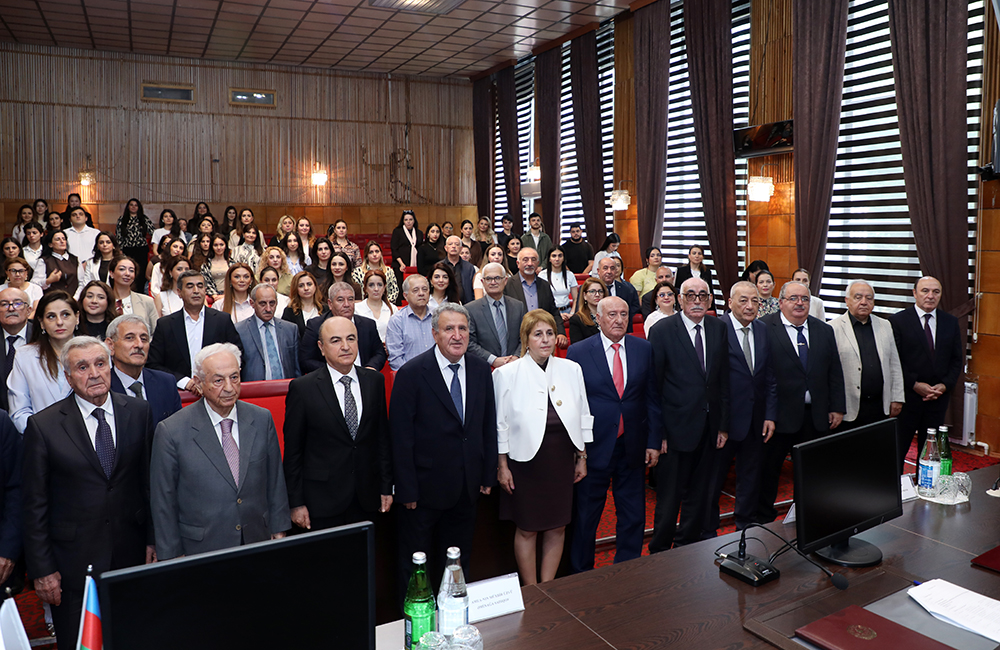
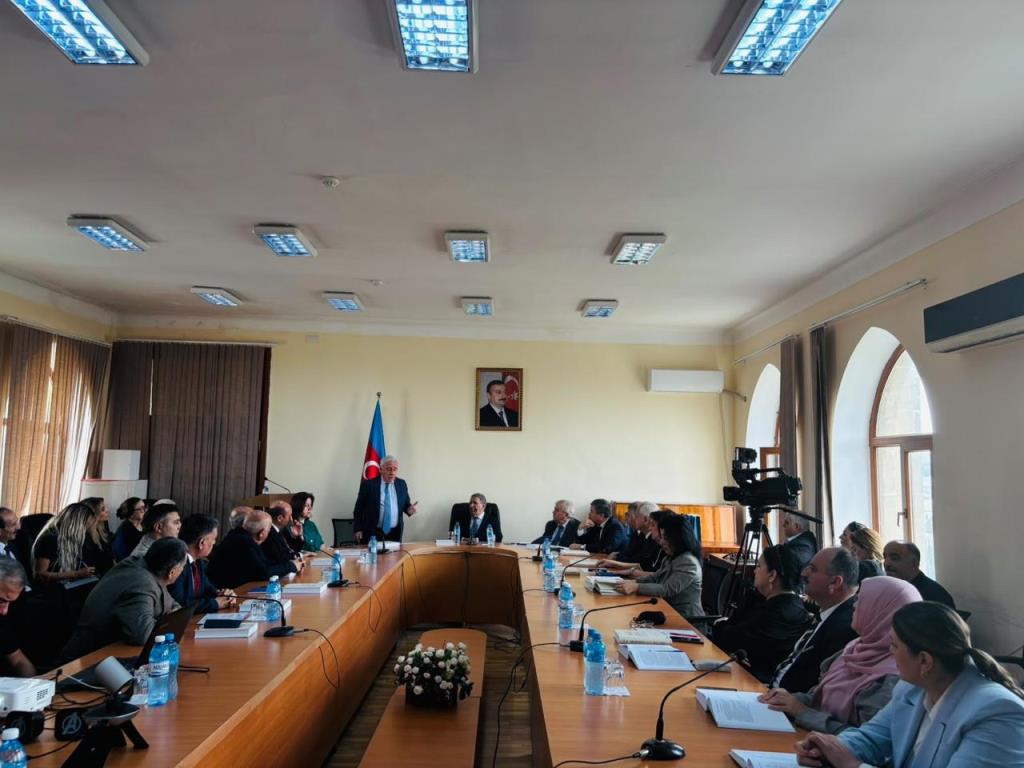
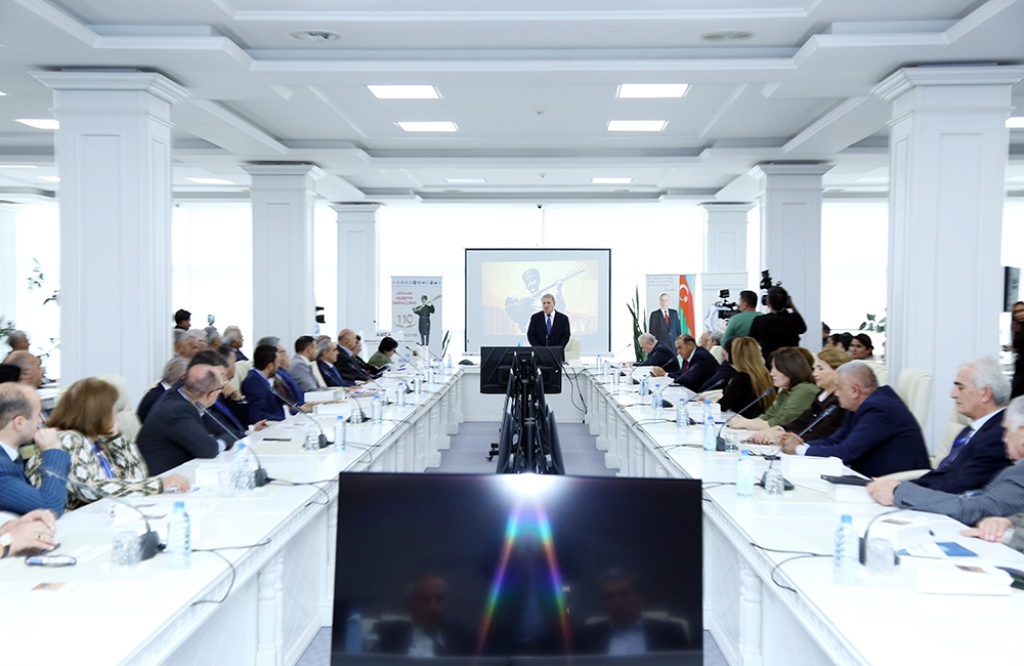
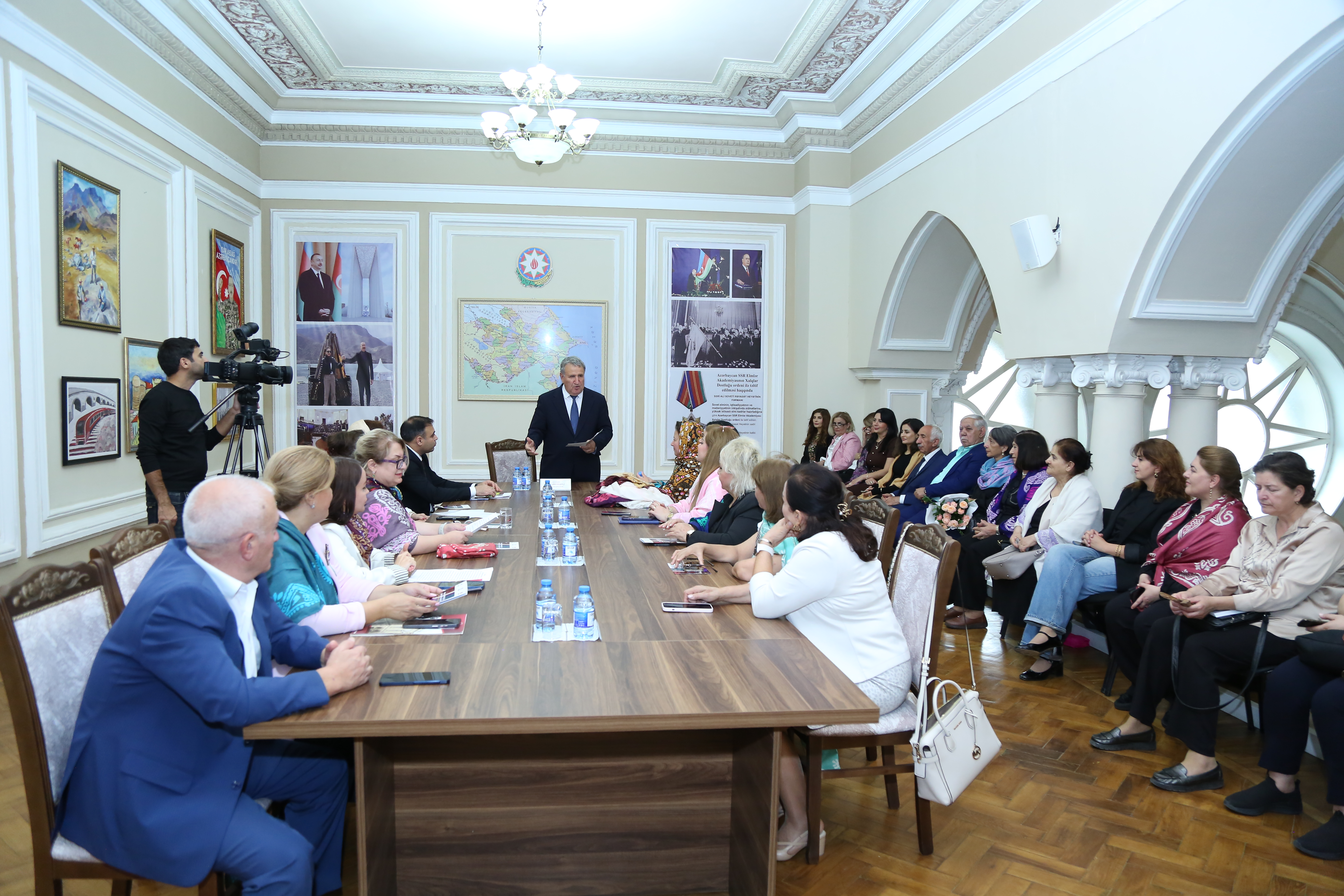
An international scientific conference themed “Living Alisher Navoi,” dedicated to the 585th anniversary of the birth of the great Uzbek poet Alisher Navoi, was held at the Presidium of the Azerbaijan National Academy of Sciences (ANAS).
First, the conference participants visited the monument to Alisher Navoi in Baku and laid flower bouquets in front of the statue of the outstanding master of words.
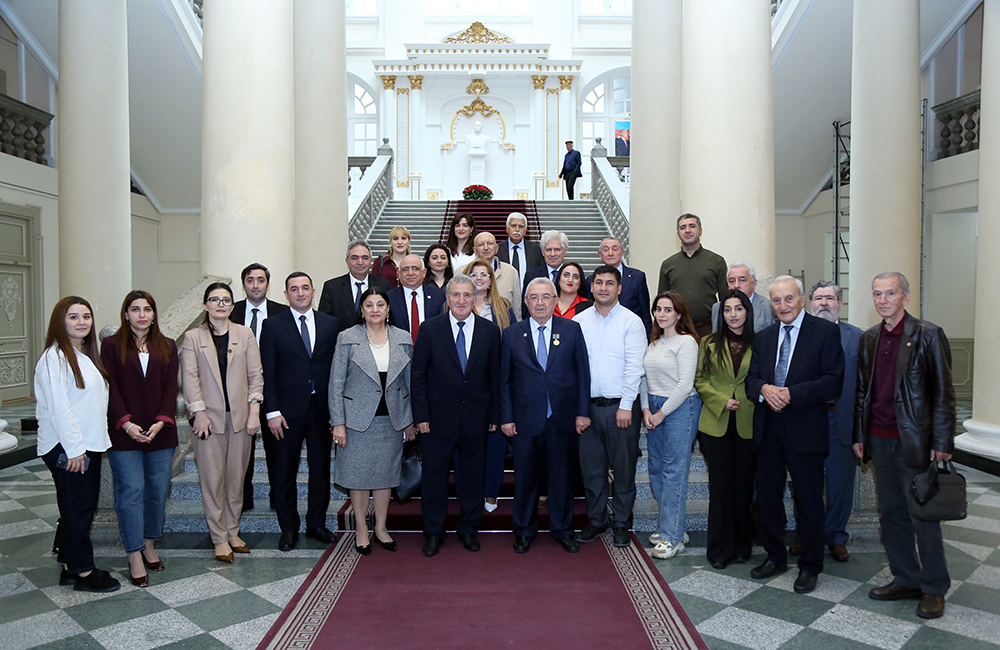
Later, the participants of the international event became acquainted with the building of the ANAS Presidium, as well as the Grand Assembly Hall of the Presidium, where the First Turkological Congress, which for the first time united the Turkic world 100 years ago, was held.
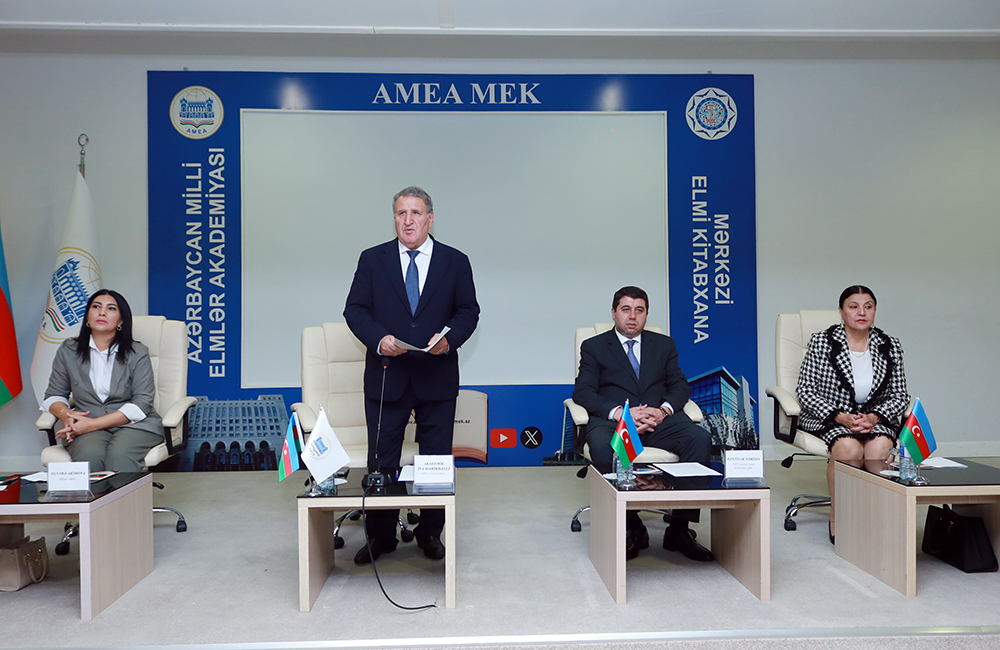
Opening the conference with a keynote address, President of ANAS, Academician Isa Habibbeyli, emphasized that Alisher Navoi is one of the most powerful figures that Uzbek literature has contributed to world culture, noting that he occupies an honorable place among the luminaries standing at the pinnacle of the art of words in pan-Turkic literature.
Academician Isa Habibbeyli stated that for more than ten years, the anniversaries of Alisher Navoi have been consistently and systematically celebrated in Azerbaijan through the joint efforts of the Embassy of the Republic of Uzbekistan in Azerbaijan and the Uzbekistan–Azerbaijan Friendship Society. At the same time, representatives of ANAS actively participate every year in the Alisher Navoi Days organized in Uzbekistan.
The ANAS president emphasized that after Tashkent, Azerbaijan is the largest center where manuscripts related to the heritage of Alisher Navoi are preserved. He noted that dozens of valuable manuscripts of the great poet are safeguarded at the Institute of Manuscripts of ANAS. He added that among them, copies transcribed during Alisher Navoi’s lifetime and manuscripts enriched with annotations by Uzbek masters are of particular importance. This fact once again confirms that Azerbaijan is an important scientific and cultural center in terms of preserving and promoting the heritage of Alisher Navoi.
The head of ANAS noted that from the early 20th century to the present day, hundreds of books and articles written, published, and translated in Azerbaijan about Alisher Navoi have been produced, and a rich scientific library consisting of his works has been formed.
Academician Isa Habibbeyli stated that the Azerbaijani people and the Turkic world as a whole hold deep respect for the creative legacy of Alisher Navoi, noting that the high esteem shown in Uzbekistan for the heritage of Nizami Ganjavi and Muhammad Fuzuli is at the same level as the love and respect shown in Azerbaijan for the works of Alisher Navoi. Alisher Navoi is a symbol of our shared cultural memory and common spiritual strength.
Drawing attention to the fact that one of the great poet’s greatest services was his “Khamsa” written in the Turkic language, the ANAS president added that although Nizami Ganjavi, Amir Khusrow Dehlavi, and Abdurrahman Jami were also authors of “Khamsa,” it was Alisher Navoi who first created this magnificent literary work in the Turkic language. This fact clearly demonstrates the scale of his historical and cultural contribution to the Turkic world. He also noted that Alisher Navoi’s “Khamsa” was translated into Azerbaijani a few years ago by Professor Ramiz Asker.
Academician Isa Habibbeyli emphasized that in Alisher Navoi’s works, the literature, spiritual values, and human world of the peoples of the Turkic world are reflected broadly and deeply. It is no coincidence that one of the highest awards established by the Organization of Turkic States bears the name of Alisher Navoi.
The head of ANAS recalled that one of the great masters who gave the highest appraisal to the work of Nizami Ganjavi was Alisher Navoi himself: “According to Alisher Navoi, Nizami Ganjavi is such a peak of art that no one has the courage to come ‘hand to hand’ with him. The same tradition of mutual respect and affection was demonstrated by Muhammad Fuzuli toward the Uzbek people through the figure of Alisher Navoi.”
Concluding his speech, Academician Isa Habibbeyli noted that holding the anniversary of Alisher Navoi on the eve of the 100th anniversary of the First Turkological Congress carries special symbolic significance. Wishing success to the work of the international conference, he expressed confidence that such scientific events would contribute to further strengthening the cultural and scientific unity of the Turkic world.
Then, the Ambassador Extraordinary and Plenipotentiary of the Republic of Uzbekistan to Azerbaijan, Bakhram Ashrafkhanov, spoke about the development of Azerbaijan–Uzbekistan relations, noting that the historical roots, culture, language, and literature of the two countries are closely related. Stating that special attention and care are given to the heritage of Navoi, Bakhram Ashrafkhanov emphasized that with the support of the country’s leadership, efforts to study and promote the creative legacy of the powerful master of words are continuing. He said that Azerbaijan is regarded as Alisher Navoi’s second homeland and noted that the erection of Navoi’s statue in Baku is an expression of the brotherly country’s respect for the memory of the Uzbek poet.
The ambassador highly appreciated the research conducted in Azerbaijan related to Alisher Navoi. He expressed confidence that the international conference would contribute to the development of Turkological studies, the expansion of mutually beneficial cooperation between the two countries, as well as the advancement of Azerbaijani–Uzbek scientific and literary ties.
The Ambassador Extraordinary and Plenipotentiary of Türkiye to Azerbaijan, Professor Birol Akgün, stated in his speech that Alisher Navoi is not only a great poet of the 15th century, but also a great master of words and thinker of the Turkic world. He noted that Navoi’s legacy transforms the Turkic language into a means of transmitting cultural, literary, and civilizational values. He is a source of inspiration for poets of the Turkic world and a great thinker who left behind a vast literary and philosophical heritage.
Speaking about Alisher Navoi’s role in the development of Turkic-language poetry, Birol Akgün noted that the works written by the Uzbek poet served the spiritual elevation of Uzbekistan and the Turkic world as a whole.
The ambassador emphasized that Alisher Navoi is a powerful figure who has influenced the shared cultural heritage and cultural consciousness of the Turkic peoples, and wished success to the conference.
Later, Chairman of the Azerbaijan–Uzbekistan Friendship Society and Member of Parliament Eldar Ibrahimov, as well as Member of Parliament Gunay Afandiyeva, spoke, emphasizing that the creative legacy of Alisher Navoi is a strong spiritual bridge uniting peoples. They assessed the conference as a contribution to our shared heritage, universal values, and the deep friendship and solidarity between our brotherly nations. It was noted that writing the “Khamsa,” considered the poet’s masterpiece, in the Turkic language is a manifestation of his love, respect, and devotion to the Turkic World.
At the event, Chairman of the Board of the “Citizens” Public Foundation of Uzbekistan Odiljon Sattarov, as well as Uzbek scholars Professor Marufjon Yoldashev, Associate Professor Burabiya Rajabova, and writer Risolat Haydarova delivered presentations on Navoi’s creativity and the ideological essence of his poems.
At the end, Zhu Tianxu, a student majoring in the Azerbaijani language at Beijing Foreign Studies University, expressed his satisfaction with participating in the international event dedicated to the creative legacy of the great thinker Alisher Navoi and recited Samad Vurgun’s widely renowned poem “Azerbaijan.”
Translation by Gulhane Aghayeva, Department of Public Relations, Press, and Information, Presidium of ANAS.
© All rights reserved. Reference to www.science.gov.az is required when using materials from this site.
Similar News
Links