Azerbaijan National Academy of Sciences
The first website of Azerbaijan (1995)
 Elm TV
 Photo
Photo
 Video
Video
- A-
- A
- A+
The Next Meeting of the Presidium of ANAS Has Been Held


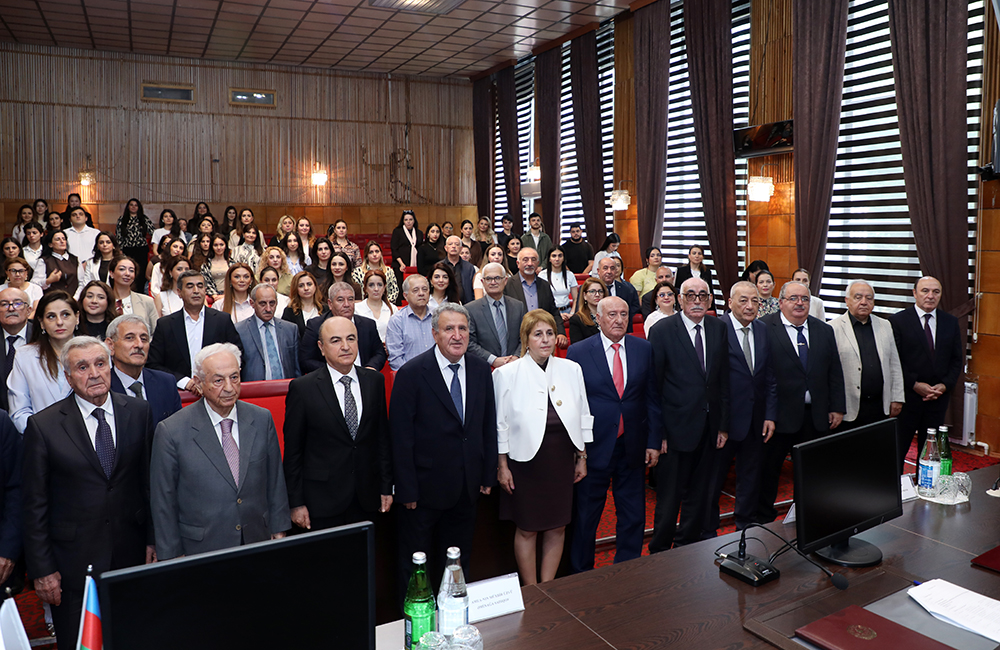
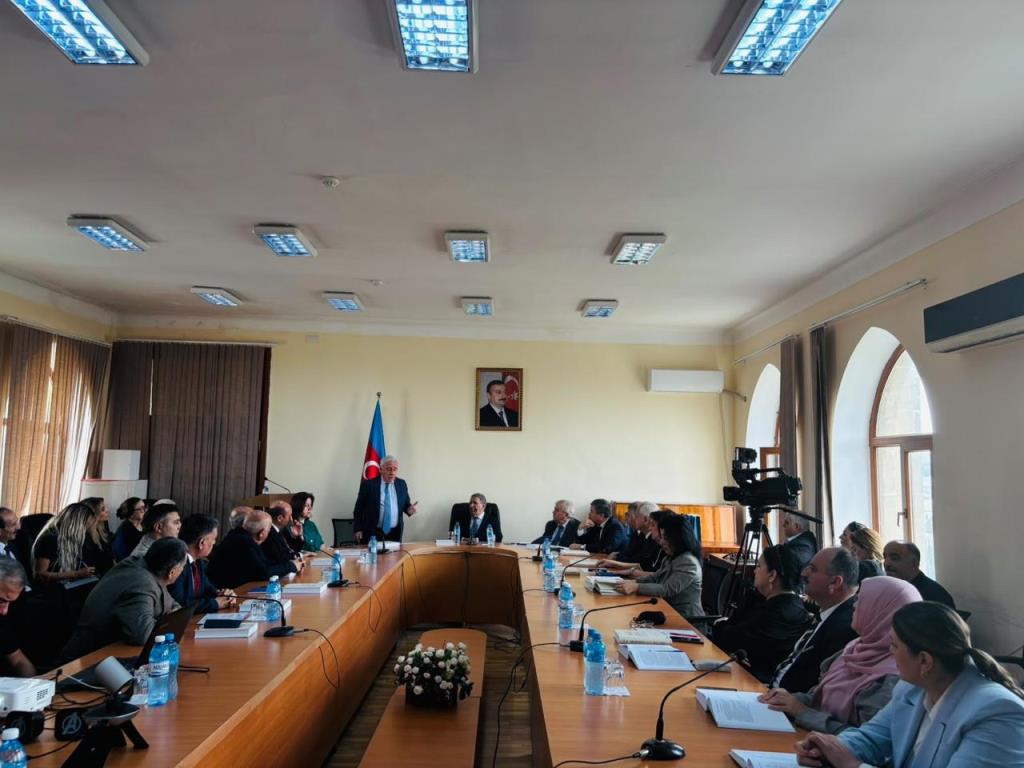
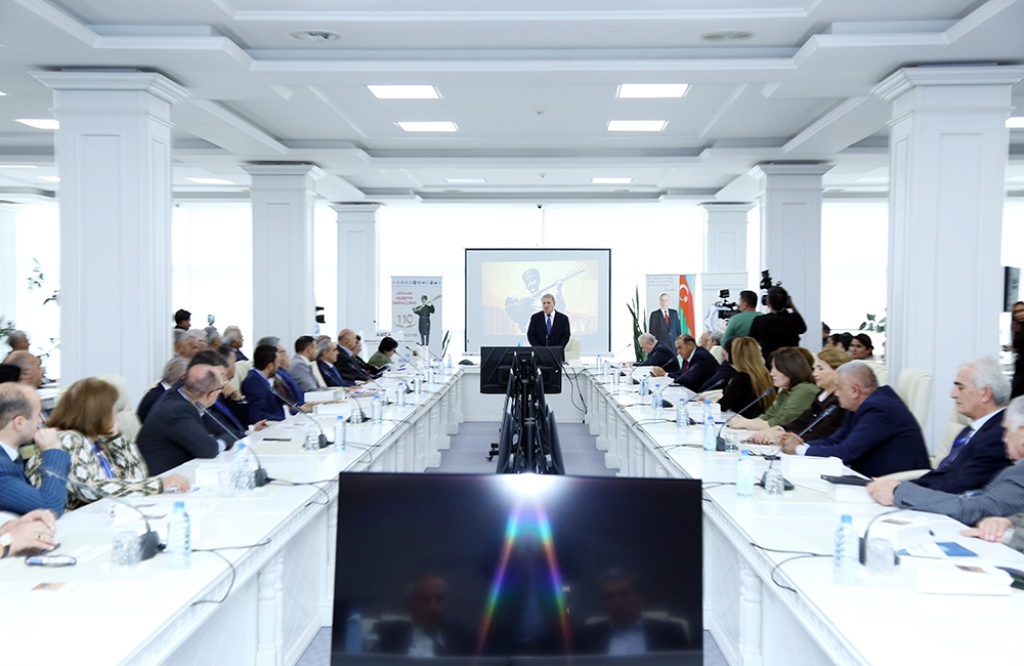
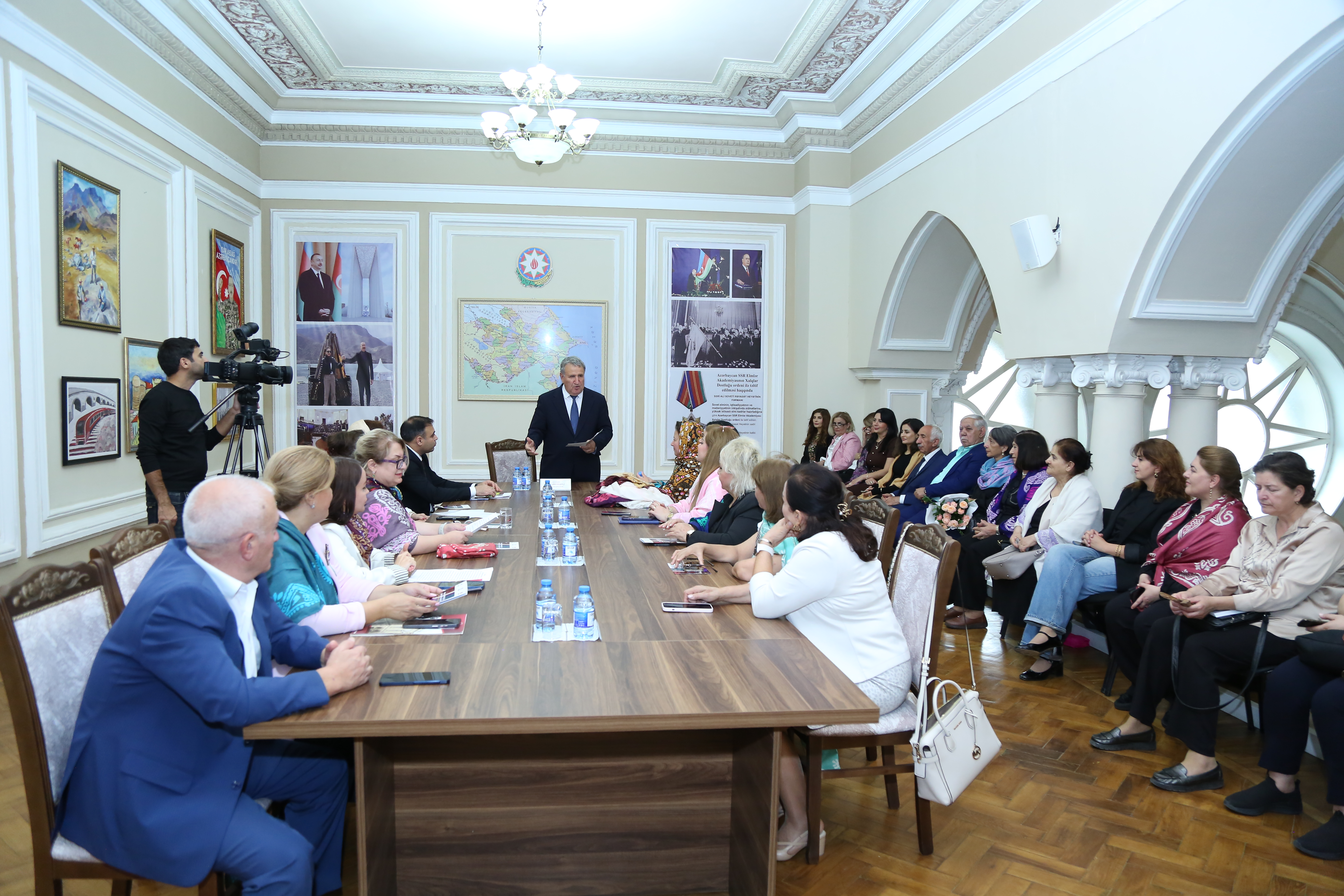
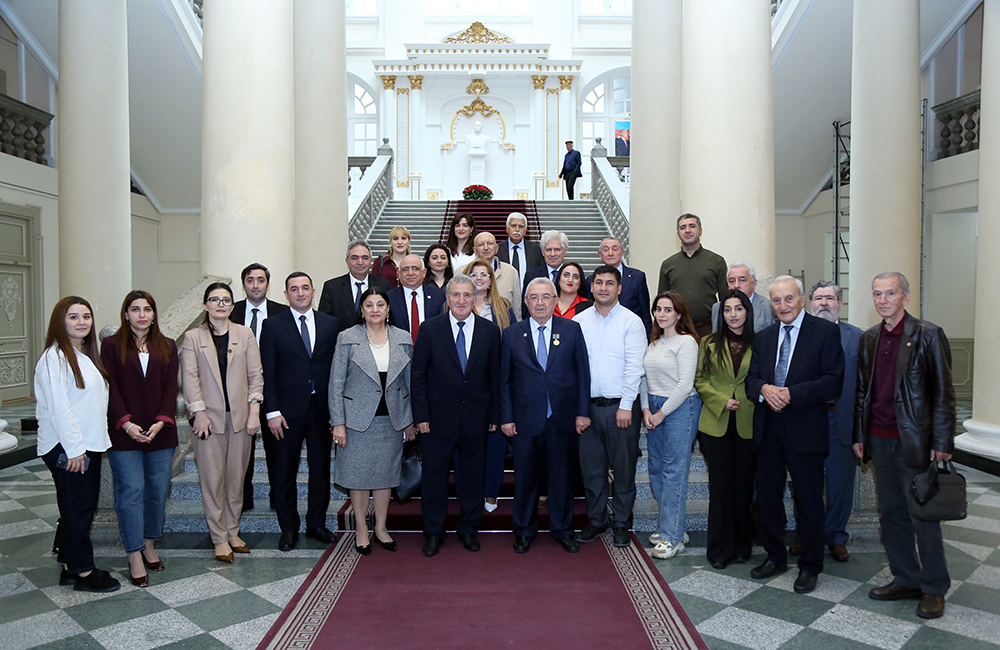
The next meeting of the Presidium of the Azerbaijan National Academy of Sciences (ANAS) has been held.
The event was attended by ANAS President, Academician Isa Habibbeyli, members of the Presidium, heads of departments of the Presidium’s administration, members of the division, directors of the division’s scientific institutions, and relevant officials.
First, participants viewed an exhibition showcasing the achievements of the ANAS Earth Sciences Division (ESD), the Republican Seismological Service Center (RSSC) under ANAS, and the Sheki Regional Scientific Center (Sheki RSC) in 2025, as well as published scientific works and books.
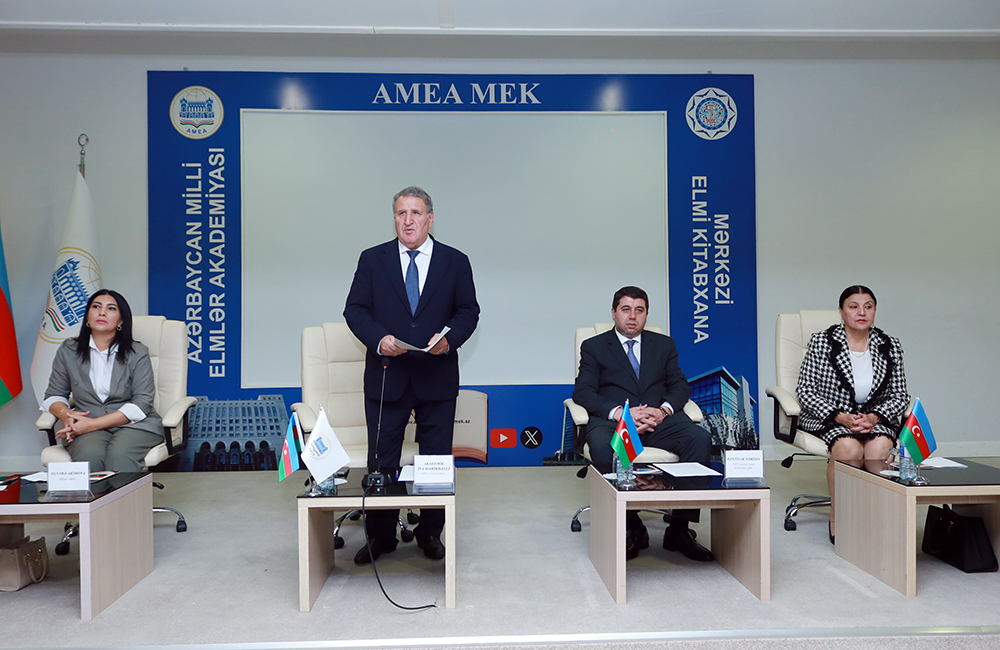
Opening the meeting with an introductory speech, Academician Isa Habibbeyli informed participants about the agenda.
Academician Isa Habibbeyli noted that with this meeting, the presentation of reports on the activities of ANAS scientific divisions for 2025 begins, and in the coming days, reports of a total of six divisions of the Academy, as well as its regional divisions and scientific centers, will be presented to the public. He emphasized that the goal is to listen to and evaluate scientific achievements and to present them to the country’s scientific community. Touching upon the importance of each division having and actively using its own website for the promotion of scientific achievements, Academician Isa Habibbeyli stated that this enables society to become closely acquainted with the scientific processes taking place at the Academy and to form an informed opinion. The ANAS President also stressed the necessity of reflecting modernization models, comparisons, tables, and diagrams when preparing reports.
Providing information on the structural reforms carried out at the Academy, Academician Isa Habibbeyli said these reforms are required by the challenges of the time and are inevitable. He noted that over the past period, nearly 30 new departments have been established at ANAS using existing staff positions and internal resources. Within this framework, he stated that departments specializing in digital science and artificial intelligence have recently been established at ANAS scientific institutions, emphasizing that the ongoing structural reforms contribute to the development of science.
Subsequently, ANAS Vice-President and Chairman of the Scientific Council of the Earth Sciences Division, Academician Ibrahim Guliyev, presented a report on the scientific and scientific-organizational activities of the division for 2025. He stated that in the past year, research conducted at the division’s institutions was mainly focused on the implementation of “Azerbaijan 2030: National Priorities for Socio-Economic Development,” the “National Strategy on Efficient Use of Water Resources,” the “Employment Strategy of the Republic of Azerbaijan for 2019–2030,” the Presidential Order “On Celebrating the 80th Anniversary of the Azerbaijan National Academy of Sciences,” the “First State Program on the Great Return to the Liberated Territories of the Republic of Azerbaijan,” the “Year of the Constitution and Sovereignty,” as well as relevant decisions of the ANAS General Assembly and the Presidium.
Academician Ibrahim Guliyev noted that in 2025, scientific institutions under the Earth Sciences Division implemented 44 topics covering 15 problems, 56 research projects, and research activities across 15 stages; 11 topics, 20 research projects, and 7 stages were completed. During the reporting year, more than 40 significant results were obtained at the division’s institutions, and 43 applied scientific projects were carried out based on economic contracts.
It was reported that the results mainly covered pressing topics such as Karabakh and East Zangazur, the Great Return, assessment of hydrocarbon resources in the Caspian Sea aquatory, improvement of gas-condensate field development processes, research into renewable energy sources, spatial and temporal distribution of solar, wind, and wave energy potential in the Caspian Sea and technologies for their use, study of active geodynamic processes, fault slip monitored by satellite data in the Kura basin, crustal deformation caused by distant earthquakes affecting oil and gas and mud volcano areas in Azerbaijan, changes in the Caspian Sea level and coastal dynamics, improvement of water resources management, and expansion of alternative water resource use. The scholar emphasized that based on the application of artificial intelligence technologies, an interactive digital database titled “Digital Caspian” has been developed. This system includes analytical modules and represents a comprehensive geological and geophysical model of the South Caspian Basin through interactive digital maps created via modeling hydrocarbon systems and oil and gas fields and developing their digital twins, intended for transdisciplinary research, scientific analysis, and sustainable resource management.
The speaker noted that according to relevant indicators in the international Scimago scientific ranking, Azerbaijan’s Earth sciences have shown a stable and consistent upward dynamic both globally and within the Eastern European country group over the past five years. According to the results of 2024, Azerbaijan ranks 36th in geophysics, 41st in geoengineering, and 47th in geology among nearly 200 countries.
Providing information on publishing activity, Academician Ibrahim Guliyev reported that during the reporting year, scientific institutions under the Earth Sciences Division published 9 monographs (1 abroad), 16 books and 6 textbooks, 264 articles (188 abroad), and 117 conference abstracts (78 abroad). Of these, 115 were published in impact-factor journals indexed in Web of Science and Scopus. He noted that during the reporting period, valuable research works such as “The Paleontological Atlas of Azerbaijan,” “Earth Sciences of Azerbaijan Over an 80-Year Period – Pages of a Rich and Glorious History,” “Karabakh and East Zangazur: Geology and Mineral Resources,” “Tourism and Recreation Potential of Karabakh,” “An Explanatory Dictionary of Ancient Settlements and Toponyms of the Karabakh Economic Region,” “A Study of East Zangazur Oikonyms from the Perspectives of Geography, History, and Linguistics,” and others were produced.
He also highlighted information on the division’s human resources and training, strengthening the integration of science and education, the division’s scientific journals, international cooperation, awards, the state of e-science, renewal of the material and technical base of science, improvement of information support systems, conferences, seminars, and jubilees.
Then, the Director General of the Republican Seismological Service Center under ANAS, Corresponding Member of ANAS Gurban Yetirmishli, presented a report on the scientific and scientific-organizational activities of the RSSC for 2025. He stated that in 2025, 5 topics covering 3 problems and 13 research projects were implemented at the RSSC. The Center’s staff participated in 4 grant projects (international and local).
During the reporting year, 47 articles (12 abroad) and 19 abstracts (12 abroad) were published at the RSSC. Of the published articles, 9 appeared in impact-factor journals indexed in Web of Science and Scopus.
He noted that during the reporting period, work continued on projects such as “Expansion of the Seismic Network in the Caucasus and Central Asia” with Ukrainian specialists, “Study of the Influence of Natural Geodynamic Factors on Radon Emission Dynamics” with Belarusian scientists, as well as “Characteristic Features of Seismicity and Determination of the Spatial Location of Potential Strong Earthquake Sources in the Karabakh Territory” and “Magnetometric Study of Geodynamic Processes in Azerbaijan Based on Data on Solar and Lunar Physical Phenomena.”
Gurban Yetirmishli reported that in 2025, geological and geophysical studies were conducted at the Baku Television Tower and adjacent areas, and proposals were submitted to mitigate landslide risks. A local monitoring system was also established in the study area to record weak and micro-earthquakes.
The speaker emphasized that the Republican Seismological Service Center under ANAS is a full member of international organizations such as the European-Mediterranean Seismological Centre (EMSC), Incorporated Research Institutions for Seismology (IRIS), Observatories and Research Facilities for European Seismology (ORFEUS), the European Seismological Commission (ESC), the European Geosciences Union (EGU), and the American Geophysical Union (AGU). He also stressed that the RSSC maintains close cooperation with seismological and geophysical institutes of more than 30 countries, including the GFZ German Research Centre for Geosciences, Lawrence Livermore National Laboratory (USA), Berkeley Laboratory (USA), the University of Missouri (USA), the University of Victoria (Canada), the University of Oxford (UK), the Earthquake Research Department of Turkey’s Disaster and Emergency Management Authority, the Israel Geophysical Institute, and the Natural Hazards Centre of the University of Pretoria (South Africa), among others. He added that in 2025, a protocol of agreement on scientific cooperation was signed with the National Scientific Center for Seismological Observations and Research of the Ministry of Emergency Situations of the Republic of Kazakhstan.
The Director General also provided information on the Center’s human resources and training, strengthening science–education integration, steps taken to popularize science, grants and awards, the state of e-science, activities on the Wikipedia Virtual Encyclopedia, as well as the institution’s website, social media accounts, and the journal “Seismoprognosis Observations in the Territory of Azerbaijan.”
Afterwards, a report on the scientific and scientific-organizational activities of the Sheki Regional Scientific Center for 2025 was heard. Presenting the report, the Center’s Director, PhD in Physics Yusif Shukurli, stated that during the reporting year, 19 research projects were carried out across 11 topics in 6 new priority areas, resulting in 25 significant outcomes.
In his speech, Y. Shukurli highlighted the work carried out at the Center stemming from the Presidential decrees on the “Year of the Constitution and Sovereignty,” the “Digital Development Concept of the Republic of Azerbaijan,” as well as “On Celebrating the 140th Anniversary of Uzeyir Hajibeyli,” “On Celebrating the 100th Anniversary of Bakhtiyar Vahabzadeh,” “On Celebrating the 190th Anniversary of Seyid Azim Shirvani,” “On Holding the 150th Anniversary of Fatali Khan Khoyski,” and “On Holding the 100th Anniversary of the First Turkological Congress.”
The speaker noted that during the reporting period, Center staff published 24 articles (11 abroad) and 30 abstracts (12 abroad). Five of the published articles appeared in Web of Science and Scopus indexed journals. In 2025, a total of 4 books were published at the Sheki RSC, including “Sheki Laughter and Gabrovo Humor” and “Subtextual Semantics in Bakhtiyar Vahabzadeh’s Works of the Soviet Period,” among others.
The scholar stated that significant results were obtained through research on the Sheki literary environment, comparative study of Sheki and Gabrovo anecdotes, investigation of wild medicinal plants распростран in the Sheki region, and analysis of historical manuscripts in the Gabala and Zagatala regions, among other areas.
He also reported that studies conducted on 8 silkworm breeds imported from the Republic of Uzbekistan showed that the silk content of fresh cocoons ranged from 20.0 to 22.9 percent in the Gulshan, Nafis, Yulduz, Asaka, and Marvarid breeds. Compared to 2024, the silk content of fresh cocoons in 2025 was 1.3 percent higher in the Orzu, Guzal, and Marxamat breeds.
Yusif Shukurli further emphasized that in accordance with the 2025 research plan, expeditions were organized to several villages in the Oguz district, where samples of pome, stone, and nut fruit varieties belonging to folk selection were collected, grafted onto rootstocks at the Sheki RSC experimental field, and biomorphological indicators were determined for each sample. In addition, he noted that an expedition was organized to the territories of Bash Shabalid and Bash Kungut villages for archaeological excavations, during which several soil and jar burials dating to antiquity and a Christian stone box grave from the early Middle Ages were discovered and included in research. He also highlighted that expeditions were organized to remote mountainous areas of the Balakan, Zagatala, and Sheki districts to assess ecotourism potential and monitor riverbeds.
The scholar also presented information on the Center’s human resources and training, strengthening science–education integration, international cooperation, awards, and the state of e-science.
During the meeting, Academician Rasim Aliguliyev, Corresponding Member of ANAS Rauf Gardashov, Professor Rza Mahmudov, Doctor of Geographical Sciences Zaur Imrani, Doctor of Geographical Sciences Said Safarov, PhD in Engineering, Associate Professor Rauf Muradov, Sadig Nabiyev, and others spoke about the reports presented and shared their views on the significant results achieved.
In his concluding remarks, Academician Isa Habibbeyli highly assessed the 2025 activities of the Earth Sciences Division, the Republican Seismological Service Center under ANAS, and the Sheki Regional Scientific Center, and outlined the tasks ahead of them.
Following the discussions, by decision of the ANAS Presidium, the reports on the scientific and scientific-organizational activities of the Earth Sciences Division, the Republican Seismological Service Center under ANAS, and the Sheki RSC for 2025 were approved, and it was decided to include the significant results obtained in ANAS’s annual report.
Translation by Gulhane Aghayeva, Department of Public Relations, Press, and Information, Presidium of ANAS.
© All rights reserved. Reference to www.science.gov.az is required when using materials from this site.
Similar News
Links