Azerbaijan National Academy of Sciences
The first website of Azerbaijan (1995)
 Elm TV
 Photo
Photo
 Video
Video
- A-
- A
- A+
Seminar on the Concept of Miracles in Legends Held at the Institute of Folklore
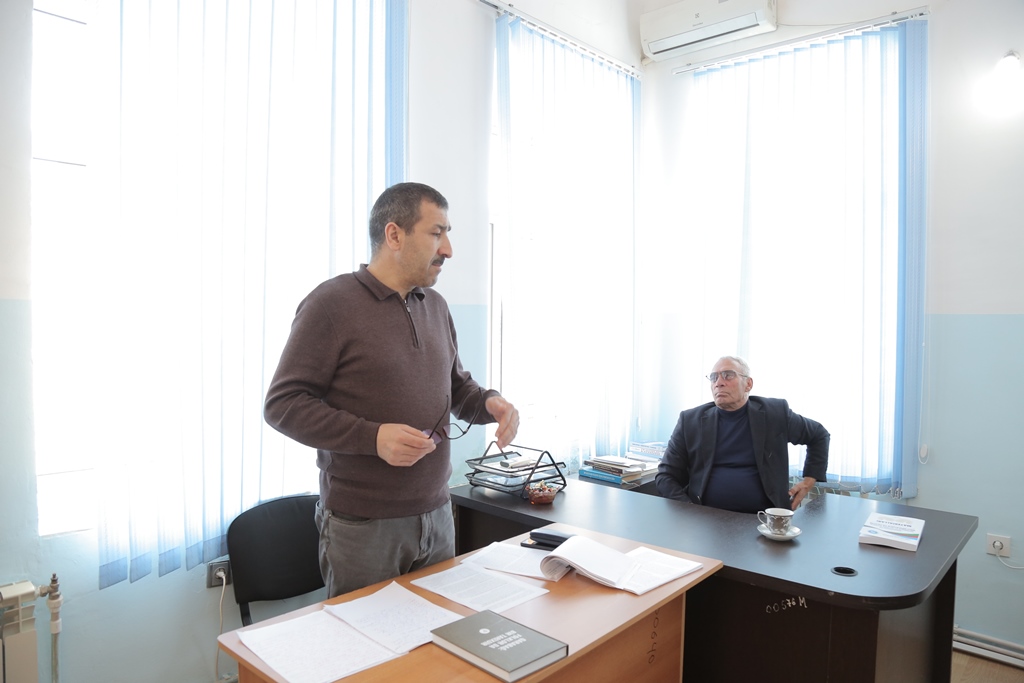
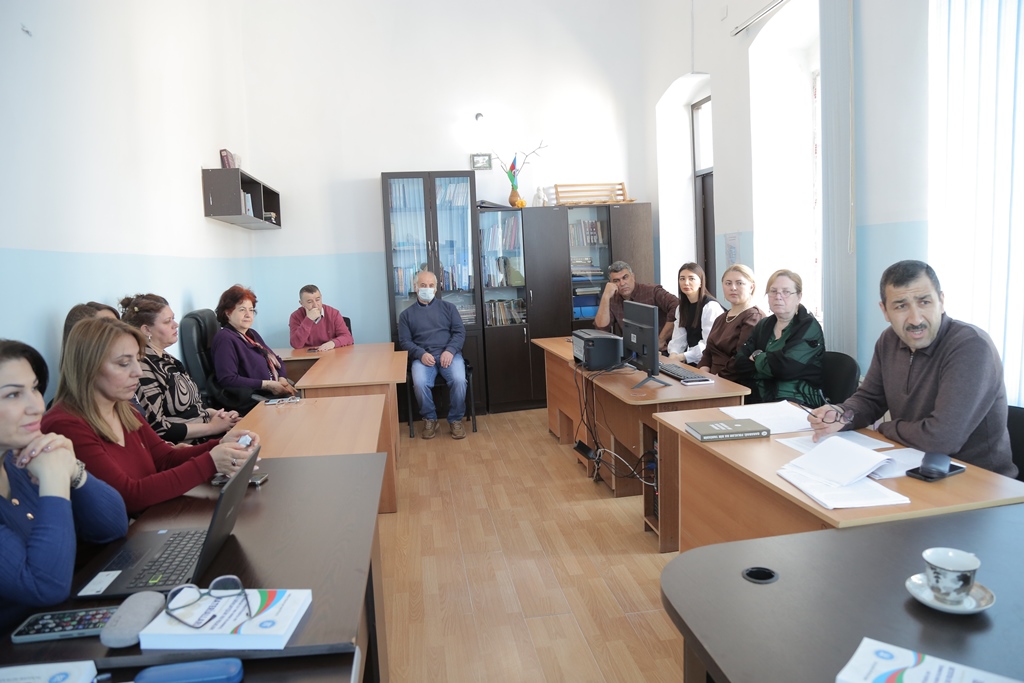

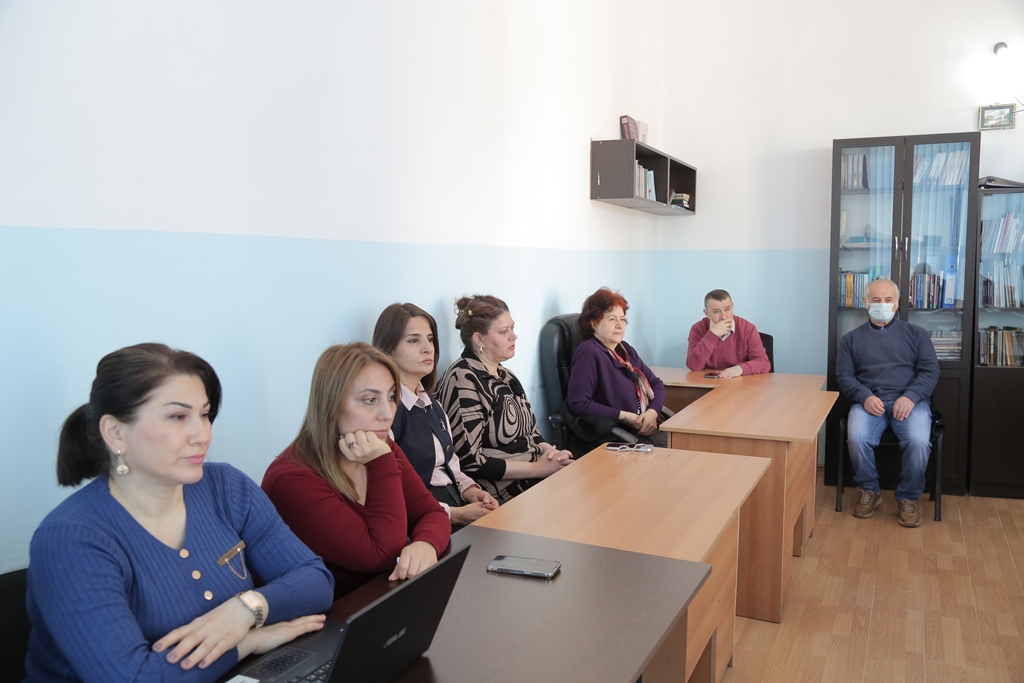
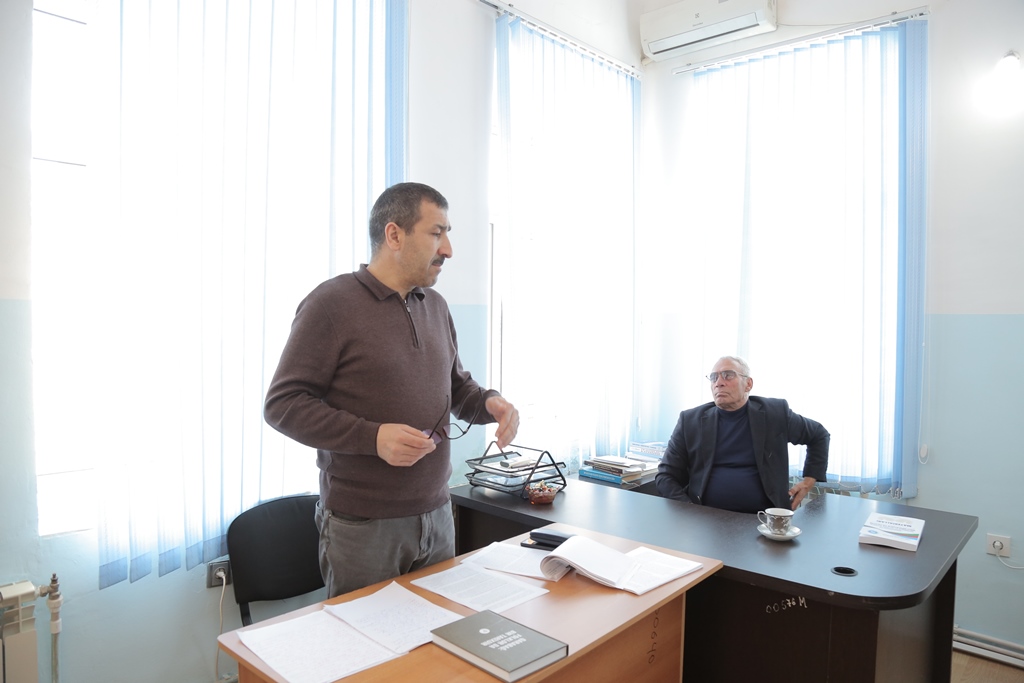
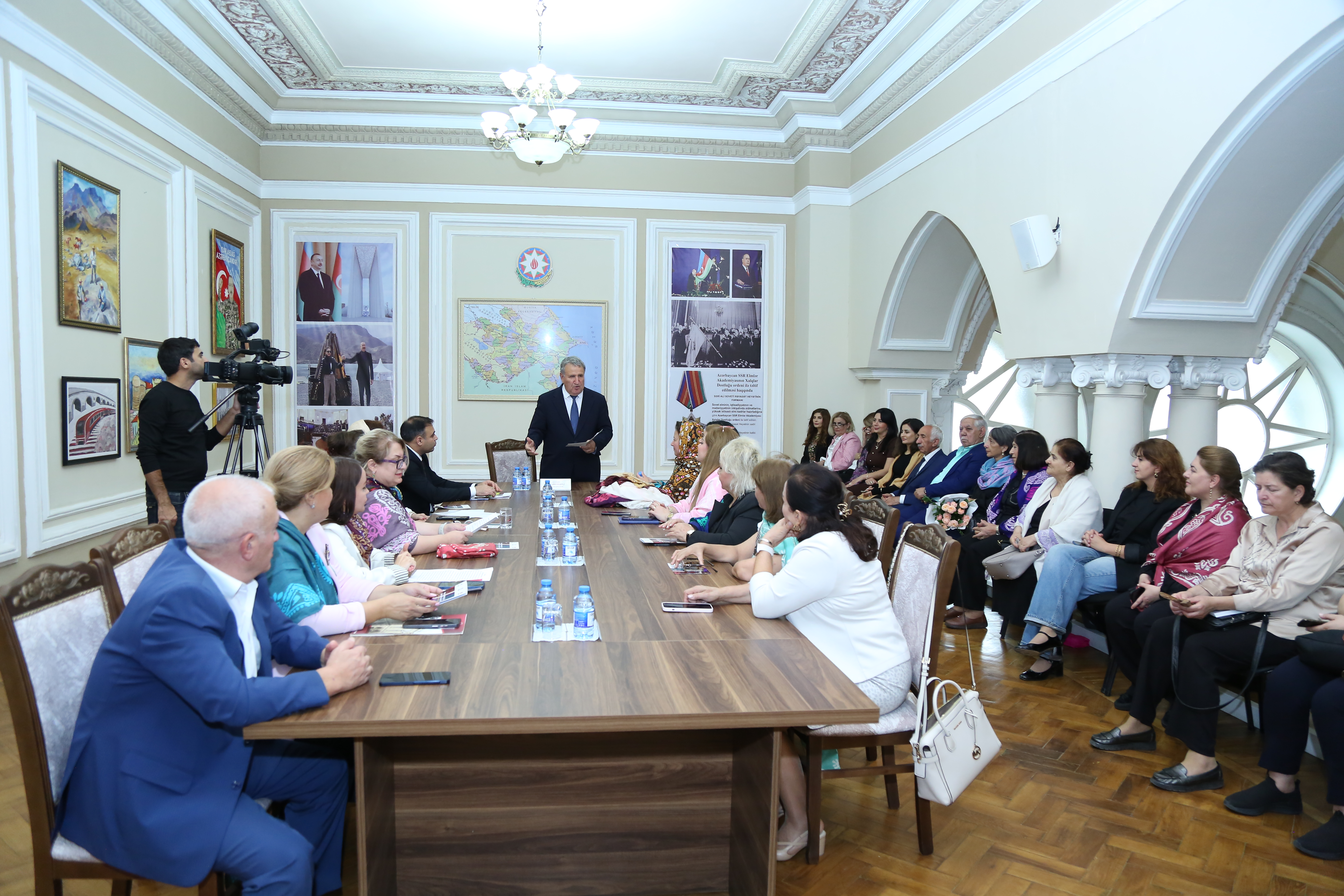
A joint scientific seminar was held at the Institute of Folklore of ANAS by the Department of Collection and Systematization of Folklore and the Department of Folklore of Turkic Peoples.
At the seminar, a report titled “The Concept of Miracle in Azerbaijani Legends” was presented by senior researcher Zafar Farhadov.
The report noted that the miracle is one of the key elements determining the poetic system of a legend, sacralizing the space and enabling its perception as a text of belief. Therefore, most researchers have regarded the miracle as a formative element and considered it a distinguishing feature of legends.
Although events corresponding to the concept of miracles are described in the Qur’an, the term “miracle” itself is not used; instead, the word “ayah” (sign, evidence) is employed. This term emerged in the early period of Islam, particularly alongside the formation of the science of kalam. From the 9th century onward, philosophical debates among scholars of kalam (especially Sunni theologians) intensified, creating the need to distinguish extraordinary acts performed by prophets from concepts such as magic, sorcery, and saintly wonders. As a result of these discussions, the term “miracle” came into use. The word “miracle” derives from the root meaning weakness, incapacity, or inability, and was used to differentiate divine proofs confirming prophethood from other supernatural phenomena.
The report also addressed the distinction between miracles and magic. It was noted that although miracles involve extraordinariness, not every extraordinary phenomenon qualifies as a miracle. In legends, only extraordinary events of divine origin are considered miracles, while those achieved through magical means are regarded as sorcery or enchantment. A miracle is a manifestation of the irrational world, emerging as a direct or indirect expression of divine will. In direct manifestation, there is no intermediary, whereas in indirect manifestation, divine will is revealed through prophets or Islamic saints. A miracle is an occurrence beyond human influence—people can only observe it from the outside. Magic, on the other hand, is a practice through which humans attempt to control natural phenomena using words, rituals, symbols, and objects. A miracle represents a divine message to society, preserving religious and moral values and serving as a guardian of the existing order. Magic, by contrast, is an illusion serving personal interests. For example, a protective incantation recited to prevent wolves from attacking livestock is a magical practice, realized through the perceived power of words and symbolic actions. While humans cannot influence miracles, they are direct agents of magical practices, carrying them out through rituals and prayers. Thus, a miracle is understood as a divine act—an intervention of God into profane time—serving universal rather than personal interests and maintaining cosmic order, whereas magic is driven by individual gain.
The speaker then discussed the differences between the popular understanding of miracles and the concept promoted by official religion. It was emphasized that in oral tradition, the miracle is not confined within strict theological frameworks but develops according to the rules of oral tradition—it can vary and be repeated. Alongside supernatural events, everyday occurrences such as death, illness, rain, storms, and earthquakes may also be interpreted as miracles. In religious sources, however, miracles attributed to prophets are strictly regulated within theological boundaries. Only extraordinary events occurring after a claim to prophethood, transcending the laws of nature and confirmed by witness accounts, are considered miracles. In religious literature, a miracle is a unique, non-repetitive event; if the same phenomenon appears in another context, it loses its status as a miracle. In contrast, in folk legends, miracles can be repeated and take different forms. As a result, while in popular belief miracles serve creation and the preservation of cosmic order, in religious literature they function as proof of prophethood.
The report also touched upon the relationship between miracles and karamat (saintly wonders). The speaker noted that the distinction between miracle and karamat does not originate from tradition but was introduced later under the influence of kalam literature to protect the doctrine of prophethood, establish normative boundaries, and ensure theological consistency. The term “karamat” is primarily used by educated religious figures, while among the general population no such distinction exists. In folk belief, all extraordinary phenomena of divine origin are regarded as miracles, including those manifested through saints and descendants of the Prophet. Miracles did not cease after the end of prophethood but continued through saints, and these examples have helped sustain belief in miracles to this day.
The seminar continued with discussions around the report.
Translation by Gulhane Aghayeva, Department of Public Relations, Press, and Information, Presidium of ANAS.
© All rights reserved. Reference to www.science.gov.az is required when using materials from this site.
Similar News
Links