Azerbaijan National Academy of Sciences
The first website of Azerbaijan (1995)
 Elm TV
 Photo
Photo
 Video
Video
- A-
- A
- A+
Institute of Archaeology and Anthropology Reports on Its Scientific Activities in 2025


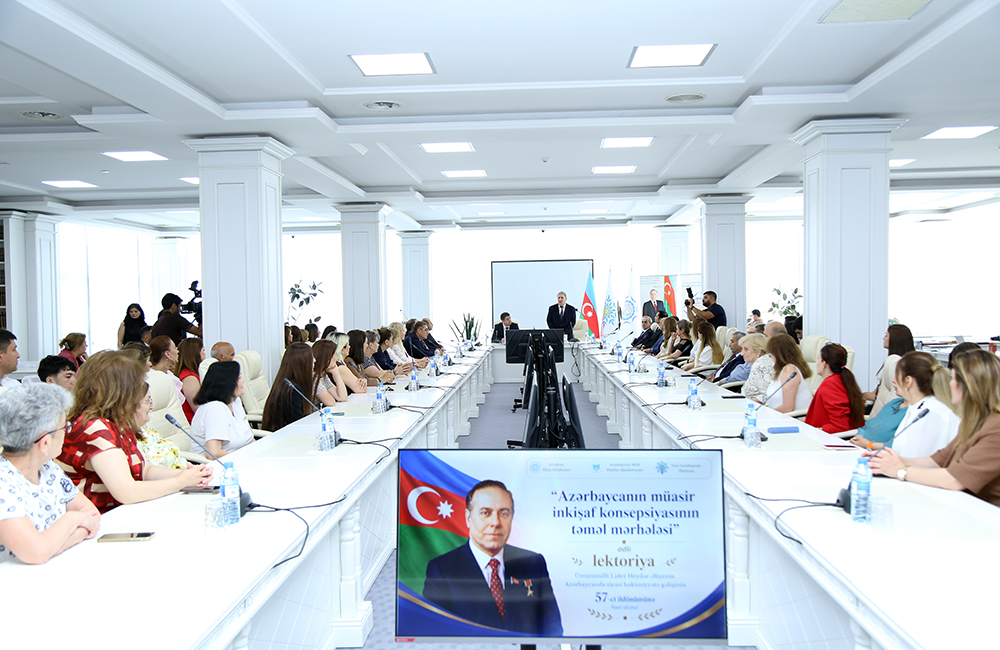
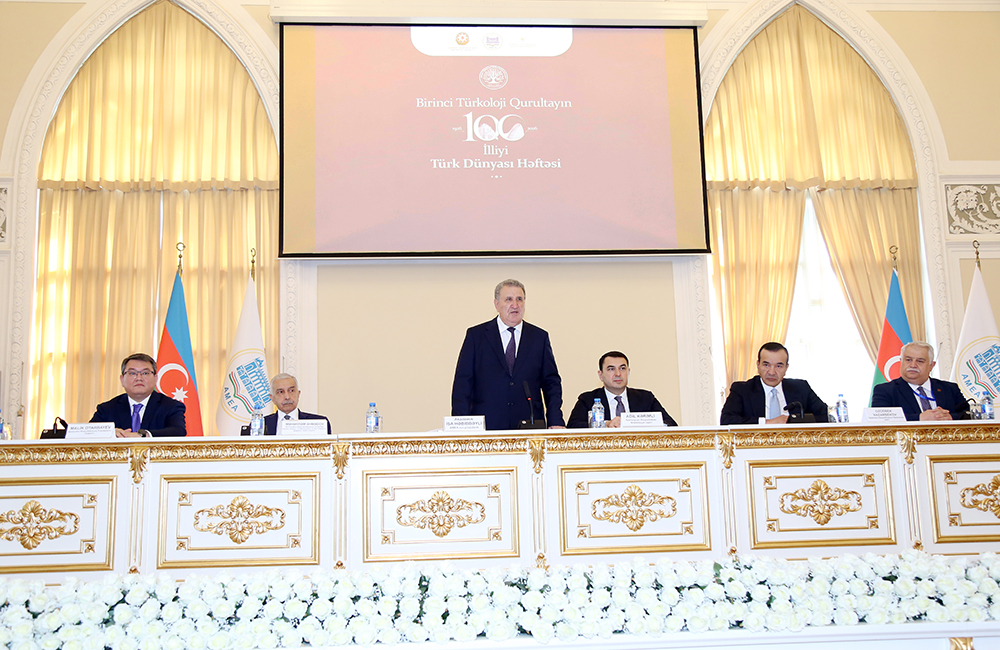
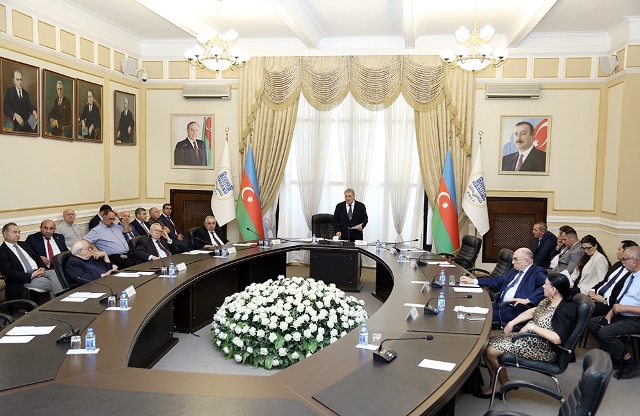
A reporting meeting on the results of the scientific research and scientific-organizational activities carried out by the Institute of Archaeology and Anthropology in 2025 was held at the Main Building of ANAS.
Prior to the meeting, participants viewed an exhibition featuring significant artifacts discovered as a result of archaeological research conducted throughout Azerbaijan during the year, including in Karabakh and East Zangezur, as well as newly published monographs, books, and journals.
The event began with a one-minute silence in memory of the National Leader Heydar Aliyev, the founder of independent and modern Azerbaijan.
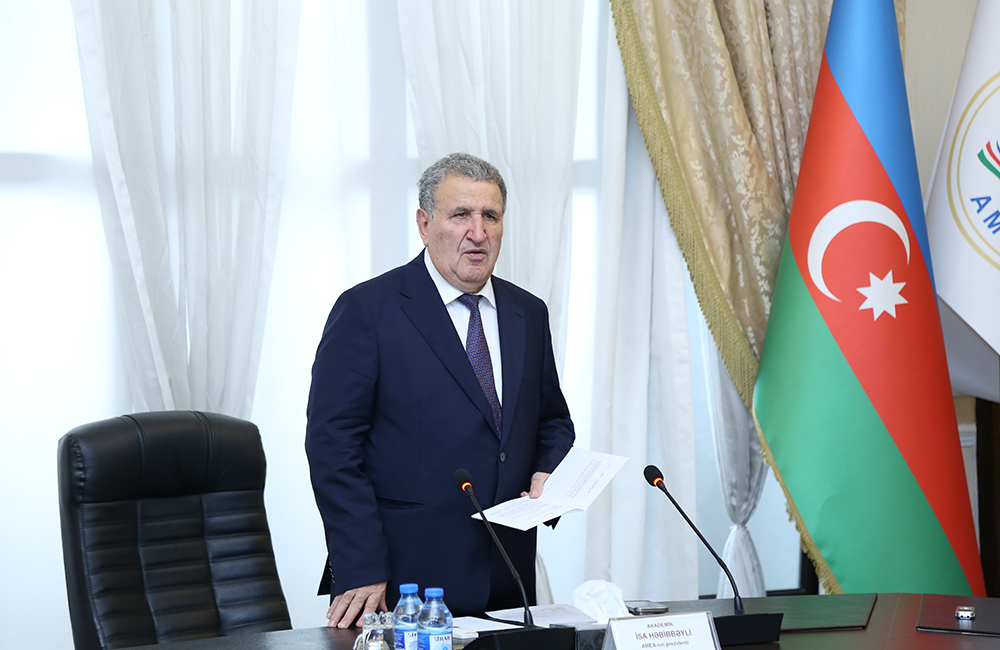
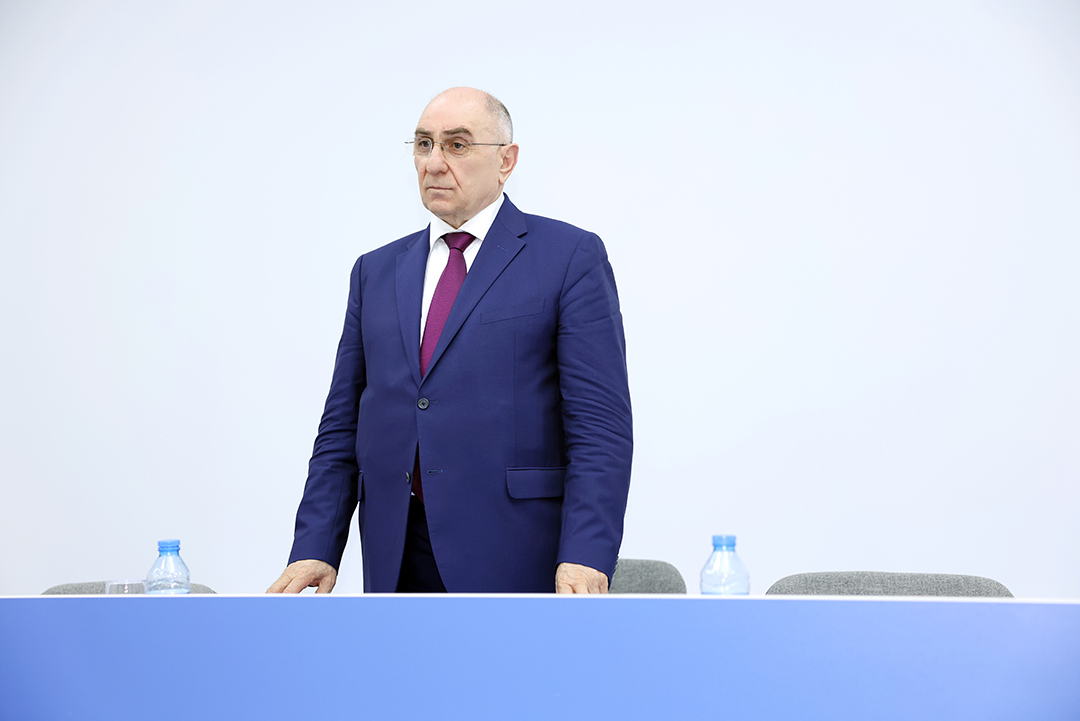
Opening the meeting with introductory remarks, President of ANAS, Academician Isa Habibbeyli, noted that in recent years the Institute of Archaeology and Anthropology has conducted large-scale archaeological research in various regions of Azerbaijan, including in the liberated territories, resulting in the discovery of numerous previously unknown monuments of material culture.
Stating that this was the first report presented by the Institute of Archaeology and Anthropology in such a format, the head of ANAS emphasized the importance of the exhibition held within the framework of the event, which reflects the history, past, traditions, and prominent figures of the Azerbaijani people. He noted that the exhibits on display related to the Neolithic and Caucasian Albanian cultures, finds discovered at Mount Avey, as well as material culture samples unearthed at the ancient human camps of Azikh and Taghlar in Karabakh, had attracted great interest. Academician Isa Habibbeyli also considered it appropriate to organize exhibitions in this format during the reporting meetings of the Division of Social Sciences.
The head of ANAS further drew attention to the establishment of new and improved research structures at the Institute in line with modern requirements, including Islamic-period archaeology, ethnoarchaeology, forensic archaeology, Caspian archaeology, and the Karabakh archaeological expedition. He stated that he had personally familiarized himself on site with the archaeological excavations conducted by the Institute in the city of Naftalan, Goranboy district, Astara, Mount Beshbarmag, and the Karabakh region. Emphasizing that archaeologists had also been provided with drones and GPS devices, the academician stressed that the application of modern technologies would enhance the quality and efficiency of archaeological research.
Noting that the geographical scope of archaeological research is steadily expanding, Academician Isa Habibbeyli highlighted the need to further increase the number of excavations carried out in the northern and southern regions of Azerbaijan, as well as to broaden research related to Caucasian Albania. He also underscored the importance of holding future presentations of work that is of particular anthropological interest.
Academician Isa Habibbeyli emphasized the need to increase the number of books and monographs written on the basis of archaeological materials, as well as articles published in impact-factor journals. He noted that the Institute of Archaeology and Anthropology had published its first international periodical scientific journal in the current year, stating that the journal represents an important scientific source for researchers in world archaeology. He added that the articles published in the first issue mainly cover recent archaeological research conducted within the territory of the Republic of Azerbaijan, primarily in the liberated areas. Alongside Azerbaijani scholars, archaeologists from Japan, Italy, and Germany are also among the co-authors of the articles.
He further stated that as a result of research conducted in the Taghlar Cave located in Khojavend district, a paleoanthropological remain had been discovered for the first time since 1968 (the discovery of Azikh Man), and that the find is currently being analyzed in Japan. The head of ANAS said that following the completion of the dating of the artifact, which belongs to a Neanderthal human approximately 80,000 years old, it would be presented at the international level.
In concluding his remarks, Academician Isa Habibbeyli highly assessed the Institute’s activities, noting that its staff had worked efficiently throughout the year and achieved significant scientific results. He described the prioritization of research serving the interests of the Azerbaijani state and society, alongside archaeological studies, as a manifestation of the support of scholars and intellectuals for the policy pursued by the head of state.
Subsequently, the Institute’s Scientific Secretary, PhD in History Ellada Bekirova, presented the participants with a report on the Institute’s annual activities. She provided information on the implementation of tasks assigned to the scientific institution in connection with the execution of decrees and orders of the President of the Republic of Azerbaijan, decisions and orders of the Cabinet of Ministers of the Republic of Azerbaijan, as well as state programs.
Ellada Bekirova stated that, in accordance with the main research plan, the staff of the Institute of Archaeology and Anthropology conducted studies under the scientific direction “Archaeological and Anthropological Research in Azerbaijan.” These studies included 15 topics covering four problems and a total of 56 research works, with most of the work carried out in line with the plan.
According to her, nearly 40 expeditions covering archaeological, anthropological, and reconnaissance research were organized during the reporting year. In the current year, Institute staff conducted archaeological and anthropological research in the territories of the liberated districts of Zangilan, Aghdam, Fuzuli, Khojaly, Khojavend, and Kalbajar, as well as in Imishli, Aghstafa, Astara, Shamkir, Tovuz, Goranboy, Shabran, Agsu, Shamakhi, Gabala, Yardimli, Jalilabad, Guba, Absheron, and in the Nakhchivan Autonomous Republic, in the districts of Ordubad and Kangarli. A significant portion of the research was carried out in the liberated districts. Some of these excavation works were conducted by joint international expeditions based on international agreements concluded by the Institute.
She recalled that the studies at Sheki “Yukhari Bash,” Aghdam Shahbulag, Siyazan “Beshbarmag,” Ismayilli “Basgal,” and Khojavend “Tugh” were implemented with the support of the Azerbaijan State Tourism Agency. She also noted that during the current year, archaeological expeditions operated in the territories of the “Ancient Shamkir City” State Historical and Cultural Reserve, Kechikchidagh State Historical and Cultural Reserve, and Avey State Historical and Cultural Reserve, which are subordinate to the Ministry of Culture of the Republic of Azerbaijan.
The Scientific Secretary highlighted research conducted during the reporting year on the following topics: “The Paleolithic Period, Early Humans, and the Natural Environment,” “Archaeological Study of Mesolithic, Neolithic, and Chalcolithic Monuments of Azerbaijan,” “Research on Archaeological Sites of Nakhchivan,” “Cultural-Historical Overview and Local Characteristics of the Early Bronze Age ‘Kura–Araxes’ Culture Tribes (4th–3rd millennia BC),” “Middle and Late Bronze Age Monuments, Ancient Settlements, Kurgans, Stone Cist and Earth Graves (2nd millennium BC),” “Iron Age Ancient Settlements and Burial Monuments: Early Statehood,” “Material Culture of Caucasian Albania,” “Material Culture of Atropatene,” “Medieval Urban Sites of Azerbaijan,” and “Caspian Archaeology.” She also spoke about studies in socio-cultural anthropology in Azerbaijan, forensic archaeology, research on the anthropological characteristics of the ancient and modern population of Azerbaijan, as well as other reconnaissance and monitoring studies.
Ellada Bekirova also discussed significant applied results achieved in 2025, international relations, events and conferences held, the Institute’s publishing activities, the state of electronic science, as well as work carried out in the fields of popularization, promotion, and encouragement of science.
Providing information on the institution’s international and local grant projects, she stated that work continued on two main grant projects at the Institute of Archaeology and Anthropology during the current year, and that Institute staff won four new grant projects, one of which is international.
Speaking about work carried out in the field of scientific personnel training, Ellada Bekirova noted that according to 2025 data, the Institute of Archaeology and Anthropology has 11 doctoral students pursuing a PhD degree, two dissertants, seven doctoral students pursuing a Doctor of Sciences degree, and three dissertants.
The Scientific Secretary also highlighted awards and honors received by the Institute’s staff during the reporting year. She stated that, in accordance with relevant Orders of President Ilham Aliyev, Institute employee Mirjavid Aghalarov was awarded the 2025 Presidential Prize for Youth, while Head of the Anthropology Department Aliaga Mammadli and Head of the Department for Monitoring and Evaluation of Field Research Tavakkul Aliyev were awarded the “Progress” Medal for their services to the development of Azerbaijani science.
This was followed by discussions around the report. The Institute’s Director, PhD in History, Associate Professor Farhad Guliyev, shared his views and proposals and answered questions.
At the end of the meeting, Academician Nargiz Akhundova, Professors Asadulla Jafarov, Hidayat Jafarov, Kubra Aliyeva, and Chief Specialist of the Science and Education Department of the ANAS Presidium Administration Aynur Gunashli delivered speeches, highly assessing the Institute’s annual activities.
Translation by Gulhane Aghayeva, Department of Public Relations, Press, and Information, Presidium of ANAS.
© All rights reserved. Reference to www.science.gov.az is required when using materials from this site.
Similar News
Links