Azerbaijan National Academy of Sciences
The first website of Azerbaijan (1995)
 Elm TV
 Photo
Photo
 Video
Video
- A-
- A
- A+
Meeting of the Presidium of ANAS Held


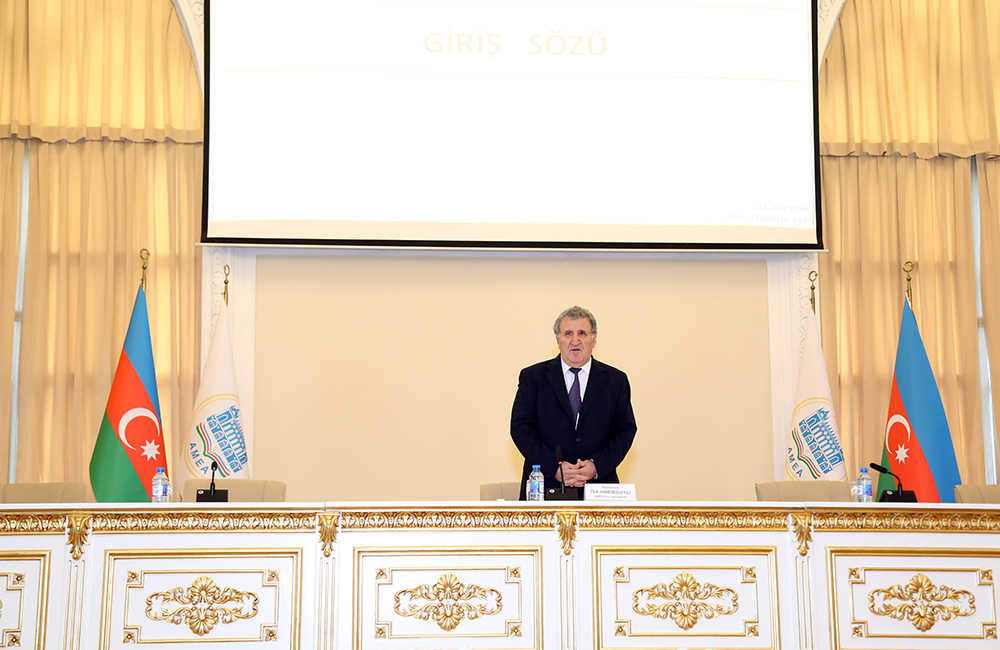
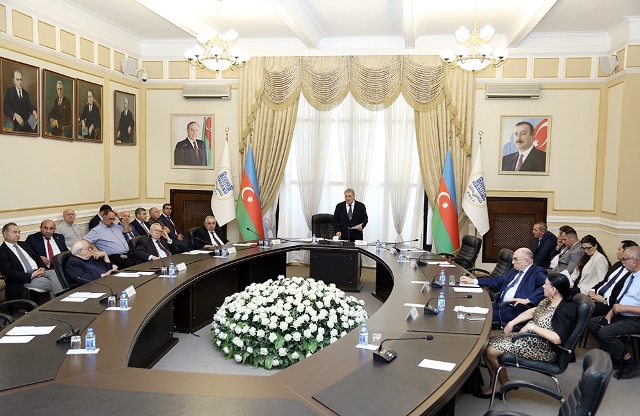
The next meeting of the Presidium of the Azerbaijan National Academy of Sciences (ANAS) has been held.
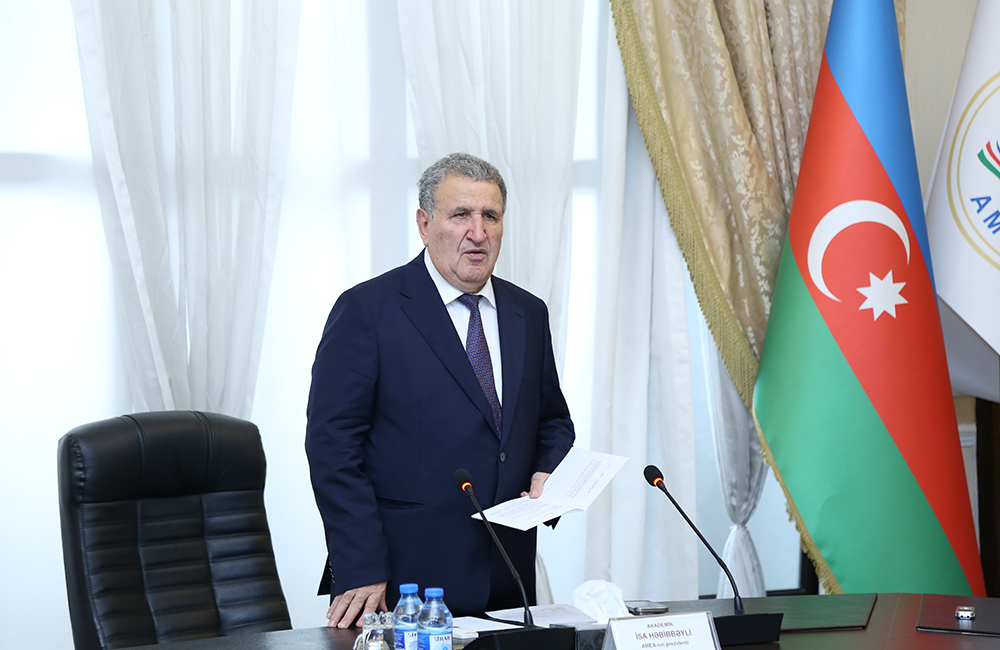
The event was attended by ANAS President Academician Isa Habibbeyli, members of the Presidium, heads of departments of the Presidium’s administration, directors of scientific institutions and organizations, young scientists, doctoral students, and other relevant persons.
Opening the meeting with introductory remarks, Academician Isa Habibbeyli informed participants about the agenda.
The first issue discussed at the meeting was “The 2025 Nobel Prize and Laureates: Priorities of World Science and the Tasks of Azerbaijani Science.”
Speaking on the issue, Academician Isa Habibbeyli noted that every year, following the announcement of the Nobel Prize results, reports are traditionally presented at a meeting of the ANAS Presidium, discussions are held on the priorities of world science, and trends in the development of Azerbaijani science’s position in global science are assessed. He emphasized that doctoral students admitted to ANAS doctoral programs for the degree of Doctor of Philosophy in 2025 were also participating in today’s meeting, and that the presentation on the Nobel Prizes would be useful for their future scientific activities as well.
Afterwards, ANAS Vice-President Academician Dilgam Taghiyev delivered a report on the topic “The 2025 Nobel Prize and Laureates: Priorities of World Science and the Tasks of Azerbaijani Science.”
The academician stated that candidates for the Nobel Prize are nominated by the Swedish and Norwegian Academies, Nobel committees, Nobel laureates, and scholars recommended by the Academy. Each year, the Nobel Foundation sends questionnaires to leading scientists, information on the discoveries of several thousand scientists is collected and filtered, several hundred of them are selected as nominees, and from 5–6 main candidates—finalists—up to three are awarded the Nobel Prize. He noted that to date, the countries with the highest number of Nobel Prizes are the United States (402), the United Kingdom (137), Germany (109), France (68), and Sweden (33), and that of the total 1,020 laureates, 66 are women.
Academician Dilgam Taghiyev pointed out that in 2025, the Abel Prize, regarded as the Nobel Prize in mathematics, was awarded to Masaki Kashiwara (Japan), while the Turing Award in computer science was awarded to Andrew Barto and Richard Sutton (USA).
The speaker also said that the 2025 Nobel Prize in Physiology or Medicine was awarded to U.S. scientists Mary Brunka and Fred Ramstell, and to Shimon Sakaguchi (Japan), for pioneering discoveries in the field of peripheral immunological tolerance that prevent harmful effects of the immune system on the body.
He emphasized that the Nobel Prize in Physics was awarded to John Clark (United Kingdom, working in the USA), Michel Devoret (France, working at Yale University in the USA), and John Martinis (USA) for experiments proving that quantum phenomena can be observed in objects visible to the human eye.
Academician Dilgam Taghiyev stated that the 2025 Nobel Prize in Chemistry was awarded to Susumu Kitagawa (Japan), Richard Robson (United Kingdom, working in Australia), and Omar Yaghi (Jordan, working in the USA) for successful research in the creation of metal-organic frameworks (MOFs): “The laureates have created a new form of molecular architecture. In this structure, long organic radicals form crystals with large pores through metals located at nodes (MOF – metal-organic frameworks). When constructing them, building blocks can be selected in such a way that they have the ability to absorb or store molecules of specific sizes. In this regard, their potential capabilities are highly valued.”
He also noted that the Nobel Prize in Literature was awarded to Hungarian writer László Krasznahorkai for his convincing and farsighted work, which, despite its apocalyptic horrors, once again affirms the power of art.
In addition, he highlighted that the Nobel Prize in Economic Sciences was awarded to Joel Mokyr (USA), Philippe Aghion (France), and Peter Howitt (USA) for explaining economic development based on innovation, the development of the economy, and the improvement of human well-being with the help of new artificial intelligence technologies.
It was also stated that Maria Corina Machado was awarded the Nobel Peace Prize from among 366 nominees.
Academician Dilgam Taghiyev also spoke about Nobel laureates from Muslim countries, well-known scientists and writers who did not receive the Nobel Prize, as well as certain problems and difficulties related to the award.
The report also noted that today artificial intelligence, quantum computing, environmental solution technologies—green energy, carbon capture technologies, and others—life sciences (medicine, cognitive and biotechnologies), new materials and nanotechnologies, green technologies, and industrial technologies are the main priorities of world science.
At the end of his speech, Academician Dilgam Taghiyev also addressed the main priorities of world science in the field of chemistry and presented the priority areas envisaged for chemical sciences in ANAS’s “Development Strategy and Roadmap” for 2026–2030.
After the report, discussions were held and an appropriate decision was adopted by the Presidium.
The meeting then continued with the discussion of a number of scientific and organizational issues.
ANAS Vice-President Academician Rasim Aliguliyev provided information on his participation in the 37th General Assembly of the GÉANT Association and meetings dedicated to the prospects of the GÉANT Network Infrastructure, held in Amsterdam, the capital of the Netherlands. He noted that the General Assembly discussed updates on the activities of the GÉANT Association and the strategic importance of the GN5-2 project for the development of Europe’s research and education network. During the discussions, strategic development directions of GÉANT for 2026–2030 were identified, and prospects for cooperation among national research and education networks were reviewed.
Academician Rasim Aliguliyev also stated that discussions covered issues such as the European Commission’s increased attention to regional cyber sovereignty, the expansion of GÉANT’s role in the European research ecosystem, the GÉANT roadmap, the compliance of national research and education network infrastructures with the requirements of Europe’s digital sovereignty concept, ensuring the sovereignty of cloud resources, and supporting open science.
After hearing the information, the Presidium adopted an appropriate decision.
Decisions were also adopted at the meeting regarding the 80th anniversary of Academician Valida Ali-zadeh and the 70th anniversary of ANAS Corresponding Member Ibrahim Jafarov.
The meeting then featured the award ceremony for the winners of a young researchers’ article competition on the topic “Opportunities for the Use of Artificial Intelligence and Digital Technologies in the Humanities and Social Sciences,” announced within the framework of ANAS’s 80th anniversary events.
Academician Isa Habibbeyli stated that, within the framework of the 80th anniversary events of ANAS, activities were also organized for young people, and today awards would be presented to the winners of one such event—the article competition. He noted that conditions were created for the participation of young specialists not only from ANAS scientific institutions and organizations, but also from Baku State University. The head of ANAS emphasized that 19 participants submitted articles to the competition, which was held for the first time in the country in the field of artificial intelligence, and that the goal was to encourage young people to engage in the training of specialists in this area.
Academician Isa Habibbeyli stressed that the competition would also contribute to the implementation of the tasks set before scientists by the head of state regarding artificial intelligence and digital development in his speech at the 80th anniversary assembly of ANAS.
He noted that a Commission was established to organize the competition under the chairmanship of the Head of the Science and Education Department of the ANAS Presidium’s administration, Doctor of Philological Sciences Sarkhan Khaveri, and that the articles were reviewed by an Expert Group chaired by ANAS Vice-President Academician Rasim Aliguliyev.
Afterwards, Academician Rasim Aliguliyev shared his views on the articles submitted to the competition.
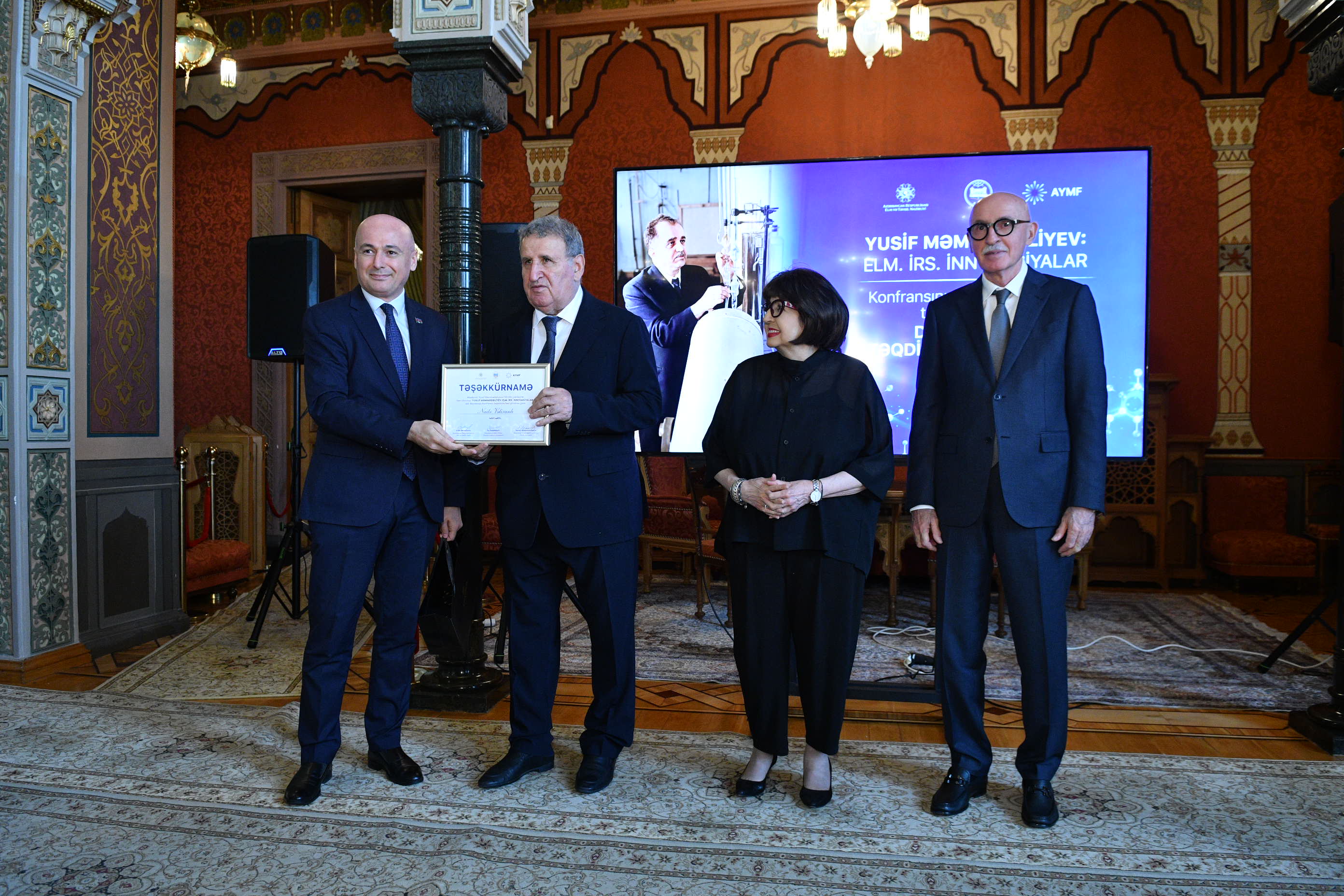
Awards were then presented to the young participants. According to the competition results, Laman Rustamli, an employee of the ANAS Institute of Architecture and Art, won first place. Orkhan Isayev, an employee of the ANAS Institute of Literature named after Nizami Ganjavi, and Roya Mirzabeyova, an employee of the ANAS Institute of Oriental Studies named after Academician Ziya Bunyadov, took second place. Jahandar Jabarov, a full-time doctoral student of the ANAS Institute of Philosophy and Sociology, Ilaha Asadzadeh, an employee of the ANAS Ganja Branch, and Ruzgar Jamal, an employee of the ANAS Nakhchivan Branch, shared third place. In addition, 13 participants received incentive awards.
Furthermore, the Head of the Science and Education Department, Doctor of Philological Sciences Sarkhan Khaveri, provided information on the results of admission to doctoral programs at ANAS for 2025.
Subsequently, the dissertation topics of doctoral students admitted to ANAS doctoral programs for the degree of Doctor of Philosophy in 2025 were discussed.
Academician Isa Habibbeyli noted that the vast majority of dissertation topics of this year’s admitted doctoral students are devoted to current issues such as artificial intelligence, digital development, and ethnolinguistics, and are aligned with the challenges of modern world science. He stated that these topics are also among the priority areas in the future activities of the Academy. Emphasizing the importance of thorough discussions of proposed dissertation titles first at departments and then at Scientific Councils, Academician Isa Habibbeyli said this is essential for the development of science. He also noted that he would conduct a master class for new doctoral students, stressing that this is a duty in terms of training scientific personnel and the future of science.
Following extensive discussions, amendments were made to the titles of a number of dissertations, and the topics and scientific supervisors were approved.
Translation by Gulhane Aghayeva, Department of Public Relations, Press, and Information, Presidium of ANAS.
© All rights reserved. Reference to www.science.gov.az is required when using materials from this site.
Similar News
Links